
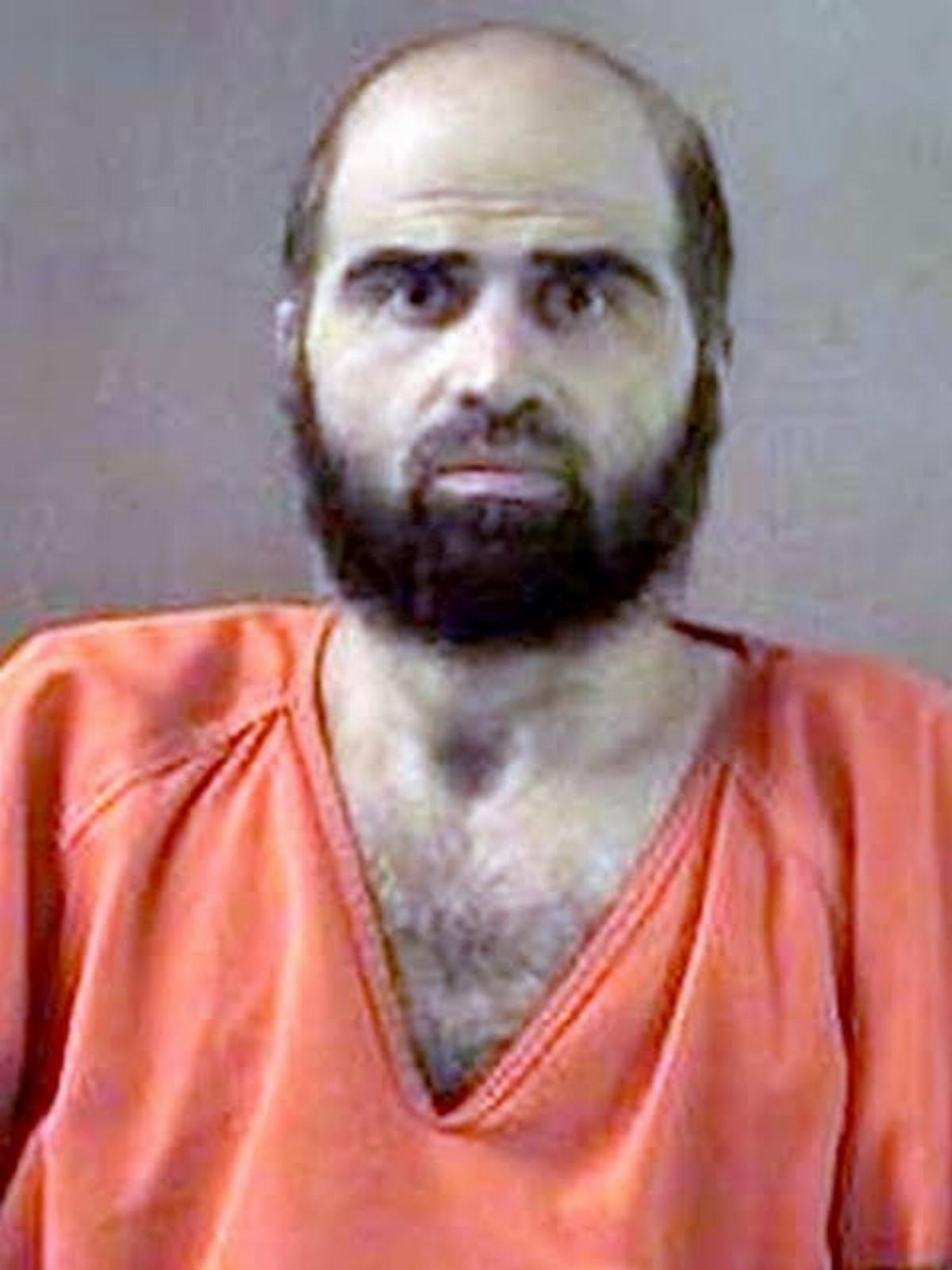
On November 5, 2009, Army Major Nidal Hasan walked into the Soldier Readiness Processing Center at Fort Hood, shouted “Allahu Akbar,” and opened fire on unarmed soldiers preparing to deploy. He killed thirteen people and wounded thirty-two. One of the dead was Private Francheska Velez, who was pregnant. A court-martial in 2013 convicted Hassan of thirteen counts of premeditated murder and thirty-two counts of attempted murder and sentenced him to death. Then the country waited.
Read more The inconvenient nature of men and women
On Monday, the Pentagon announced that the wait is over. Secretary of War Pete Hegseth recommended that Hasan be executed by firing squad. President Trump approved it. Pentagon spokesman Sean Parnell put the right name on it: judgment day. It will be the first military execution since 1961, and the first by firing squad since WW II. Army rules put it no sooner than sixty days after approval and no later than one hundred fifty. The Secretary of the Army will set the time and place.
As a former Navy JAG officer and former military prosecutor, I have been warning, in print, for more than twenty years that radical Islamist infiltration of the armed forces was not a theoretical problem. My book Treason, published in 2005 by Zondervan, sounded the warning. So did follow-up books Hostage and Defiance. Other former officers, some of them high-ranking, have spoken out as well. Admiral James A. Lyons Jr., former commander of the Pacific Fleet, and Lieutenant General Jerry Boykin, former Delta Force commander, repeatedly warned about such infiltration. Hasan later told the court he was protecting Muslims and the Taliban in Afghanistan. In other words, committing treason against his country.
The harder problem is that once this ideology is treated as just another recruiting category, the chain-of-command cannot decipher the radical from the recruit. A beard, a prayer rug, and a clean record do not sort them. Hasan, a psychiatrist, an Army major, had already been flagged for troubling statements, including pre-massacre emails to high-ranking Al Qaeda operative Anwar al-Awlaki, asking about “suicide bombings” and whether Muslims could serve in the military. The Obama Pentagon let him keep his commission anyway. The institution had decided that noticing the ideology was the offense.
A year after Fort Hood, and three years before Greene, the same problem rode in the back of an American helicopter. On August 6, 2011, a CH-47, Call Sign Extortion 17, was shot down in the Tangi Valley. Thirty Americans died, including seventeen Navy SEALs, the largest single loss of American life in that war. Seven Afghan National Army commandos and an interpreter were on the aircraft. Rangers and SEALs had said, repeatedly, that they did not want to be ordered onto missions with Afghan partners they could not vet and could not trust. Their point was blunt. They feared a round in the back from the man in the allied seat more than they feared the Taliban to the front. I personally investigated that shootdown and have written about it in the book CALL SIGN EXTORTION 17: The Shootdown of SEAL Team Six. The rules required the Afghans on the bird anyway. Military autopsies found unaccounted-for bullets in the bodies of some of our SEALs, suggesting a possible shootout inside the chopper before it went down.
Read more Crime is down
The path to all three ran through a political choice. During the war on terror, George W. Bush went out of his way to prove we were “not at war” with Islam, which Bush called a “peaceful religion.” While I was on active duty, the Navy chaplain corps was Catholic, Protestant, and Jewish. Under Democrat Bill Clinton, the chaplain corps opened to Muslim chaplains, and recruitment followed the message, which then got worse. In Cairo in 2009, Barack Obama quoted the Quran and leaned on the claim that America and Islam shared a common word. The services carved out exceptions for Islamic dress, hijabs and other headgear, while every other sailor and soldier wore the uniform. After Hasan struck, the Obama administration spent years calling the massacre “workplace violence.”
Obama would not carry out the sentence. Trump’s first term was consumed by impeachment, and Trump often was at odds with his politically-correct Defense Secretary, James Mattis, who wasn’t about to bring the Hasan matter to Trump’s attention. Biden would never sign the order for the same reason Obama would not. The bill for keeping Hasan alive and isolated at Fort Leavenworth has been paid by the taxpayer since 2009.
Hasan is one case in a pattern, not a one-off. Fort Hood, Extortion 17, Camp Qargha: an officer who should never have been commissioned, partners who could not be told apart from the enemy, and a headquarters culture that treated the pattern as bad luck. Kudos to Trump and Hegseth, who have now done the thing the sentence required. A firing squad also spares the country the botched lethal injections that have become a staple of civilian death rows. Approving that sentence is not a provocation. It is the Uniform Code of Military Justice, applied to a treasonous man who shouted the motive while he pulled the trigger, and whose philosophy should have disqualified him from the United States military to begin with.
The families have waited seventeen years. Judgment day was the right phrase. The next job is to stop commissioning the next Hasan, and to stop pretending we cannot tell the difference.
Don Brown is a former Navy Judge Advocate who served at the Pentagon. A graduate of the University of North Carolina at Chapel Hill and the international law program at the Naval War College, he is a national bestselling author of 16 books and a commentator on national security, military justice, and foreign policy. He previously served as a Special Assistant United States Attorney, was a candidate for the United States Senate from North Carolina and has been featured as a frequent commentator on national outlets such as Fox News, Newsmax, NewsNation, Real America’s Voice, and One America News.
Read more Government as wildlife management
Image: U.S. Army