
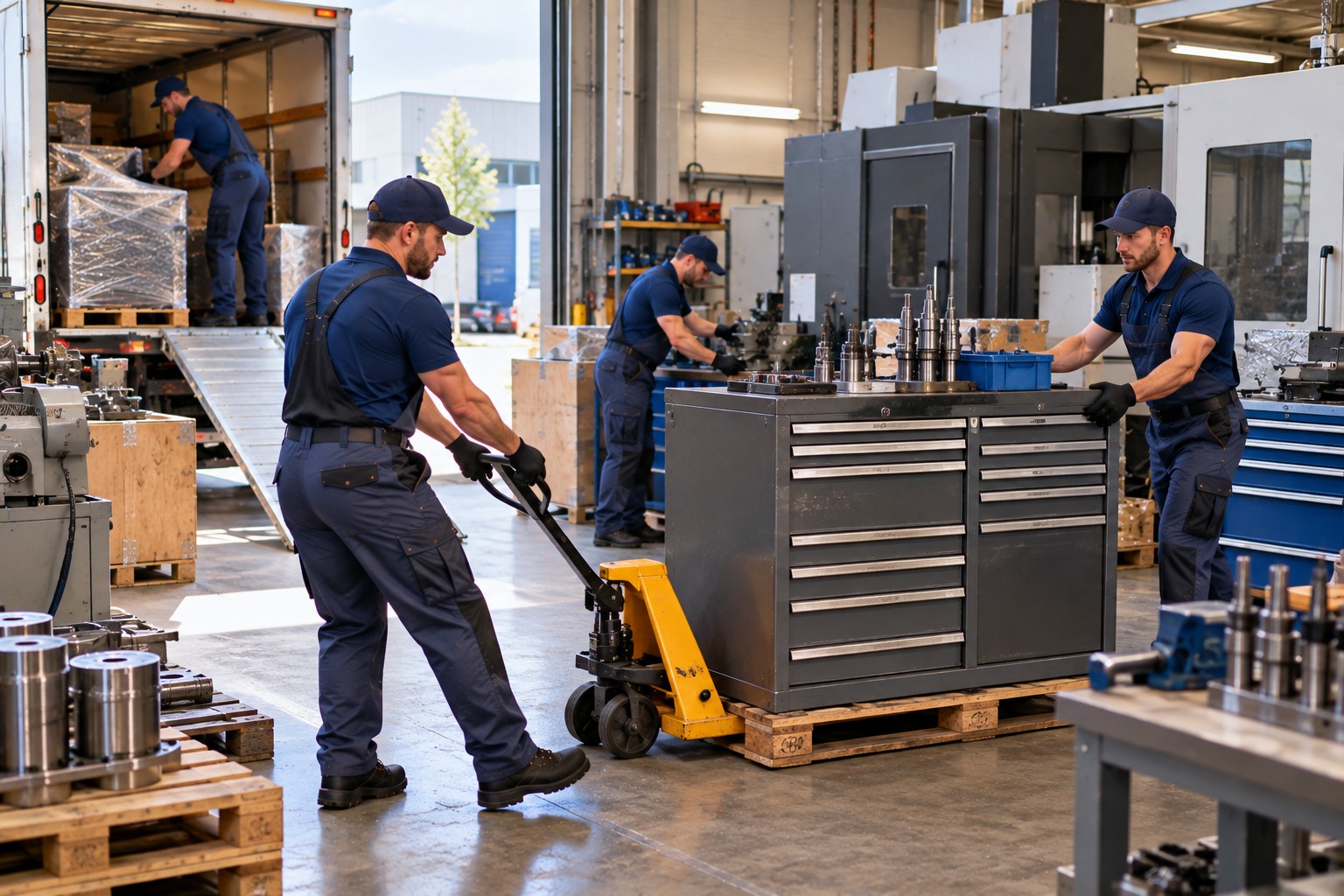
A manufacturing toolroom is one of the most specialized areas of an industrial facility. Behind its doors may be precision measuring instruments, tooling systems, workbenches, storage cabinets, machinery accessories, and equipment that supports production across an entire plant. Relocating this space requires considerably more planning than moving ordinary office furniture.
For a Racine manufacturer, the goal is not simply to transport everything safely. The relocation should protect precision equipment, maintain inventory control, and allow production teams to resume access to essential tools as quickly as possible.
Map the Toolroom Before Anything Moves
The first stage should be an inventory of the entire toolroom. Identify equipment by function rather than simply counting boxes or pieces of furniture.
Separate precision instruments, hand tools, power equipment, tooling components, storage systems, workbenches, and consumable supplies. Record serial numbers where appropriate and photograph specialized equipment before disassembly.
This creates a reference for both loading and reinstallation. It also makes it easier to identify missing components or accessories after delivery.
Star Van Lines Movers can be part of a broader relocation strategy when a manufacturer needs the physical move coordinated around the operational requirements of the facility.
Identify Precision Items Early
Some toolroom equipment cannot be handled like ordinary industrial inventory. Calipers, gauges, measuring systems, inspection equipment, specialized tooling, and other precision components may be vulnerable to impact or improper positioning.
Flag these items before packing begins. Use suitable protective materials and keep small components associated with the correct equipment. When calibration is critical, document the equipment’s status before the move and establish a plan for verification after installation.
Organize Tooling by Production Function
A toolroom often contains hundreds or thousands of small components. Random packing can create a major problem when production resumes and employees cannot find what they need.
Use the existing storage system as the basis for relocation. Label containers according to cabinet, drawer, workstation, or production function. If possible, photograph shelves and drawers before they are emptied so the original organization can be recreated.
Small tooling should remain grouped rather than being consolidated into large mixed containers. This may take more preparation initially but can save considerable time during setup.
Prepare Racine Facility Access
Industrial relocation planning should account for the entire route from the toolroom to the transport vehicle. Measure doorways, loading doors, corridors, ramps, and other potential restrictions.
Determine where trucks can park and whether loading areas need to remain clear during the move. Manufacturing facilities may have forklifts, production traffic, employees, and delivery vehicles operating nearby, so a dedicated moving route can help separate the relocation from normal plant activity.
For companies relocating within Wisconsin, https://starvanlinesmovers.com/locations/wisconsin can serve as a starting point when reviewing moving support across the state.
Coordinate With Maintenance and Safety Teams
A toolroom move may involve equipment that requires power disconnection or mechanical preparation. Coordinate these tasks with qualified plant personnel rather than treating them as ordinary packing work.
Safety procedures should remain active throughout the relocation. Establish restricted areas around loading operations, communicate the moving schedule to employees, and make sure emergency pathways remain accessible.
Protect Heavy and Sensitive Equipment
Toolroom equipment can be dense and difficult to handle. Heavy cabinets, workbenches, machinery components, and metal storage systems require stable loading arrangements to prevent shifting during transportation.
Drawers should be secured, removable components separated when necessary, and heavier pieces positioned appropriately inside the vehicle. Fragile measuring equipment should not be placed beneath heavy materials.
Star Van Lines Movers can assist with the transportation side of the project, while plant personnel can focus on technical preparation, production priorities, and equipment verification.
Rebuild the Toolroom in the Right Sequence
The new toolroom should be ready before equipment begins arriving. Confirm that floors, electrical connections, lighting, storage locations, and work areas are prepared.
Do not necessarily unpack everything at once. Start with the tools and equipment required for immediate production needs. Reinstall essential workstations first, then restore secondary storage and less frequently used inventory.
A simple floor plan can make this process easier. Mark the locations of workbenches, cabinets, inspection stations, and high-use tooling so movers know where larger items belong.
A successful manufacturing toolroom relocation in Racine depends on precision at every stage. With detailed inventory control, careful handling, coordinated facility access, and a deliberate reinstallation sequence, manufacturers can move a critical workspace while keeping disruption to production under control.