
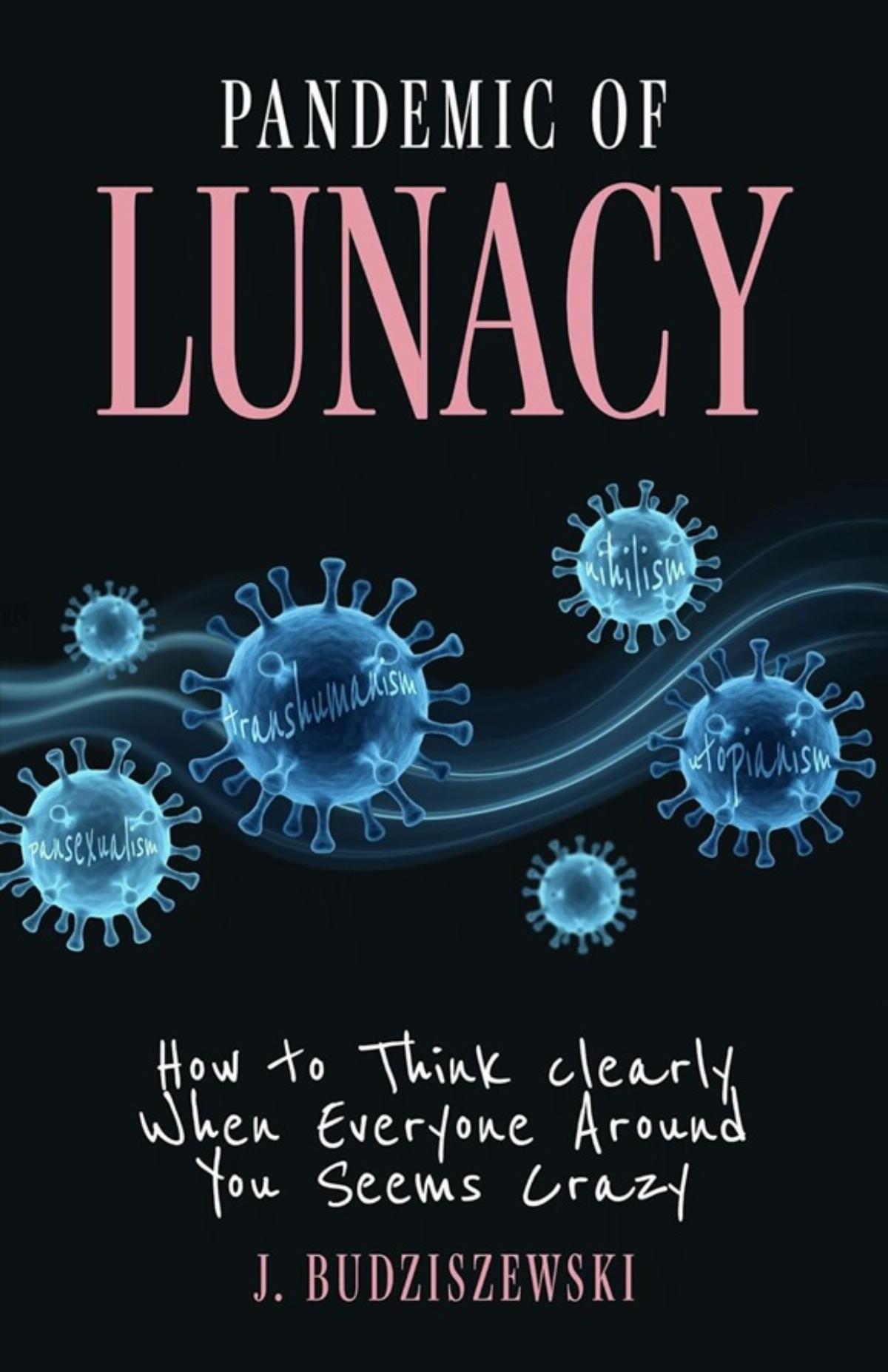
The chance of finding a philosophy professor like J. Budziszewski is about as rare as finding a teenage student who doesn’t believe that right and wrong, like beauty, are in the eye of the beholder. In Pandemic of Lunacy. How to Think Clearly When Everyone Around You Seems CrazyProfessor Budziszewski makes a compelling case for the opposite view, one seldom embraced nowadays even by members of his own profession, namely, that right and wrong are objective categories and not, in general, “vague and equivocal.” Nor are they “different for everyone.”
Read more Rick Adelman: Early Observations of a Hall of Famer
If the reader immediately objects that different cultures have different notions about what is right and wrong, the former nihilist and Nietzsche aficionado who has ruffled many feathers at the University of Texas has a logical answer for you, one that distinguishes what right and wrong actually are from what any person or culture asserts they are. Beyond that currently heretical belief, Budziszewski provides scholarly evidence that the moral elements in the Ten Commandments are, in some form, embedded in all cultures. You’ll have to buy the book to get a reasoned and likely convincing reply to your objections, but be warned that Margaret Mead’s conclusion about South Sea Islander sexual license (precursor to those now extant in America) has been debunked.
Budziszewski’s analysis concerning basic concepts of right and wrong serves as a foundation for the other topics he addresses in this short, six-part tour de force, written for “laymen” and employing a bare minimum of philosophical terminology. Part one, “Delusions about Virtue and Happiness” is followed by topics that concern politics, sexuality, being human, reality, and lastly, God and religion. That final category shouldn’t mislead folks into thinking the book is based on religious dogma. It is not. Aristotle is the philosopher Budziszewski relies on most, even in the final section about God. Accordingly, when speaking about happiness, the professor points readers toward Aristotle’s definition of the term that concerns an activity, living well, not merely a feeling of pleasure.
The preceding paragraph provides an example of Budziszewski’s warning: “Just as lies beget lies, self-deceptions beget new self-deceptions.” Stated otherwise, when one violates natural law, the negative consequences have a cascading quality. So, in addition to the harmful effects listed above about sex-related delusions, one must add millions of abortions, legislation expanding abortion’s scope, and in recent years even abortion’s celebration. The taking of human life in utero also cheapens human life itself and makes suicide and euthanasia more common. (I offer as additional evidence this article about Canada’s MAiD program that now accounts for one in twenty deaths in that country.)
Read more Can Romania Lead the Way Out of the EU’s Green Nightmare?
Of course, none of these things are moral problems, at least intellectually, for those who insist that natural law is a social fiction. But Budziszewski argues persuasively that conscience exacts a cost for violating its moral parameters. Sometimes that price is compulsive repetition of the immoral behavior, often leading to addiction. Sometimes the penalty is the destruction of the ability to truly love another person sexually. And for some individuals, unacknowledged guilt compels them to recruit others into sharing and celebrating their ruling vice — a form of confession without contrition. Of course, we all pay the price of living in a disordered world brought about by disordered loves and beliefs.
Budziszewski’s penultimate lunacy (#29) deals with the popular proscription against “judging,” an incoherent dogma encapsulated in the verbal challenge, “Who’s to say?” As the professor observes, this rejection of judgment amounts in point of fact to a judgment against something else, usually traditional beliefs such as the definition of marriage or the humanity of an unborn child. After confounding his imagined interlocutor by asking, “Who is to say that tolerance is right?” Budziszewski concludes his lesson by noting that nonjudgmentalism isn’t what it seems to be. “It is always a disguise for imposing a moral judgment without having to give reasons for it, just by pretending not to be making one.”
Some of the more traditional philosophical delusions that Budziszewski addresses include the belief that everything is material, that humans are naturally good or bad, that humans have no “nature” at all, and the belief that humans are merely animals. Whatever the topic, the professor writes clearly and cogently, employing logic, experience, and common sense to support conclusions that are sure to confound and possibly infuriate persons tied to the unexamined delusions that underpin the lunacy of our time.
Richard Kirk is a freelance writer and a retired philosophy and religion instructor. His book Moral Illiteracy: “Who’s to Say?” is also available on Kindle , as is his book Poetry with a Moral Edge.
Read more Iran’s ayatollah makes new claims, revealing new fears
Image: Creed and Culture