
Electric vehicles have always been a niche product. Mostly, the top 7% in household income buy them. They can afford all the flexible, internal combustion engine—ICE—vehicles they need while keeping an EV for greenie street cred. The truth is, for most Americans, EVS aren’t ready for prime time. Their low ranges and long charging times are constant problems, and in hot weather, and especially in cold weather, they lose as much as half their range, and charging times increase dramatically, if they charge at all.
Read more James (Talarico) Gang Rides Again
The out-of-production Ford F-150 Lightning pickup, which was supposed to lead Ford into a bold, all-electric future, failed. It couldn’t do what Americans buy the most popular truck—the most popular vehicle—in America to do, and in winter it was a total disaster, losing half its range and denying owners a functioning heater. Ford actually recommended that Lightning owners only use the steering wheel and seat heaters to prevent a catastrophic loss of range rather than just an awful loss of range. That didn’t amuse owners who couldn’t keep warm or keep the frost off their windows and windshields.
Even worse, EVs cost far more to repair than ICE vehicles, have virtually no resale value, and carry equally high insurance rates. Their extremely heavy batteries require special, costly tires, which wear out much faster than normal, and home fast chargers run around $10,000, if the local grid will accept them. They’re also much more expensive than comparable ICE vehicles.
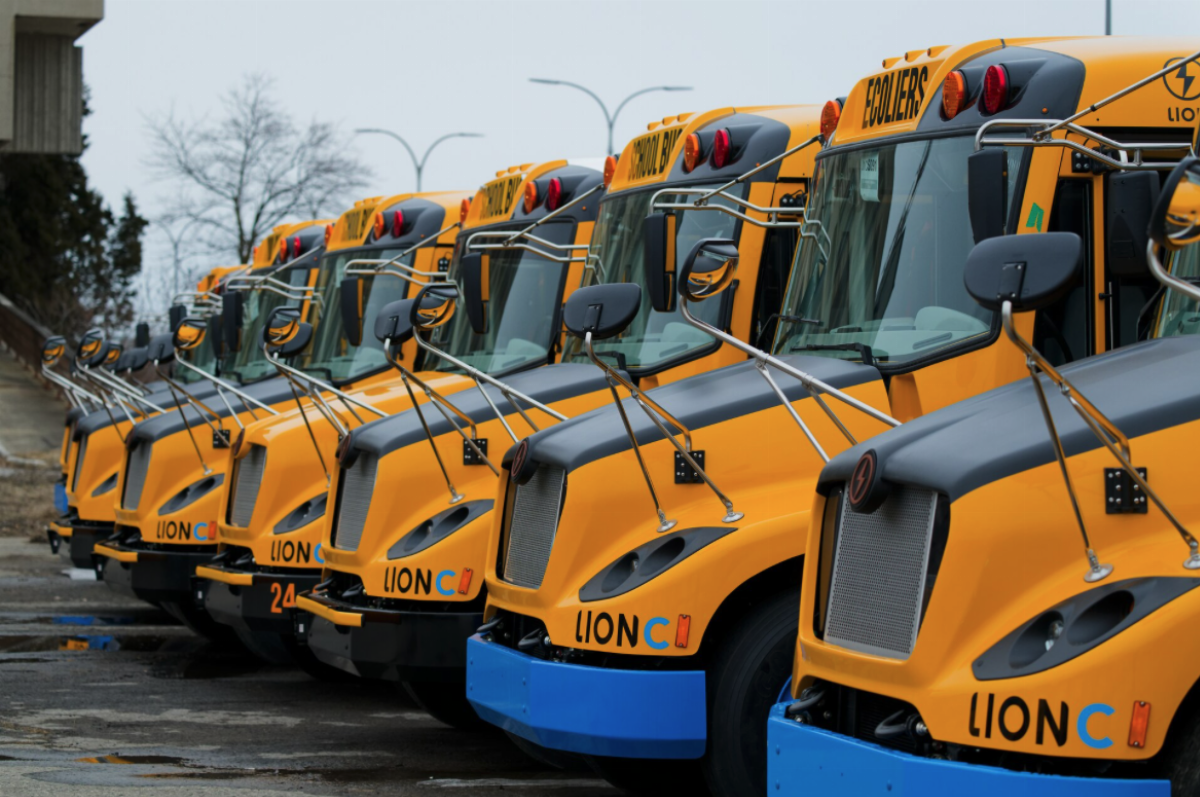
Americans’ realization that they didn’t want and couldn’t afford EVs coincided with the second Trump Administration, which canceled the federal $7500 EV tax credit, which has all but doomed most of the EV market. That includes the market for EV buses, which, particularly in cold climates, have proved to be even more disastrous than other EVs.
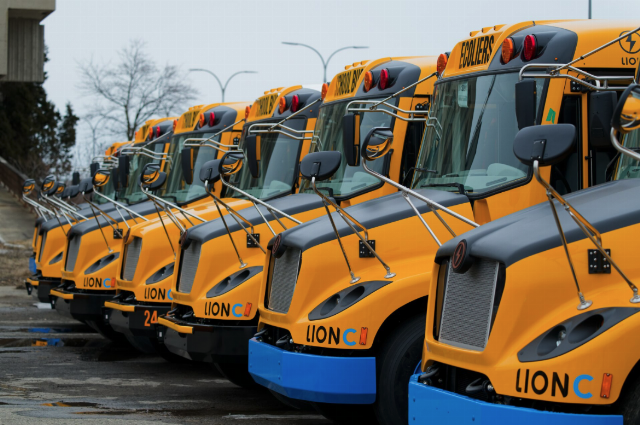
Graphic: LionC all-electric school bus. Wikimedia Commons. Pierre5018. CCA4.0 International.
By 2020, Philadelphia, which paid $24 million and got a federal $2.6 million grant for 25 Proterra transit buses, had to retire them all because the batteries were cracking the chassis, and they didn’t have enough range even for the shortest city routes. Those and parts availability problems eventually drove Proterra out of business, leaving every city and school district that bought them stuck.
Jackson, Wyoming–Teton County—is an island of blue in the otherwise red state, and they went for electric transit and school buses in a big way. It hasn’t worked out well for them:
Jackson’s push to electrify its public buses failed, and eight are still parked unused at the bus barn. But the city’s transit system is now off the hook for about $3 million it could have owed the federal government for not using the buses long enough.
The buses were bought in 2020 using 85% federal funding.
Known electric bus issues didn’t deter blue cities, at least not at first:
START avoided the bill by winning a federal waiver, [local START bus director Mike] Toronto said, after making the case that the buses couldn’t be repaired and that fixing them would cost too much.
The buses were built by Proterra, a California electric bus maker that went bankrupt in 2023, leaving START unable to get parts to fix them when they started breaking down a few years after purchase. Other cities, such as Des Moines, Iowa, and Philadelphia also had to retire their Proterra buses for the same reason.
Read more Elon to the rescue!
Even with the waiver, the city still spent almost $750,000 to purchase the buses. That money cannot be reimbursed, Toronto said.
Some weren’t EV cheerleaders:
Not everyone in Jackson was surprised by how the buses turned out. Former Teton County Commissioner Paul Vogelheim said in 2023 the county should have bought natural gas buses instead of electric.
“We missed the boat there with our electric bus purchases, and obviously a bad choice of vendor,” Vogelheim previously told Cowboy State Daily.
But there are still plenty around:
Alicia Cox, executive director of Yellowstone-Teton Clean Cities, told Cowboy State Daily the failure was unfortunate but doesn’t mean the end of electric buses.
“I believe battery technology for electric buses can work in Wyoming,” Cox said. “They can work in cold climates, they can work where it’s snowy. This was just a very unfortunate set of circumstances.”
Actually, they can’t, and frozen kids denied cabin heat in buses is a seldom-mentioned reason. Still, EV cheerleaders never say die.
Electric buses have no fewer problems than smaller EVs; they’re just larger scale and more expensive. Some people just won’t learn from experience. That’s easier when they’re spending other people’s money.
Become a subscriber and get our weekly Friday newsletter with unique content from our editors. These essays alone are worth the cost of the subscription.
Mike McDaniel is a USAF veteran, classically trained musician, Japanese and European fencer, lifelong athlete, firearm instructor, retired police officer, and high school and college English teacher. He is a published author and blogger. His home blog is Stately McDaniel Manor.
Read more Congresswoman Miller’s war