
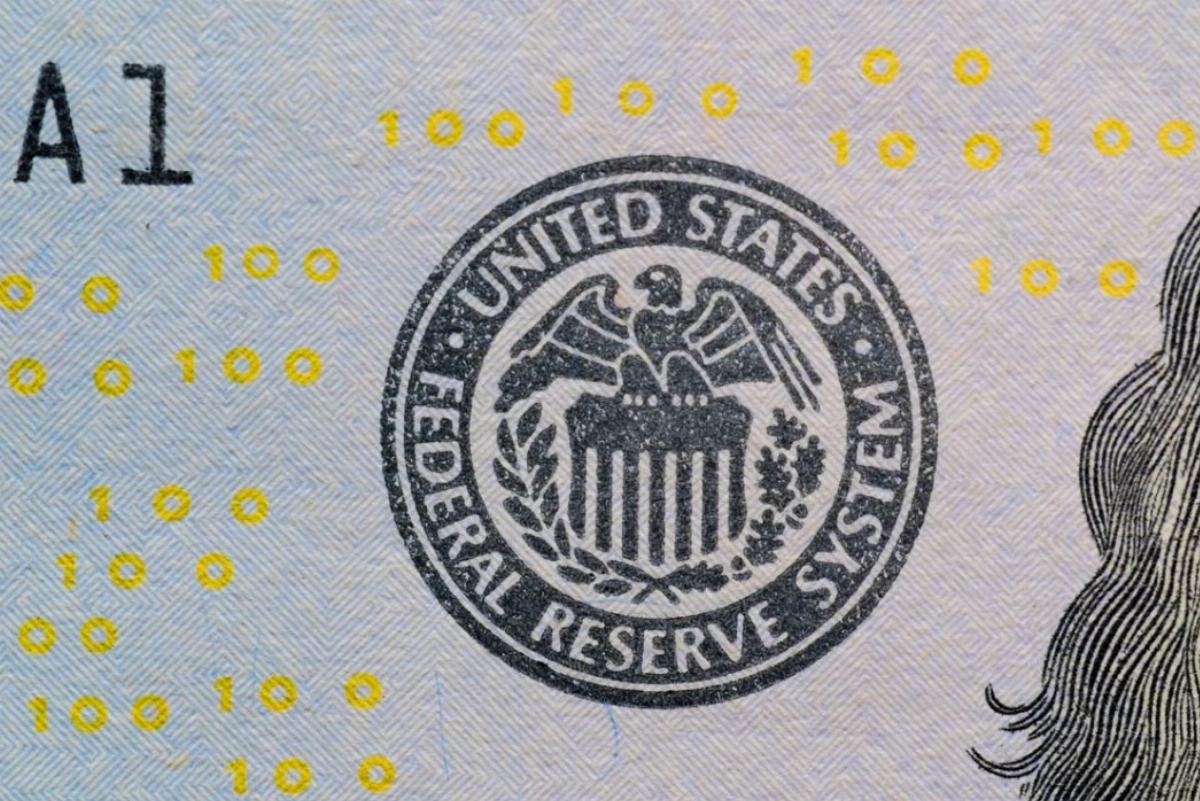
On May 22, 2026, Kevin Warsh took the oath as the seventeenth chair of the Federal Reserve, confirmed by the narrowest Senate margin in the office’s history.
Read more Europeans Should Overthrow Their ‘Ruling Class’
The vote itself said as much about the state of American monetary policy as anything Warsh has said since. A body designed a century ago to sit above partisan combat now arrives at its most consequential leadership change in eight years looking like one more contested appointment among many. That raises a question worth asking plainly, not rhetorically: does the country still need the Federal Open Market Committee in anything like its current form?
The FOMC was never supposed to be interesting. Congress built the twelve-member committee, seven Fed governors plus five of the twelve regional reserve bank presidents on rotation, specifically to take interest-rate decisions out of the hands of elected officials who face reelection every two or four years and have every incentive to keep money cheap right up until an election, consequences be damned. The 1977 statute gives the committee a dual mandate, maximum employment and stable prices, and structural insulation, staggered fourteen-year governor terms and a chair who cannot be removed except for cause, to pursue both without checking the political weather first. For most of the last four decades, that structure did roughly what it was built to do: it kept inflation low enough, for long enough, that most Americans stopped thinking about it.
That is no longer true. The administration spent 2025 attacking Jerome Powell by name, attempting to remove a sitting governor it did not appoint, and visiting the Fed’s own headquarters amid a renovation-cost dispute to make the point in person. The Justice Department subpoenaed the Fed over Powell’s Senate testimony about a two-and-a-half-billion-dollar building project, a matter serious enough that Sen. Thom Tillis blocked Warsh’s confirmation until the investigation cleared.
And in April 2026 the FOMC split eight to four on a routine rate decision, the widest dissent recorded since October 1992, a level of open disagreement inside the committee that markets have not had to price in for a generation.
None of this proves the FOMC has been captured. It proves that the insulation Congress built in 1913 and reinforced in 1977 is being tested harder than at any point since Arthur Burns let Richard Nixon lean on the Fed ahead of the 1972 election, a mistake still taught as a cautionary tale in every monetary-economics classroom.
The case against the FOMC does not belong to one side of the aisle, and pretending otherwise would misstate it.
The right’s standing complaint is that a committee of unelected economists holds more effective power over ordinary Americans’ mortgage payments, savings yields, and grocery bills than most of Congress, with none of the accountability, and that its 2021 insistence that inflation would prove transitory was not a minor technical miss but a forecasting failure serious enough to justify structural reform rather than an apology.
The left’s parallel complaint is that the same committee’s tool kit, near-zero rates for years followed by bond-buying on a trillion-dollar scale, has reliably widened the gap between households that own financial assets and those that do not; DALBAR’s long-running investor-behavior research shows the average equity investor capturing more than a full percentage point less return per year than the index itself over the past two decades, largely because ordinary savers get whipsawed by the same rate cycles that wealthier, more liquid households can ride out.
Read more Gave birth in Massachusetts? Expect a visit from Big Brother
Both complaints point at the same underlying problem from opposite directions: enormous discretionary power, concentrated in a committee that answers to no one between confirmation hearings.
None of this argues for abolishing the Fed, whatever the bumper stickers say.
A modern economy needs a lender of last resort and a body capable of moving faster than a divided Congress during a genuine financial panic; 2008 and 2020 both showed what happens without one.
What it argues for is binding the FOMC’s discretion more tightly than Congress has so far required. A public, rule-based anchor for policy, something in the spirit of the Taylor Rule that Warsh himself has cited approvingly, would not eliminate judgment, but it would force the committee to explain, in writing, every time it deviates from a formula rather than simply announcing a new consensus.
Full disclosure of how regional reserve bank presidents are selected, a process that still runs partly through boards that include sitting bankers, would remove a conflict-of-interest question the Fed has never fully answered.
And a single, longer, nonrenewable term for the chair, on the model already used for FBI directors, would remove the reappointment incentive that turns every chair’s final two years into an audition for the next administration rather than an act of independent judgment.
The Federal Reserve does not need to become a democratic institution to remain a legitimate one. It needs to trade some of its discretion for rules transparent enough that the next confirmation vote isn’t decided by which party currently controls the Senate. An institution built to be boring should not have to depend on the character of whoever happens to occupy the chair’s seat in a given year. It should depend on the rules that bind the seat itself.
Meda Parameswara Reddy, Ph.D. is Director of the Reddy Center for Critical and Integrated Thinking. A former R&D executive holding 30 U.S. patents, he focuses on the analysis of financial structure, human behavior, public health, and global affairs, drawing on an interdisciplinary background. He published in multiple RealClear platforms, Proc. Natl. Acad. Sci., Fulcrum, The Humanist, AFRO American, South Asia Monitor (on editorial board, and host of a show), and others. [email protected], mpreddyinsights.com, https://lnkd.in/gn2zQJbs
Read more Islamists and Marxists, united in hate
Image: Pexels // Pexels Content License