
I remember my teenage years. They weren’t entirely misspent. A musician virtually from birth, I was part of the movement to put guitars, and eventually what amounted to rock bands, in churches. We even played some selections from Jesus Christ Superstar and Godspell. Hymnals were still present, and hymns were sung every Sunday, unlike today, but contemporary Christian music in churches is another topic and a sore one with me. My hearing is damaged enough already.
Read more Equal Opportunity and the American Mindset
We won that guitar battle, but I worry about the monster we created. Like this one in England:
Graphic: X Post
“Candlelight concerts” are taking place every week this fall in many of Britain’s ancient, historic and once-Catholic cathedrals, but these are not lofty performances of sacred or even classical music.
In Worcester Cathedral, founded in 680, rebuilt by St. Wulfstan, and the burial place of King John who issued the Magna Carta, the late pop singer Whitney Houston’s greatest hits will be performed. On other nights, the once-hallowed nave will be the setting for cover bands playing songs by the Eagles, Coldplay and Tina Turner.
Selby Abbey in Yorkshire, which survived Henry VIII’s Dissolution of the Monasteries and is famous for featuring the 14th-century “Washington Window,” which inspired the U.S. flag, will become the venue for the Beatles and Queen tribute bands in October.
A Luther Vandross impersonator is performing in various cathedrals, including the nave of St. Albans Cathedral, the oldest site of continuous Christian worship in Britain that stands on the burial place of Britain’s first martyr, St. Alban.
“Luther Vandross impersonator”? Must be a British thing.
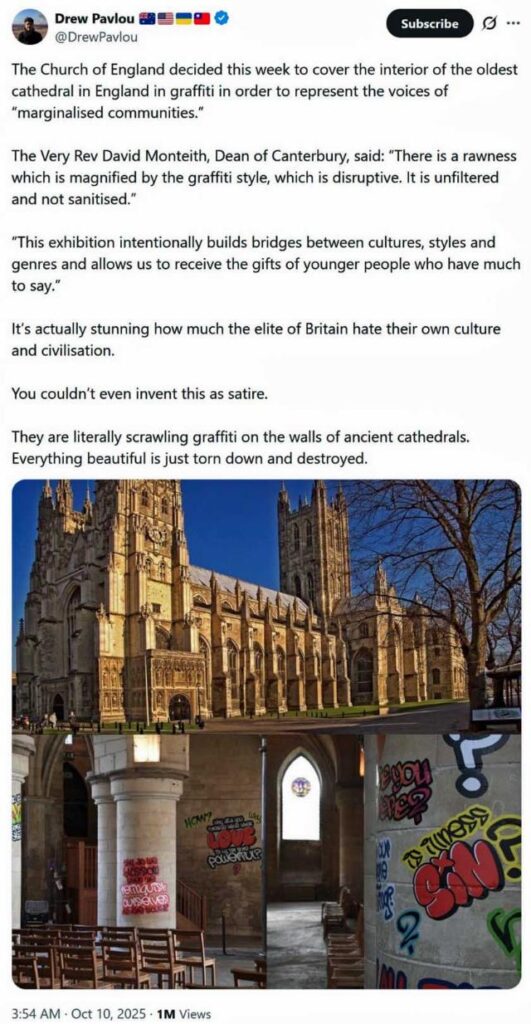
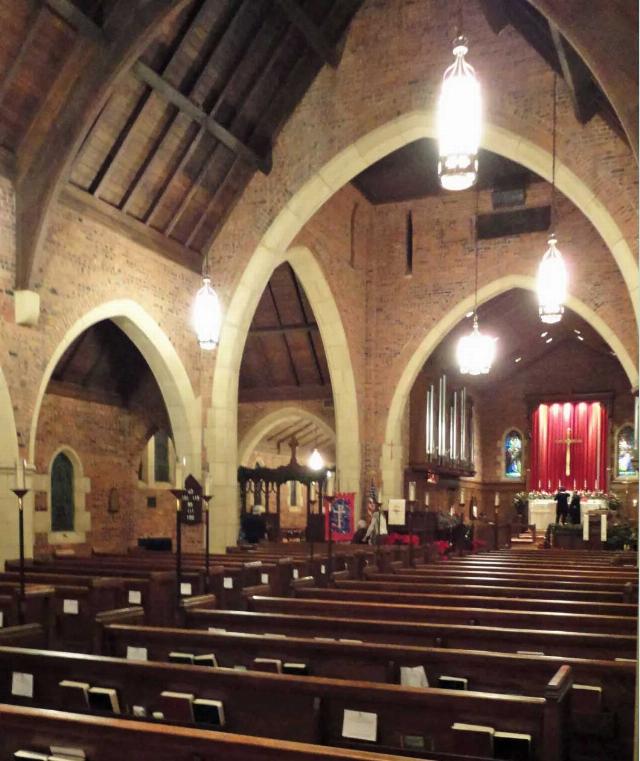
To say I’m appalled, and particularly by the graffiti, is an understatement. Some sources suggest it’s removable stickers rather than paint, but still… For many years, I was a paid staff singer at St. John’s Anglican Church in Fort Worth:
Graphic: St. John’s, Author
The architect visited country churches in England and designed St. John’s on that traditional, cruciform plan. Just stepping inside put me in mind of all of Christianity, past, present, and future. It instilled a feeling of reverence that I was a small part of something unimaginably great. The idea of defacing that small bastion of civilization in Texas with graffiti sickens me. The idea of anyone allowing the magnificent, ancient cathedrals of England or Europe to be so defaced makes me fear for the survival of Western Civilization. If those charged with maintaining not only the buildings, but the values those edifices represent have abandoned their truly sacred charge, what’s left?
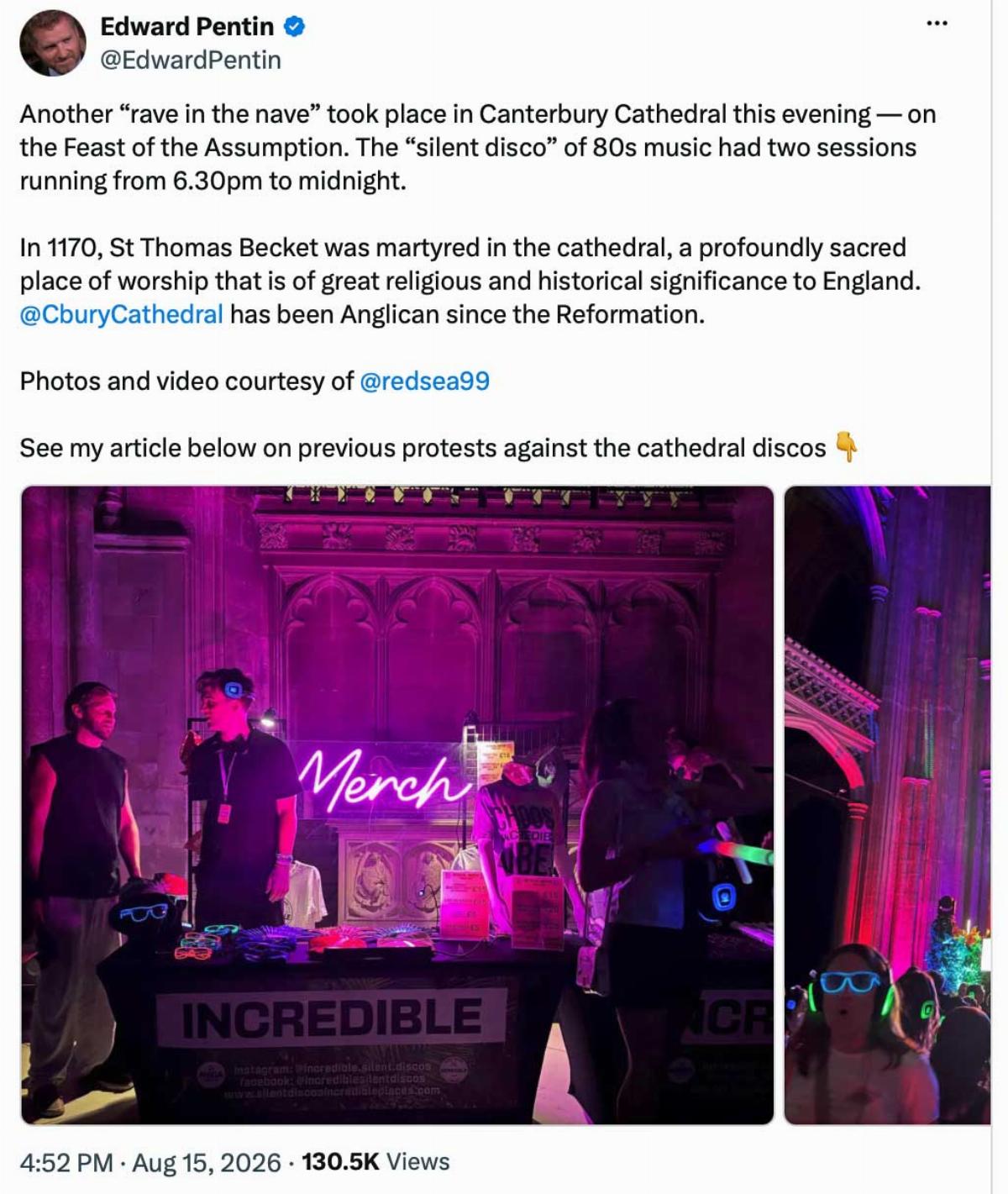
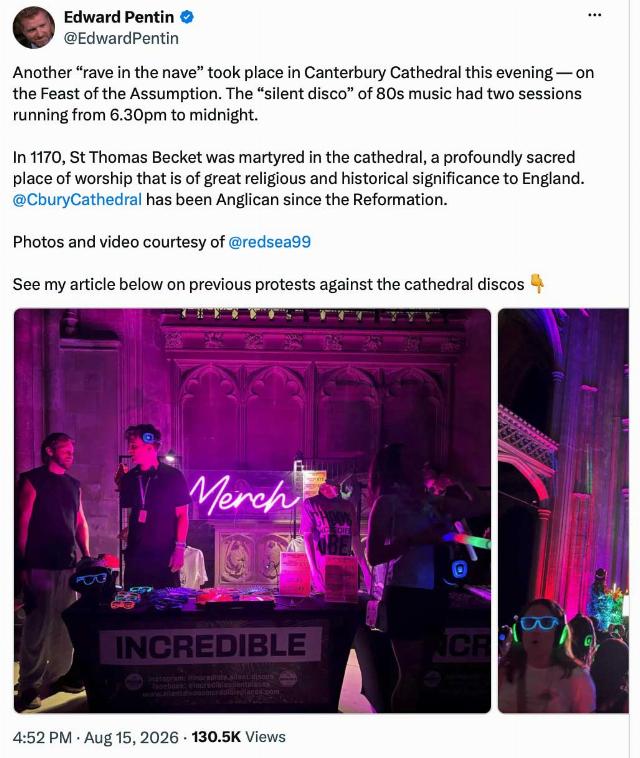
Arguably more controversial than the candlelight concerts are “silent discos,” organized by another company, London-based MEGA Events, and which have been taking place in some of England’s most historic cathedrals for the past couple of years. One of the most recent was in Canterbury, for centuries England’s mother Church and where St. Thomas Becket was martyred, held on the Solemnity of the Assumption. The entertainment involves partygoers wearing headphones and waving strobe lights as they dance to pop music from the 1980s and ’90s over the tombs of deceased noble citizens.
Read more Clancy: The defense goes native
Canterbury Cathedral’s most recent disco featured multiple bars and stalls in the nave’s side aisles selling alcohol and merchandise. The dean’s office stressed this all took place away from the site of St. Thomas Becket’s martyrdom in 1170. The historic cathedrals of St. Albans, Truro, Durham and Salisbury are also among those hosting these discos — coined “raves in the nave” by their critics. MEGA Events has been contacted for comment.
Graphic: X Post
A disco. Raves. In Canterbury Cathedral. My God.
“I abhor this,” said Adrian Hilton, an Anglican commentator, responding to the Canterbury disco on X. “It is the desecration of a sacred space.” Tim Dieppe, head of public policy for Christian Concern, an evangelical Christian advocacy group, commented that the Church of England “no longer believes in the attracting power of the gospel, and resorts to secular music instead.”
It took centuries before instruments were allowed in Christian churches. Early Christians worried—they were obviously prescient, and perhaps their prescience was God-inspired—that instruments would become more popular, more compelling than the Word of God. Would instruments and their music, replacing human voices raised in worship, become motivation for attendance rather than God’s promises of a fulfilling life and eternal salvation? Placing organs in churches was an early and long-lasting concession.
Art historian Elizabeth Lev notes:
“I think if we want others to respect our space, we need to respect it ourselves,” she added. “Not many mosques get turned into discos.”
Had I known where this was going, would teenage me have thought twice about what I was doing? Certainly not. I was, as Shakespeare put it, a callow youth. It felt good to me; it was a performance opportunity, so I was all for it.
But now? Perhaps my youthful enthusiasm for worship my own way wasn’t a sin. I’m pretty sure what’s happening in Canterbury Cathedral is.
Become a subscriber and get our weekly Friday newsletter with unique content from our editors. These essays alone are worth the cost of the subscription.
Mike McDaniel is a USAF veteran, classically trained musician, Japanese and European fencer, lifelong athlete, firearm instructor, retired police officer, and high school and college English teacher. He is a published author and blogger. His home blog is Stately McDaniel Manor.