
“We’re not going to ban speech,” George Clooney declared at the Venice Film Festival, casually swatting away questions about Mark Ruffalo. “I believe in free speech even when I completely disagree with it … I will always support Mark Ruffalo’s ability to speak freely. I like him. He’s a good man.”
Read more James Talarico’s faulty government charity
It was a masterclass in moral evasion masquerading as high-minded principle. Notice the rhetorical conjuring trick: Clooney didn’t actually condemn or even name what Ruffalo said. He merely offered an abstract platitude about defending speech he supposedly disagrees with, reducing a toxic boundary violation to a benign difference of opinion.
Nobody asked Clooney if Ruffalo should be jailed, silenced by statute, or stripped of his constitutional rights. The state was not knocking at the door. The controversy had nothing to do with whether Ruffalo has the legal right to speak; it was about whether what he said was conspiratorial, bigoted, and fundamentally unacceptable.
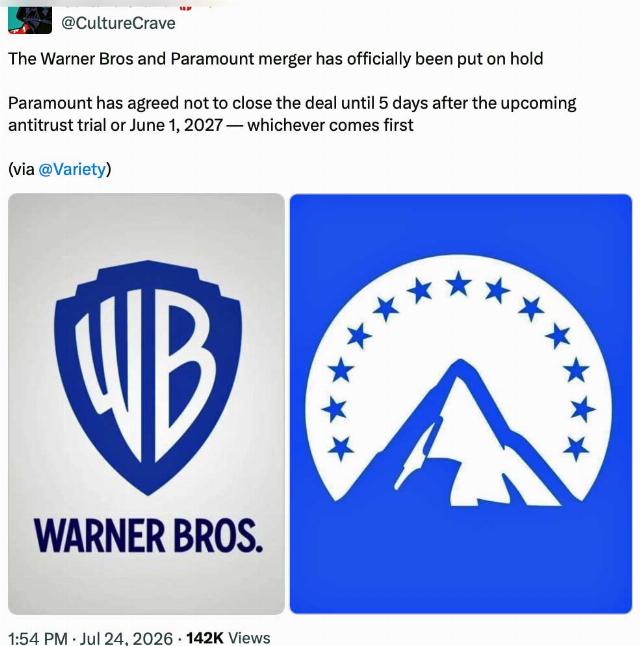
Graphic: X Post
For years, Ruffalo has treated Israel not with standard policy criticism, but with a singular, context-stripping obsession. His latest crusade — targeting the proposed Paramount–Skydance merger by singling out the Ellison family and board member Safra Catz, tying corporate transactions directly to alleged Israeli war crimes — crossed cleanly from legitimate geopolitical debate into ancient tropes of sinister, shadowy control.
By retreating to the truism of the First Amendment, Clooney pulled off a cheap deflection. He took an urgent question of moral accountability — Do you repudiate this rhetoric? — and swapped it for a trivial legal distraction: Is he legally allowed to utter it?
This is the free speech straw man, and it has become the default sanctuary for cultural and political elites terrified of policing their own side.
Free speech absolutism is vital when restraining state power. The Foundation for Individual Rights and Expression (FIRE) does essential work shielding citizens and scholars from administrative censorship. But prominent civil libertarians, including their CEO Greg Lukianoff, make a grave mistake when they stretch that legal shield into social life, reflexively branding any organized reputational consequence or social shunning as “cancel culture.” Organizing to hold someone morally and reputationally accountable is not censorship; it is the fundamental exercise of free association and free speech.
When the ACLU defended the right of neo-Nazis to march in Skokie in 1977, they upheld a vital constitutional boundary against municipal tyranny. Crucially, they didn’t brush off the marchers by calling them “good men” or treat swastikas as an intellectual puzzle to be politely debated. They recognized that while the state could not ban the assembly, civil society retained the inescapable duty to denounce, shame, and isolate the hate itself. Legal tolerance was matched by unequivocal cultural repudiation.
A toxic confusion takes over when First Amendment doctrine is treated as social immunity. The Constitution guarantees that you will not go to prison for what you say; it does not guarantee you an audience, a pass from your peers, or insulation from disgust.
In public discourse, prejudice rarely enters announcing its own malice. It arrives wrapped in activist slogans or populist outrage. When an influential figure crosses the line into conspiratorial demonization, they are testing the cultural perimeter. If their friends look away, that perimeter expands.
When Clooney dismisses Ruffalo’s rhetoric with a wave of his hand, he constructs a permission structure. He tells millions of people that a celebrity can traffic in dangerous tropes with zero reputational downside. You will keep your status, your box-office appeal, and your high-profile dinner invitations. And once an icon establishes that precedent, the next person pushes the line further.
This cowardice is a bilateral disease. On the progressive left, commentators like Hasan Piker have spent years blurring the lines between regional advocacy and the platforming of radical extremists and conspiratorial antisemitism, while allies like Abdul El-Sayed — and by extension mainstream Democratic leaders — look away to avoid alienating an energized online mob. On the right, Tucker Carlson uses his massive platform to mainstream Holocaust revisionists, while figures like JD Vance dodge condemnation by mumbling about “independent thought” and “cancel culture.”
The mechanism is identical: Tribal loyalty eclipses moral duty. Leaders refuse to enforce guardrails against their own friends out of terror that conceding an inch will give a win to their political adversaries.
Yet external outrage from political enemies never works. A right-wing host wears progressive condemnation as a badge of honor; a left-wing celebrity dismisses conservative critiques as bad-faith posturing. Deterrence works only when it is intra-tribal. Consequences only sting when they come from peers, collaborators, and trusted friends — the people whose respect the speaker values.
Holding someone accountable does not require permanent social death. A healthy society must preserve grace, proportionate consequences, and an open door for redemption when an offender demonstrates genuine remorse. But that door only opens after the boundary is enforced, not while the offense is being excused.
Historically, sustaining our civic fabric depended on precisely this courage. William F. Buckley Jr. famously excised the conspiratorial, antisemitic John Birch Society from the conservative movement. Bill Clinton took the stage at Jesse Jackson’s 1992 event to directly rebuke Sister Souljah for extremist, racially violent rhetoric. They understood that coalitions require clean moral boundaries.
Today, cultural icons like Clooney readily step into the public square as political kingmakers, penning op-eds and steering party politics. When you claim that mantle of cultural leadership, you become an institutional gatekeeper. And because cultural elites cannot be voted out of office, the public obligation to hold them accountable is even higher.
We shouldn’t hold our breath expecting Hollywood celebrities to display spontaneous moral courage. But we cannot let them sanitize hate — and we certainly cannot let them gaslight us with the free speech straw man. When public figures cross moral taboos, their friends don’t get to pass the buck to the Constitution. They have a duty to draw the line.
Erez Levin is an advertising technologist trying to affect big pro-social changes in that industry and the world at large, currently focused on restoring society’s essential moral taboos against overt, hateful bigotry. He writes on this topic at elevin11.substack.com.
Read more ICE: Foreign-born judges show us what they mean by ‘giving back to the community’
Copyright ©2026 Algemeiner.com. All Rights Reserved.