
In June 1788, when New Hampshire became the ninth state to ratify the Constitution, America was born. In 1789, its entire payroll reportedly fit on a single ledger page, consisting mainly of customs officers, marshals, postmasters, and clerks. By 1800, the federal civilian workforce had grown to 125 people. By 1901, it had reached 231,000, including the Post Office. Today, the federal civilian workforce numbers approximately 2.7 million. Add another 1.7 to 2 million contractual employees, and the number is around 4.5 million—and this doesn’t count anyone in uniform. Next, count those in state and local government: another 20 million Americans! For perspective, there are only about 100–103 million full-time private-sector workers and 25 million people employed directly or indirectly by government; in round numbers, that translates into one out of every five Americans working for government. That imbalance is economically indefensible.
Read more Republicans should love Jasmine Crockett
The size of the government workforce is only the first part of the story. Working for the government is often considerably more lucrative than working in the private sector. Federal employees receive significantly more total compensation than comparable private-sector workers, particularly those without a college degree. The average federal salary is an astounding $112,000. Add benefits, and total compensation rises to $150,000–$175,000. Federal employees work 210–225 days a year, compared with 235–245 days in the private sector. They receive heavily subsidized health insurance, a defined-benefit pension, and job security that is nearly impossible to match. State and local employees generally enjoy a similar advantage. Private-sector workers remain exposed to layoffs, changing market conditions, rising health care costs, and the possibility that their employer simply decides their position is no longer necessary. Government employment operates under a different set of rules, a consequence of a lack of a profit motive. Those rules matter because government compensation ultimately has to be financed by the productive economy—through taxation, borrowing, or inflation. When government spending grows faster than the supply of goods and services, prices rise because the government is injecting more money into the economy than the economy can absorb.
The difference becomes even more apparent over the course of a career. A federal employee under the General Schedule receives within-grade increases simply by staying around. Those increases occur at predetermined intervals, in addition to annual and locality pay adjustments. Most state and local governments have similar arrangements. Private employers frequently reward experience, but they decide whether the additional cost is justified. Government compensation systems make these decisions automatically, treating pay increases as entitlements rather than cost‑benefit judgments. A government employee can accumulate compensation advantages simply by being a warm body. The private employee often has to change employers, negotiate, or demonstrate increased value to obtain a comparable increase.
Government employees typically receive more paid time off through holidays, sick leave, vacation, parental leave, and administrative leave. Many state and local employees also work fewer hours than the conventional 40‑hour private‑sector week, some as few as 32 hours. This does not mean every government employee is lazy. There are dedicated public servants whose work is difficult and/or essential. The issue is the structure. If an employee receives full-time compensation while working substantially fewer hours, the effective cost of that labor is higher. If an agency employs more people than it needs, costs expand commensurately. That cost eventually shows up in taxes, borrowing, reduced public investment, or slower economic growth for our country. And sometimes the consequences are more serious than an inefficient budget.
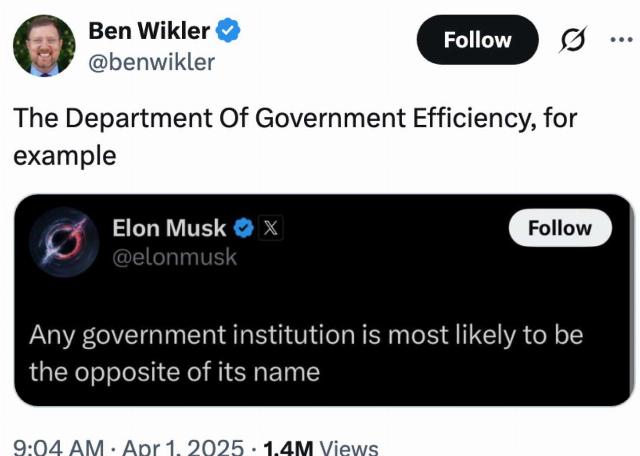
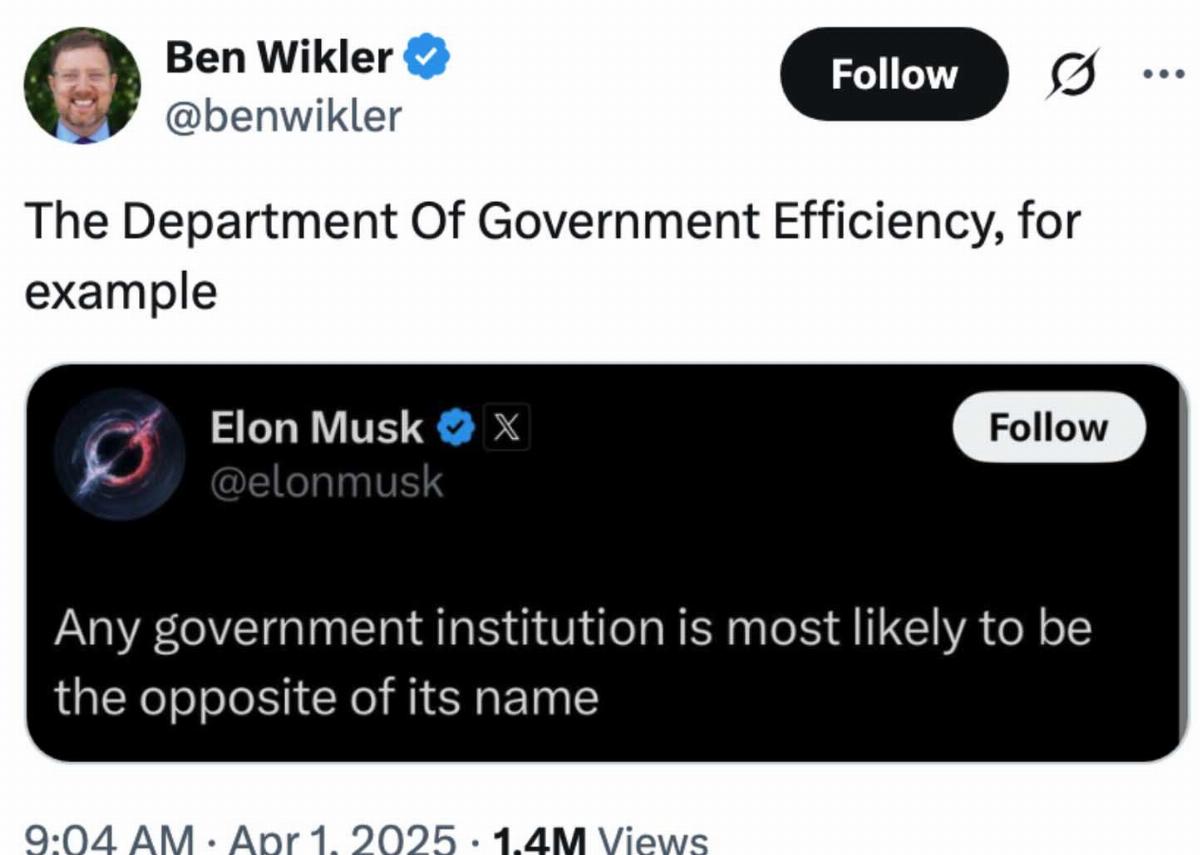
Graphic: X Post
In March 2026, an Air Canada Express jet landing at LaGuardia collided with a fire truck that had been cleared to cross the runway, killing both pilots and injuring dozens. The subsequent investigation revealed that two air traffic controllers had left work without permission about an hour early, a practice the FAA characterized as systematic time‑clock fraud. Their departure contributed to understaffing at a critical moment, leaving one controller to manage multiple responsibilities during an emergency. Air traffic control depends upon trained people being where they are supposed to be when they are supposed to be there. The LaGuardia accident demonstrates what happens when staffing, work schedules, or accountability don’t rise to what the public assumes it is paying for. Sometimes government inefficiency is measured in lives.
Government is no longer simply an institution Americans entrust to perform certain functions; it has become an enormous self-serving economic ecosystem. Every new program creates new positions. Every expansion of government creates permanent new spending, leading beneficiaries to acquire a direct economic interest in preserving the system that benefits them. Allowing government employees, either directly or through unions or dedicated PACs, to make campaign contributions or provide in-kind services creates an incestuous relationship between government employees and their elected leaders, leading to indefensible loyalties.
Read more The promise Trump still has to keep
That does not require corruption; it reflects ordinary human proclivities. A government employee prefers continued government employment, while a contractor dependent upon federal contracts opposes cuts. An organization receiving government grants defends the program providing them. Every expansion of government creates another constituency interested in maintaining it. This helps explain why government grows more easily than it contracts, as employees know they’re unlikely to find similarly lucrative employment in the private sector. Over time, government consumes an ever larger share of the pie, creating the yoke.
The government of 1789 could fit on a ledger page. Today’s government employs or financially supports tens of millions of people. That transformation did not occur overnight; it grew incrementally. One program, one agency, one new benefit, one more layer of administration was never seen in its totality; it was just too easy to add them, never looking back. The obvious answer: Zero‑based budgeting. Frightening to government leaders because it would reveal waste and inefficiency they would be forced to address.
Eventually we wound up with 25 million government employees, millions more dependent upon government contracts, and an enormous system whose beneficiaries have a manifest interest in preserving it. The yoke was built slowly, by people who believed they were doing good. But a burden is no lighter just because it was created with good intentions. The weight of that yoke is felt not in Washington but by the citizens who fund it and suffer the other losses that an inefficient government inevitably imparts. If Americans want a freer and more prosperous future, they will have to confront a difficult reality: reducing government means changing the incentives of millions who now depend upon it. Before we can throw off the yoke, we must recognize how heavy it has become and accept the necessity to address it. Otherwise, government—and those who feed off it—slowly but inevitably become our masters.
Author, Businessman, Thinker, and Strategist. Read more about Allan, his background, and his ideas to create a better tomorrow at 1plus1equals2.com.
Read more School officials in Detroit will pay even more kids thousands of dollars to attend school