
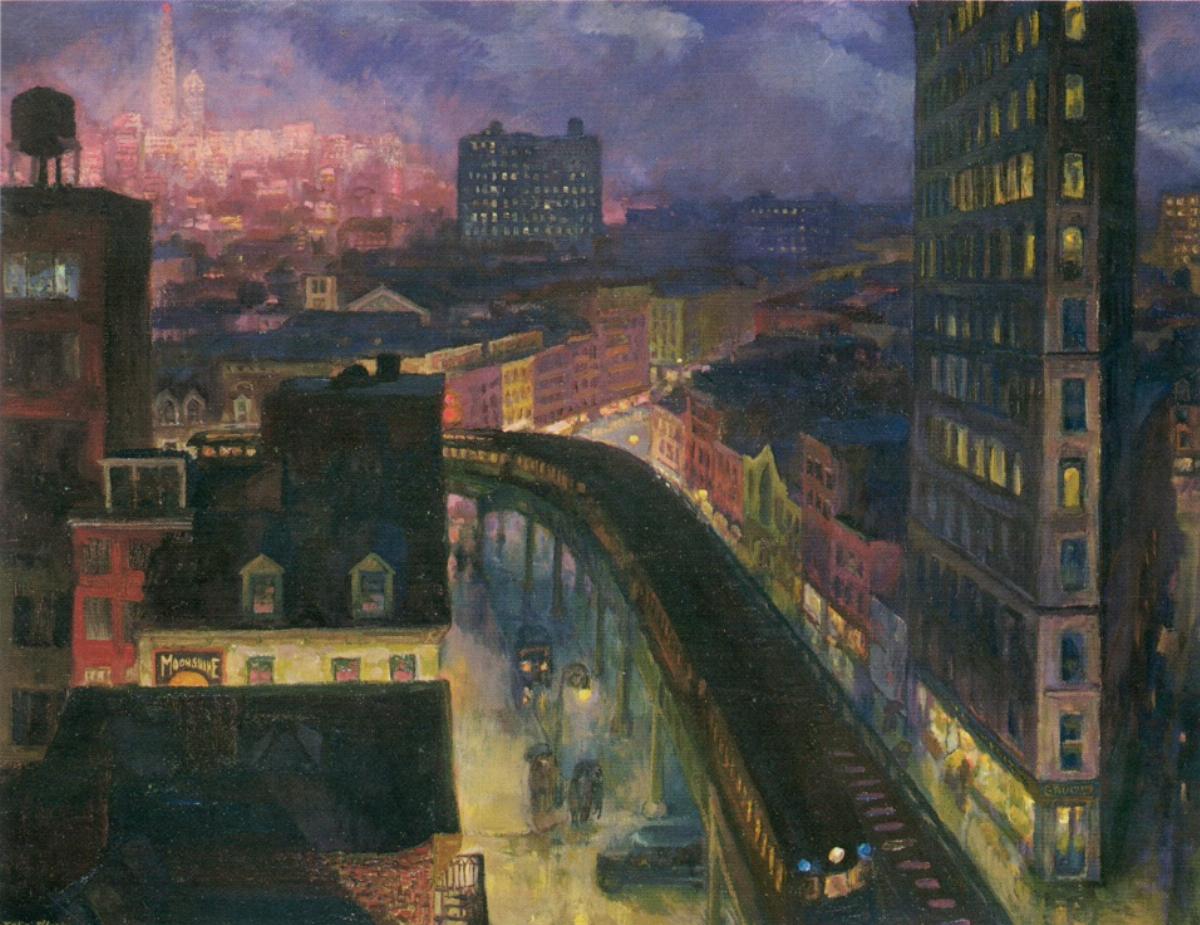
The ideal of a democratic polity rests upon a fragile consensus: that citizens will, by and large, restrain immediate appetite in favor of reciprocal forbearance, that private property will be treated as more than a provisional convenience, and that elected officials will refuse to dignify predation as justice. While rule of law and a free press are necessary conditions for such restraint, they are not sufficient.
Read more So Much Evil! Still Don’t Believe in the Devil?
Civil society’s everyday virtues — queueing, mutual non-interference, the tacit assumption that shops will open tomorrow — are routinely taken as natural rather than as hard-won and easily eroded. Within Western societies, there persist subcultures that treat institutions as resources to be harvested while simultaneously scorning the normative order those institutions sustain. When elected representatives cynically pander to these attitudes, they accelerate the corrosion.
In August 2026, New York State Assemblywoman Emily Gallagher, a democratic socialist from Brooklyn, offered a textbook illustration. After her group monitored 360 arraignments over four days outside a Manhattan courthouse, she declared that more than half the cases were low-level misdemeanors and that the theft of soap and toothpaste constituted a “crime of poverty” driven by “biological need.” Society, she insisted, should not prioritize the protection of billion-dollar pharmacy chains over the survival of the destitute; diversion into treatment rather than prosecution was the proper response.
Gallagher’s remarks spread rapidly. Legal analysts observed that poverty may explain theft without licensing it. Retail observers noted the practical consequence: chains already lock everyday goods behind plastic barriers or close stores altogether. Organized rings, not starving individuals, account for a substantial share of contemporary retail loss. Gallagher’s framing nevertheless supplied moral cover for an attitude that is simultaneously parasitic — living off the residual productivity of others — and hostile to the very legal order that makes residual productivity possible.
Gallagher’s attitude — apparently naive and out of touch with reality, if not simply anti-Western and terrorist — did not arise ex nihilo. Classical anarchist and Marxist texts already supplied the conceptual architecture. Pierre-Joseph Proudhon’s 1840 declaration that “property is theft” inverted the moral polarity: the owner who extracts surplus without labor is the true robber; the poor who seize goods merely reclaim what was unjustly withheld. Karl Marx’s 1842 articles on the Prussian wood-theft laws performed a parallel operation, portraying the criminalization of customary gathering rights as class legislation that transformed traditional use into felony.
Later illegalists — Ravachol, the Bonnot Gang — translated the doctrine into practice, treating burglary and expropriation as individual reappropriation rather than crime. In each case, the existing distribution of property is treated as presumptively illegitimate; therefore, the act of taking is corrective rather than predatory.
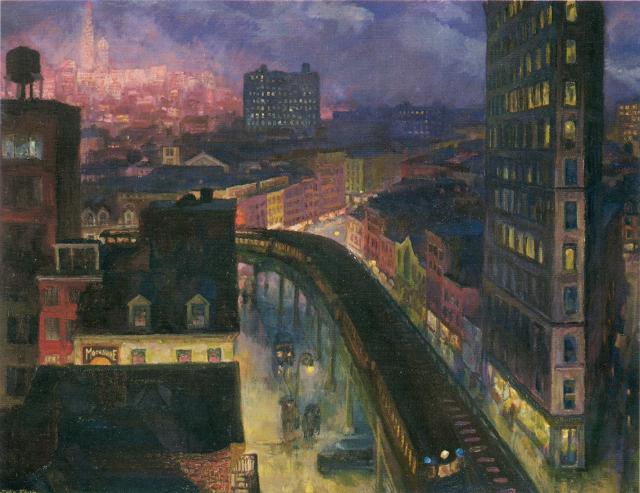
The practical test of such repertoires arrives when ordinary deterrents momentarily weaken. Historical blackouts supply one revealing data set. The 1965 Northeast outage and the far larger 2003 blackout — affecting fifty million people — produced low crime rates, mutual aid, and spontaneous traffic direction. Arrests in New York actually fell relative to ordinary summer nights. These episodes demonstrate that darkness alone does not dissolve restraint. The 1977 New York blackout remains the salient exception: occurring amid severe economic distress, high unemployment, and the “Summer of Sam” panic, it triggered widespread looting and arson, and more than three thousand arrests.
Read more My Christmas with Dolly: A Love Story
Sociologists of disaster emphasize that pre-existing social conditions — economic desperation, eroded legitimacy, ambient unrest — determine whether the temporary absence of light and formal control yields cooperation or predation. “Elite panic” often overestimates the threat; the public more frequently defaults to altruism. Yet the 1977 case shows that when the surrounding fabric is already frayed, the same absence can license predation.
A more recent and larger-scale demonstration occurred during the civil unrest that followed George Floyd’s death in late May and June 2020. While protests were insistently characterized as “peaceful,” a nihilistic fraction produced the costliest civil disorder in modern American history: insured losses of one to two billion dollars, exceeding the 1992 Los Angeles riots. In Minneapolis-St. Paul alone, more than 1,300 buildings were damaged or burned, with a five-mile stretch of Lake Street especially devastated. Looting and arson spread to high-value commercial corridors in at least 140 cities. Commercial burglaries in major cities roughly doubled in the first week of June before collapsing once curfews and National Guard deployments restored a measure of deterrence.
Opportunistic actors and organized rings exploited the temporary withdrawal of police resources — whether from overwhelmed capacity or deliberate pullback — to conduct rapid smash-and-grab operations. Concurrently, homicide rates in major cities rose more than fifty percent relative to 2019, while clearance rates for violent crime declined. Criminologists debate the precise causal weights of legitimacy loss versus de-policing, yet the temporal correlation is difficult to dismiss: when formal restraint thins, both property and personal violence can expand rapidly among those already disposed to treat the law as optional.
Those recent episodes of institutional collapse illuminate the deeper point. Civil society’s everyday order is not self-maintaining. It depends upon a critical mass of citizens who internalize restraint even when immediate detection is improbable, and upon office-holders who refuse to supply ideological alibis for those who do not. Subcultures that simultaneously draw upon the material surplus generated by productive institutions and profess hostility to the normative order sustaining those institutions are parasitic in the precise sense: they consume without reciprocal contribution and actively corrode the conditions of their own subsistence.
When legislators of Gallagher’s stripe translate that corrosion into official rhetoric — perversely recasting low-level theft as biological necessity and corporate property as presumptively illegitimate — they perform a dual disservice. They weaken the deterrent signal sent to potential offenders, and they signal to the broader public that the legal protection of ordinary commerce is negotiable. The resulting equilibrium is unstable. Retailers respond with barriers, reduced hours, or exit; residual law-abiding residents confront a landscape of inconvenience and elevated risk; opportunistic actors update their expectations of enforcement probability downwards.
Modern Western cities concentrate both extreme wealth and extreme deprivation, amplify grievance through instantaneous digital media, and house political entrepreneurs ready to convert grievance into electoral capital. Blackouts and riots merely render visible dynamics that operate, more quietly, under normal illumination. The 2003 blackout’s relative calm and the 1977 exception both confirm that social context, not the mere absence of light, governs outcomes. The 2020 data confirm that when police presence is strained, and ideological justification for property seizure is already circulating, commercial districts can be stripped with remarkable speed. Gallagher’s intervention belongs to the same continuum: an official endorsement of the claim that certain forms of theft are not truly theft.
In a polity that still aspires to democratic legitimacy and the rule of law, anarchistic-style and morally irresponsible endorsements are not merely imprudent; they are corrosive of the minimal mutual forbearance without which free institutions cannot endure. The lights need not go out for the fragility to become apparent; it is already measurable in the locked toothpaste aisle and the boarded storefront.
Read more Did the Blue Angels Get a Good Deal?
Image: John Sloan