
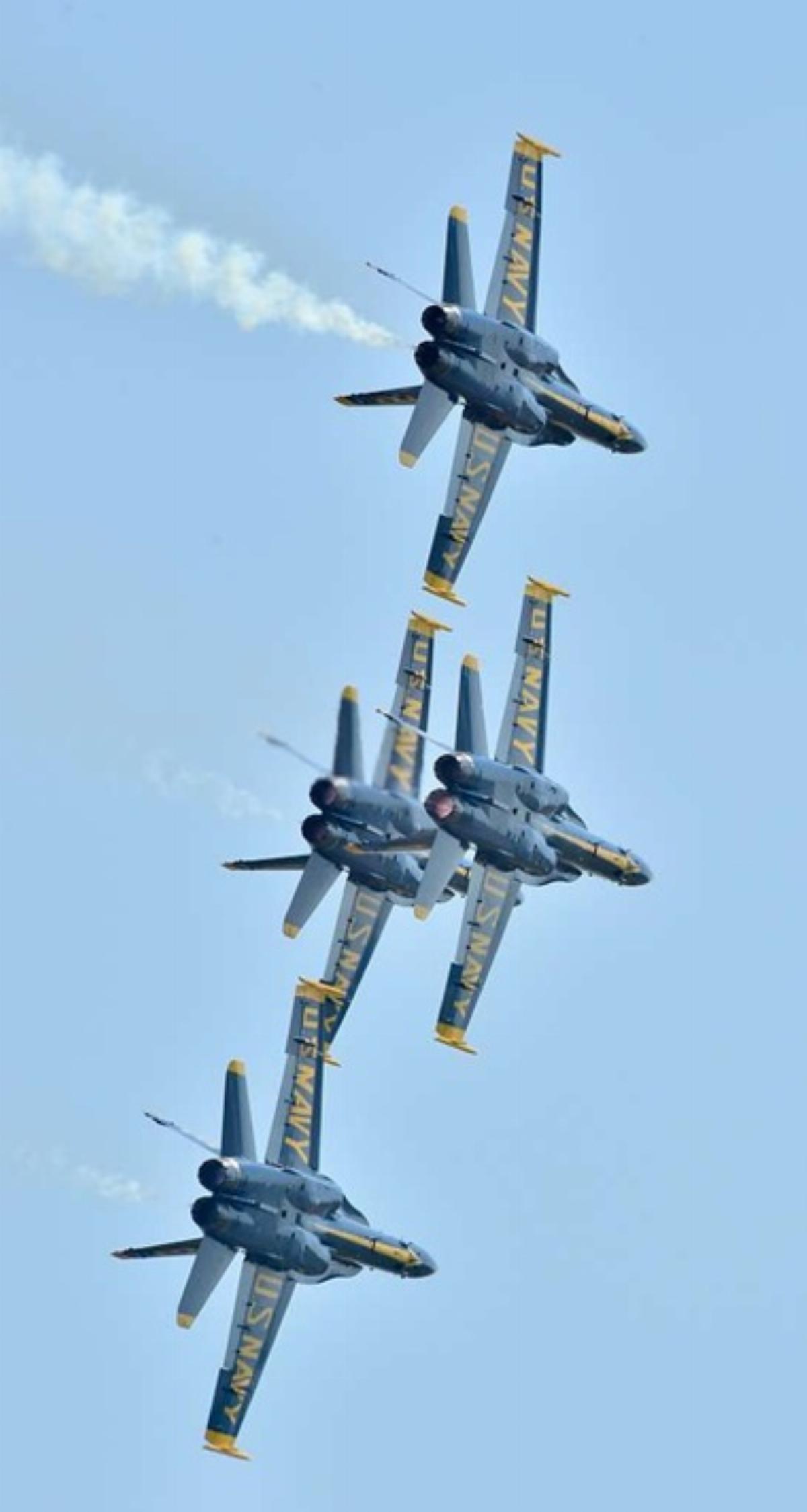
The Navy has “suddenly” dropped a long-time vendor, The Sewing Box, for the Blue Angels’ distinctive uniforms, ending a 43-year relationship. Announced on May 14, 2026, the new contractor is Aquila International LLC. Some claim the new contract price is more than double the nearly $700,000 paid to The Sewing Box since 2008, so it’s supposedly a bad deal. If that is not enough, The Sewing Box is black-owned. Oh, the humanity!
Read more Science is not the ultimate authority
But was it sudden? No. Is it a bad deal? No. The people who write this stuff know little about federal contracting. The Navy did not take sudden action. The numbers cited are accurate, but are apples and oranges. A bit of analysis shows that.
According to USAspending, The Sewing Box, doing business as Jellie B The Sewing Box LLC, performed this work since 2014. The firm did work earlier, but the Commerce Business Daily and FedBizOpps are no longer available, so it’s not possible to review their earlier work. In any event, the company performed 14 jobs in those 12 years. All were purchase orders (PO). The feds use POs for simple acquisitions, typically for off-the-shelf items. Contracts are for more complex work. Eight had very short periods of performance (POP); some only one day. The vendor provided products it already had in stock. Starting in 2017 the POs had a one-year POP. The scope was for fitting and delivering ceremonial flight suits.
Despite prior justifications for awarding the work sole-source to The Sewing Box, this was a full and open competition. The Navy confirmed this in the request for quotation (RFQ). Asked during the proposal phase questions and answers period if there was an incumbent, the Navy replied: “This is a new and distinct requirement. While a previous contract (N6883625PS106) existed for similar items, it was on a much smaller scale. The current solicitation features a more comprehensive scope along with new terms and conditions.”
The RFQ bears this out. For example, it contains two tables specifying spectral reflectance for wavelengths between 600 and 860 nanometers. It also has very strict criteria for custom-fitting uniforms for each team member. It seems the Blue Angels are looking for substantial appearance improvements over their older uniforms.
The feds have not published complete pricing details for all The Sewing Box’s POs. But some information is available to let us compare cost per uniform:
• In 2016, 88 uniforms, $644.77 each
• In 2021, 88 uniforms, $827.27 each
• In 2025, 129 uniforms, $982.56 each
Unlike the POs, the Aquila award has a five-year POP, valued at $1,691,506.40, for up to 1,700 uniforms. That is 340 uniforms per year, priced at $995 each, just $12.44 more than The Sewing Box’s final quote. They must be manufactured to much tighter requirements, with travel to Naval Air Station El Centro CA, required. It is an indefinite delivery/indefinite quantity (IDIQ) contract. The Navy is therefore not obligated to purchase all 1,700 uniforms. The work is firm fixed price (FFP). In FFP, by law, the contractor must meet all requirements regardless of cost. All financial risk is on the contractor. Considering the expanded scope, this looks like a pretty good deal. The journalists’ claims that this is a higher cost for the same work are unfounded.
Read more OpenAI reports disturbing behavior from AI agents
On January 26, 2026, the Navy announced that it would hold an industry day on February 13, 2026. The announcement included a draft solicitation and invited comments. It provided questions for prospective bidders to answer. It also required bidders to show their qualifications to do the work. The industry day took place as scheduled. The Navy surely spent many months preparing for it.
Anyone can submit a proposal during a full and open competition. It is extremely competitive. To win, a bidder must submit a winning proposal, conforming to all RFQ requirements. The government source selection team evaluates each proposal against specific scoring criteria written into the RFQ. Evaluators are not allowed to examine proposals side by side. They evaluate each in turn; the sequence is randomly determined. Then, the proposals are “racked and stacked” based on their scores, to choose the winner.
Though required by law, the source selection game is not popular with either side. The feds spend months building the solicitation. Good proposals are hard to write. Contractors often spend a year or more on their own nickel preparing for the big ones. Then the feds must evaluate the proposals they receive. Once, as we were evaluating the first proposal, I recall the source selection team chief saying in a voice of doom, “Remember — this could be the best one.” On the contractor side, I have attended win parties and suffered when we lost. Capitalism in action. After award, the feds sometimes receive the dreaded protest. Contractor pricing is subject to Defense Contracting Audit Agency review.
Did The Sewing Box submit a proposal? From the owner’s interview, it seems they did not. Her disappointment is understandable. But in full and open competition, the government must be very careful to avoid any appearance of favoritism. Doing so gives bidders grounds for a protest. Contractors must watch government acquisition activities. She had to find the RFQ on her own. After so many years of sole-source tasking, it is not surprising that she was unaware of a new solicitation. I sympathize. But nowhere is it written that an incumbent is guaranteed the next job. There’s a word in industry for incumbents who become complacent, thinking they are a shoo-in for the next contract: “incumbentitis.” I have seen it.
Good luck to The Sewing Box, Aquila, and the Blue Angels.
Julius Sanks is a retired program manager with extensive experience writing and evaluating competitive proposals for federal contracts
Read more The Democrat/DSA court-packing litmus test
Image: U.S. Navy