
It seems that we’ve got another hoax on our hands, this one involving the Strait of Hormuz.
Read more Your next blue city DSA mayor?
Using AI, somebody went to the effort of creating an elaborate series of images with an accompanying storyline to claim that Donald Trump, through the U.S. Navy, along with otherwise unidentified parties in construction and marine engineering, had succeeded in bypassing Iranian attempts to block the strait to oil shipments.
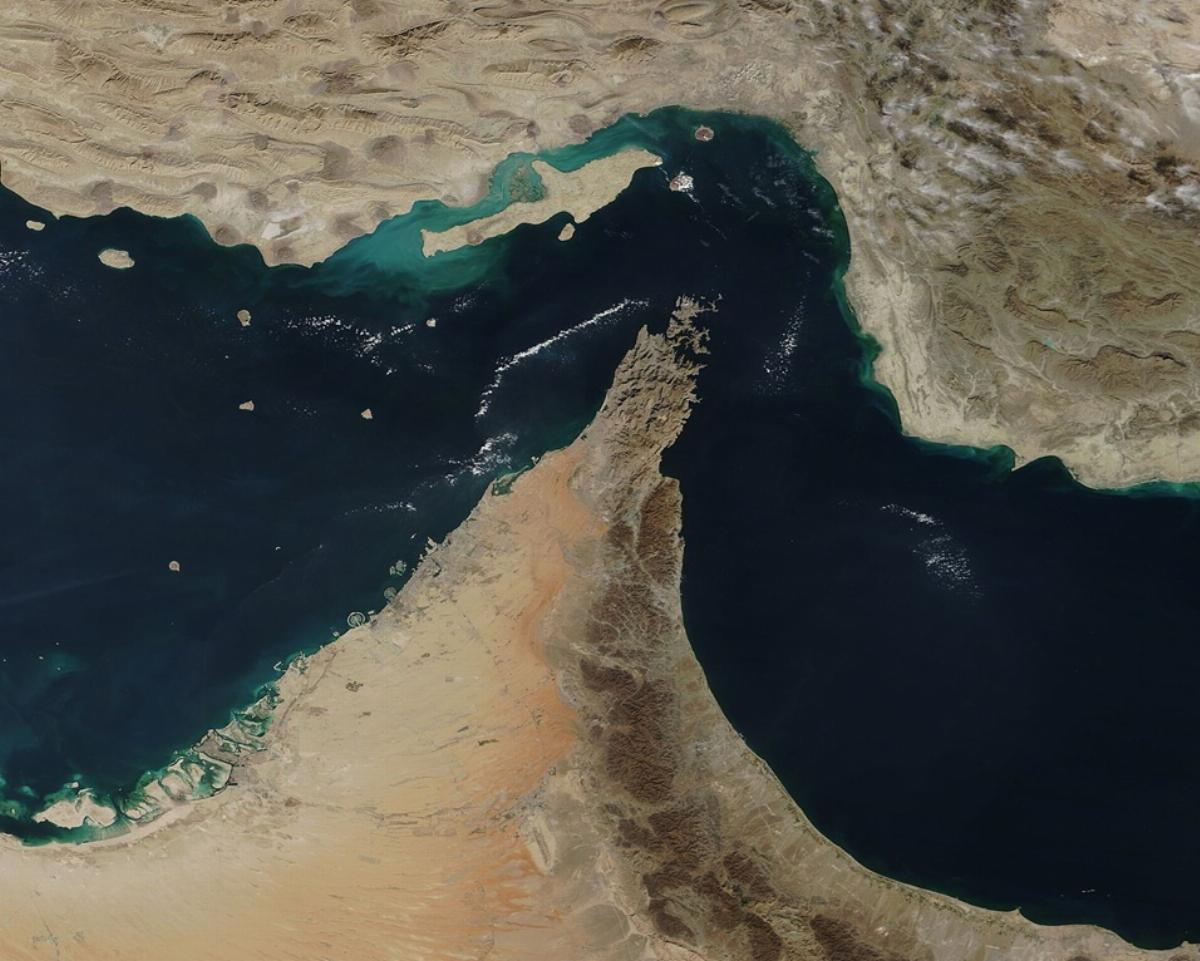
There exists a long, narrow, and rather convoluted peninsula jutting into the west side of the strait from Oman. The story claims the Navy “dredged’ a passage at the narrowest part of the peninsula, opening up a gap wide enough to allow tankers to cruise through. Visibility from strait’s east side, the side controlled by Iran, is blocked by high ground at the end of the peninsula. (Reports have called it an “island,” but it’s actually not – it’s attached to the mainland.) The passage is also far enough from Iran that the curvature of the earth prevents direct observation.
So now, tankers can slip past the strait’s narrowest point under the guns of the IRGC without Iran having any idea that they’re around or any opportunity to do anything about it.
It’s an elegant idea, clever, effective, exactly what you’d expect from Donald Trump. It should have been done long ago. The Gulf States, with their vast oil holdings, can certainly afford it. It’s something they should keep in mind for the future.
Read more The Iran War And The Problem Of Victory
Because, as of now, it doesn’t exist.
To start, there are a few things wrong with the story. You don’t “dredge” dry land. That’s something you do with a harbor or river that’s already underwater. Working on dry land, you need to dig, and, more than likely, you need to blast. It’s lengthy, tough, and intensive work, not something that can be pulled off in a few months, as is the claim here.
One picture of the “canal” with a tanker allegedly passing through shows the new gap in the peninsula as extremely wide. Comparing it to the length of the tanker suggests that it’s a half-mile or more. This is serious overkill for a project of this kind. If you’re making a basic passage for a tanker-sized ship, which run at about a 200-foot width, you need a passage a little over a hundred yards wide. The key metric for tankers is depth, with Very Large Crude Carriers (VLCCs) running at 65 to 70 feet deep.
As for the “out of sight of Iran” claim – God made drones, didn’t he?
This story hit at just the right time and has been featured on a number of sites and video channels, among them Bennie Johnson’s. You can’t blame ‘em – they’re in the business of passing on great stories, and this is a great story. But it’s not a true story.
Things aren’t always what they seem, and that’s getting to be more and more the case as time goes by. Fair warning to all.
Read more Stars and Stripes: who’s the boss?
Image: NASA