
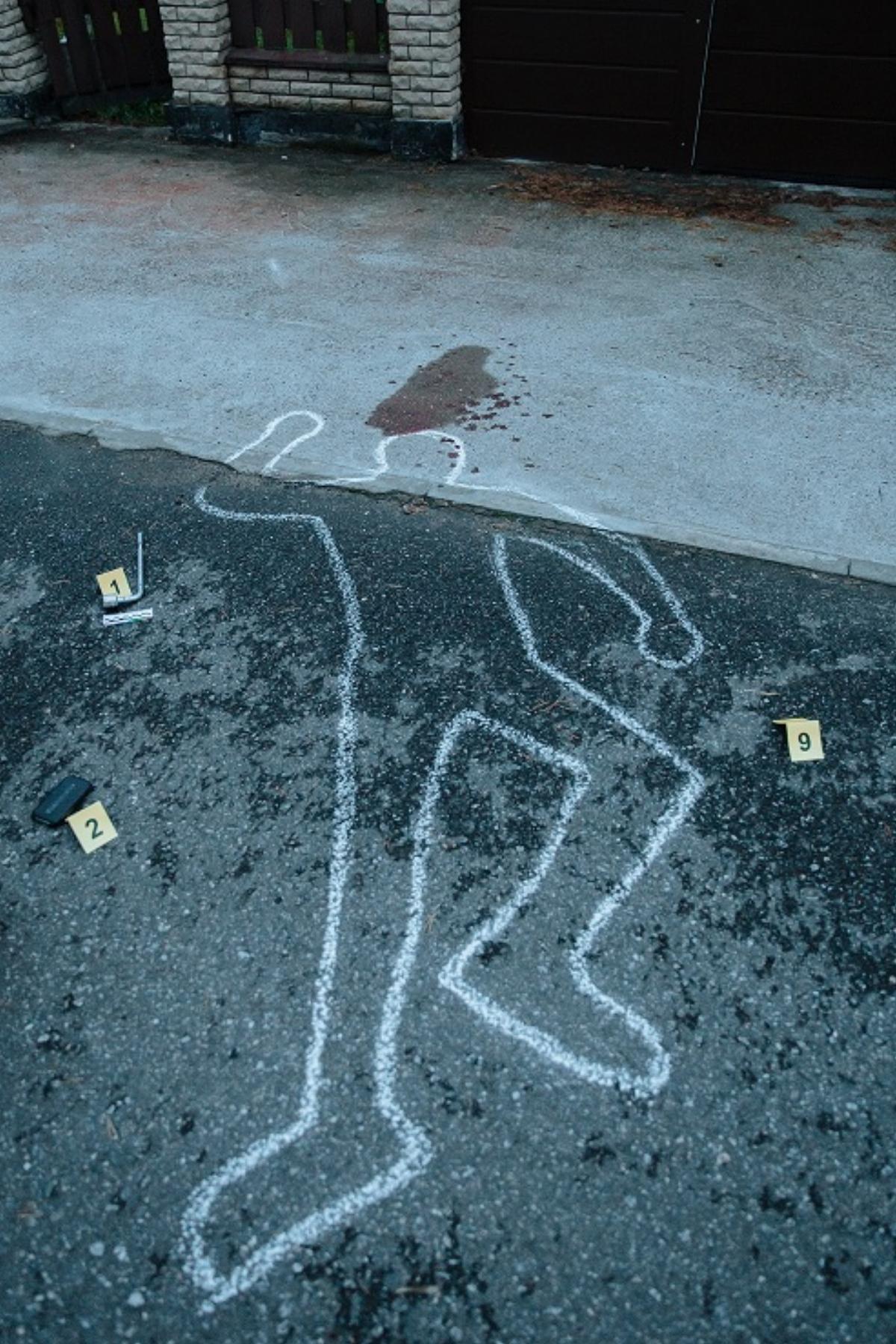
“Justice delayed is justice denied.” “The wheels of justice grind slowly but ever so fine.” “Better that one-hundred guilty persons go free than one innocent person should suffer.” These are incompatible aphorisms that at various times have been asserted about the American justice system.
Read more Venezuela: Did Trump just make a deal with the devil?
The first was clearly employed when William McKinley was assassinated in 1901. The President died on September 14, and his killer was executed a month and a half later. As a Facebook contributor noted, “If the justice system worked the way it did for McKinley, [Tyler] Robinson would have been dead by December, 2025.” More accurately, Charlie Kirk’s alleged killer would have exited this life by Halloween last year.
The assertion that “justice delayed is justice denied,” despite its frequent repetition, is a concept honored more in the breach than in the observance. Tyler Robinson’s preliminary hearing, for example, won’t be concluded until September, almost a year after Kirk’s murder. Karmelo Anthony’s trial took over fourteen months after the knife-totting youngster stabbed and killed Austin Metcalf at a high school track meet. Recently Anthony’s hearing for a retrial was denied. Appeals will doubtless follow.
That the wheels of modern American justice “grind slowly” is obvious, but the “ever so fine” conclusion is risible. Jury or judicial politicization is clear in cases involving, for example, O.J. Simpson, Donald Trump, and thousands of January 6 defendants. Meanwhile, we wait without much hope for justice to be “ground out” for the high-profile criminals involved in Crossfire Hurricane and Arctic Frost.
Of course, law enforcement and the system of justice should be structured to avoid sending innocent people to prison, but the modern fixation on one side of the judicial and law enforcement equation has devastating consequences. Here’s an alternate aphorism that should gain traction: “The fewer criminals caught and expeditiously punished, the more innocents will be harmed by criminals.” Conversely, the more criminals caught and swiftly punished, the fewer innocent victims will be harmed. This inverse correlation is all the more relevant since it’s widely conceded that crime, especially violent crime, is largely concentrated in a small portion of the population, typically estimated at five percent or less. El Salvador’s President Nayib Bukele, much vilified abroad but adored at home, totally transformed his country from a gang-ruled hellhole to a playground sanctuary for children by imprisoning one percent of the population.
Read more How not to solve the homelessness problem
So why has our judicial system changed so much from the days of McKinley’s assassination, when swift justice was the order of the day, to the present, where a plethora of “safeguards” have been placed on law enforcement and within the judicial system to prevent innocent individuals from being falsely convicted of a crime and guilty persons from being convicted based on faulty procedures? The “not one innocent” mentality is largely the product, I believe, of a therapeutic culture in which the idea of personal responsibility has been drastically attenuated. Villainy has been scaled down to reduced mental capacity or unfortunate environmental circumstances, as the psychiatrist Karl Menninger noted a half-century ago in his book Whatever Happened to Sin.
That’s not to say that such factors are totally irrelevant, but our obsessive desire for non-volitional explanations arises alongside an even deeper desire to deny the reality of evil. Accordingly, those hundred guilty persons theoretically going free are vaguely felt to be victims of biology or society. More specifically, for many females demonstrating outside the Clancy trial in Massachusetts, it’s inconceivable that a woman would knowingly strangle her three young children. It’s just too evil. Thus, the heinous act becomes itself an argument against her criminal culpability, and diffuse responsibility falls instead on medical practitioners and the pharmaceutical industry.
In short, according to this perspective, evil doesn’t really exist in individuals but rather in institutions and the persons directing those institutions. It’s a fantasy touted by Rousseau, who claimed people are born good but are corrupted by society, a belief that leaves hanging a basic question: How does a corrupt society arise from naturally good humans? That’s not a problem faced by those who believe evil lies within the human heart and that, as Immanuel Kant asserted (albeit in German), “Out of the crooked timber of humanity, no straight thing was ever made.” It’s a thought that at least helps explain the legal and human foibles discussed here.
Richard Kirk is a freelance writer living in Southern California. His book Moral Illiteracy: “Who’s to Say?” is also available on Kindle , as is his book Poetry with a Moral Edge.
Read more Just what is seriously wrong with Zohran Mamdani?
Image: Pexels