
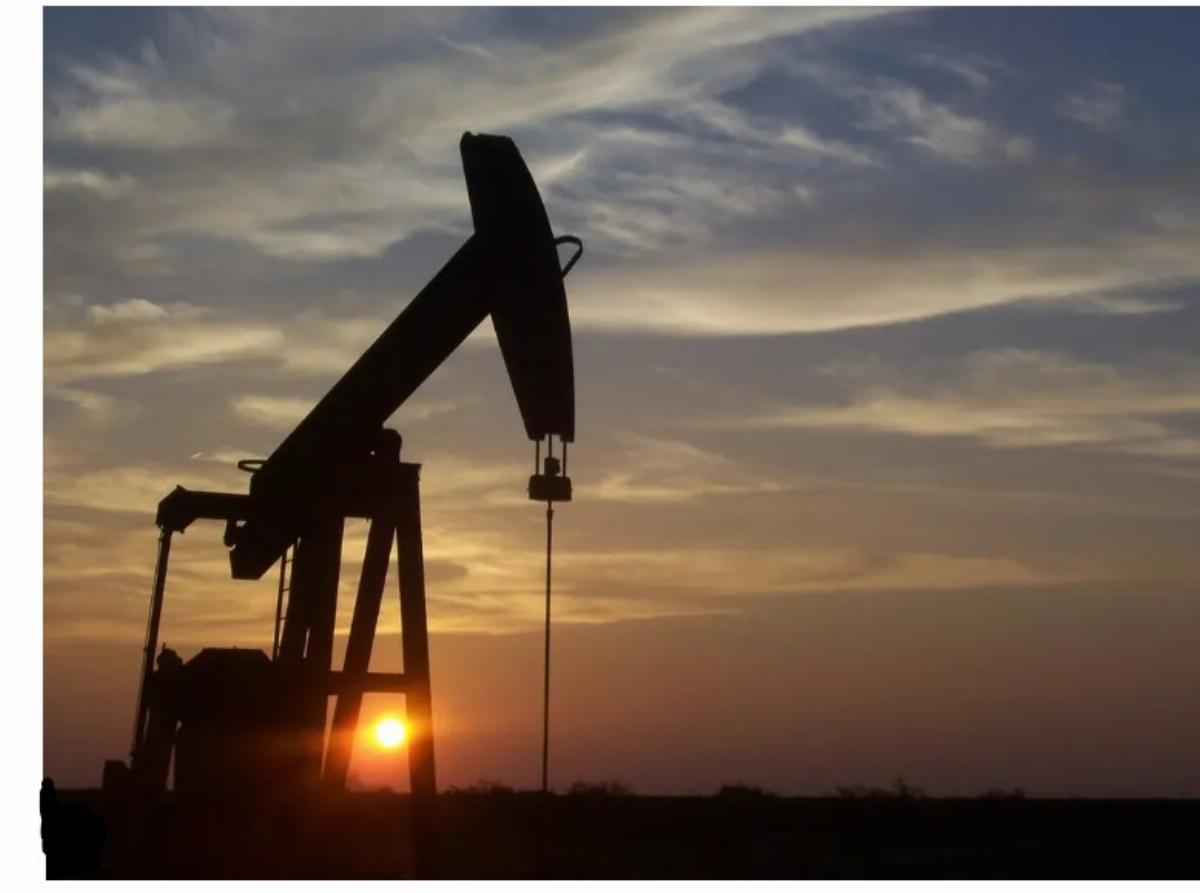
From the broadest perspective, President Trump’s newly announced oil deal with Venezuela looks like a win for the U.S.
Read more How not to solve the homelessness problem
🚨 BREAKING NEWS pic.twitter.com/vkRV9oOetV
— Department of State (@StateDept) August 28, 2026
According to the Wall Street Journal:
President Trump confirmed late Friday that the U.S. reached a deal with Venezuela to secure control of a big chunk of the Latin American country’s oil reserves.
“At my direction, Secretary of State Marco Rubio, and Secretary of War Pete Hegseth, working closely with Highly Respected Interim President of Venezuela, Delcy Rodriguez, and, through a partnership with private business, have secured majority U.S. control of more than 65 BILLION BARRELS of proven Oil Reserves in Venezuela, at no cost to the American Taxpayer,” the president said on social media.
The country’s oil industry has fallen into widespread disarray following years of mismanagement during the regimes of the late Hugo Chávez and former President Nicolás Maduro.
Since ousting Maduro in January, Trump has pushed U.S. oil companies to plow money into the country in a bid to shore up oil production. But many have been hesitant to do so.
Friday’s deal would give the U.S. a foothold in some of the most promising oil-and-gas fields. The country says it has some 300 billion barrels of proven reserves, the largest in the world. In comparison, the U.S. has about 46 billion.
The deal singlehandedly makes the U.S. the oil king of the world, leaving Russia, Iran, and OPEC in the dust. The U.S. controls the most oil, and thus, the most military and industrial power. China has fewer suppliers now, and won’t have securing easy energy supplies so easy anymore. And Canada looks in for a smackdown:
BREAKING President Trump unveils a major oil deal with Venezuela as Victoria Coates declares the United States is emerging as the world’s lone energy superpower#NYI pic.twitter.com/s1T7LM7FZ5
— NewYork-Insight (@NewYork_Insight) August 29, 2026
OPEC itself is likely to go under. Venezuela in fact is a founding member of OPEC and the talk now is that Venezuela is likely to pull out, meaning, no OPEC quota can interfere with U.S. companies’ productive development of Venezuela’s oilfields. That means oil prices can go very low indeed given Venezuela’s massive production capacity — how does $10 or $26 a barrel sound?
As Trump said, oil prices are likely to go down, countering Iran’s trump-card maneuvers blocking shipments in the Strait of Hormuz? What good is blocking what they sell when the U.S. has just doubled its supply?
One other thing: News media pundits claim the development of Venezuelan oil will take time, and yes, it probably will. But markets are anticipatory, and development typically takes less time than forecast, as we saw during President Trump’s first term opening up Alaska’s reserves.
There’s plenty of other good stuff President Trump didn’t mention: An old and natural alliance has been restored — the U.S., after all, first developed Venezuela’s oilfields in the 1920s, and Venezuela’s brilliant maneuver buying and developing its CITGO refinery chain at the recommendation of the great Emma Brossard was a natural way of securing access to U.S. markets even when crude prices fell, an important safeguard for Venezuela because Venezuela’s crude is heavy and takes extra processing costs to be usable, meaning, it commands a lower market price and a lower price is always hit hardest when global oil prices fall. (I still think Emma Brossard, whom I interviewed 20 years ago, was one of the most interesting people I have ever spoken with.) CITGO is now in court proceedings over debts and expropriations after Chavistas messed the arrangement up, and apparently was sold off tto investors. But there may be a restoration of that or a similar arrangement.
Gulf refineries, which are configured to process heavy Venezuelan crude, will have more business.
The Navy will have all the oil it needs — and they use a lot. Notice Pete Hegseth’s involvement in this — that is what it’s about, and historically, the Navy was Venezuela’s biggest American buyer until, once again, the Chavistas messed it up.
Venezuela should see some development and cash coming into its economy if all goes according to plans, and U.S. oil majors feel confident enough to invest in Venezuelan oil again. ConocoPhillips and ExxonMobil were so badly burned in Chavista expropriations it would take a lot of U.S. guarantees for them to come back and spend hundreds of millions if not billions on oil development, extraction, and production, which of course, the Chavistas ruined once they stole the previous investments. Presumably, the U.S. stake, from which they would secure a lease, would provide U.S. military guarantees that the contract would be enforced and no Chavista expropriation would be coming soon as they get the infrastructure up.
This also is an ideal time to get dollarization in place, which as it turns out, is being advocated strongly for in Venezuela’s legislature among the semi-opposition at least. One of them has asked Johns Hopkins monetary expert, Prof. Steve Hanke, a.k.a., the money doctor, to advise him on how dollarization could be done in Venezuela. That would kill off the country’s persistent Chavista hyperinflation, but more than thatt, prevent oil production and the dollars rolling in from new production from smothering the rest of the Venezuelan economy — the coffee and chocolate growers, the rum makers, the food manufacturers, etc,. in a phenomenon known as ‘Dutch disease,’ or, in Venezuela’s vernacular, ‘the devil’s excrement.’ A real economy could begin to bloom if that happens.
All the same, there are caveats.
Venezuelan opposition voices, including those with strong knowledge of the oil industry, are warning that the deal, which was made with the rump Chavista thug government, following the extraction of Nicolas Maduro in January, amounts to a deal with the devil:
Read more Just what is seriously wrong with Zohran Mamdani?
PETRÓLEO EN VENEZUELA: APERTURA TRANSPARENTE VS. ARREBATO OPACO
Por Pedro Mario Burelli
Este es el título del artículo que terminaré de escribir y publicaré al ver los términos de la mega, o MAGA, operación que anunció @realDonaldTrump, que intentó clarificar @SecRubio y que… pic.twitter.com/PH76PUMQK0
— Pedro Mario Burelli (@pburelli) August 29, 2026
El Anuncio de Trump, realidad o “Vaporware”
Todavía nadie conoce ningún detalle del acuerdo que le entregaría a EEUU el 20% de las reservas provadas de Venezuela. Lo que sí está claro es que si en el marco de ese acuerdo no existe un compromiso de inversión por parte de las…
— Luis H Ball (@ball1_ball) August 29, 2026
Delcy is ready to give Washington almost everything in exchange for securing her seat for the long term. She understands what Washington wants and appears willing to take the necessary steps to deliver it.
That makes this growing “win-win” arrangement difficult for either side… https://t.co/Oign0mO6fX
— Imdat Oner (@imdat_oner) August 29, 2026
The Venezuelan people are pretty much being left out and don’t gain anything from this, and the big danger is that billions rolling in from oil investments will only pad their coffers and entrench the regime, not help the Venezuelan economy or promote a democratic transition. That can only incentivize sabotage or worse, and already the oilfields are badly patrolled, with Uncle Sam likely to be called in to preserve order if any American company is going to invest there.
It’s being done by an illegitimate leader, Delcy Rodriguez, who is only in office through the miracle of election cheating, and even her transition term has expired, but somehow she’s still there, drug kingpin Diosdado Cabello, who once sent out a hit team to kill then-Sen. Marco Rubio, and who blocked U.S. aid workers from rescuing June quake victims, by her side.
She is immensely unpopular, not just based on election cheating and her association with Chavista excess, but based on her abysmal response to the June 24 earthquake which saw tens of thousands dead.
It doesn’t help that the deal, which is missing many details and billed as non-transparent, was brokered by a famous crook, Alejandro Betancourt, who was wanted in Switzerland for money-laundering. Betancourt, known locally as a Boligarch, or a political crony who got immensely rich off Chavista pork-barrel schemes, also built a lot of those Chavista housing units that went down fast in the June double-earthquakes that hit Venezuela. It shouldn’t surprise anyone that he’s detested by locals.
We know they’re a me-first bunch, so unless there is a democratic transition, the deal can only find itself battered or upended by instability as angry Venezuelans turn to angrier methods than protest. The bottom line, as Daniel Duquenal notes, is that Venezuela remains “a ruined and oppressed country.”
1 no fue invasión, fue captura de 2 individuos delincuentes. La “invasión ” misma duro poco más de media hora.
2 la derecha se alegró de la captura del tirano Maduro. Pero mucha derecha desde el 4 de enero tenía serias dudas sobre lo que venía.
3 que los parásitos… https://t.co/PqgkdxCt9F
— daniel duquenal (@danielduquenal) August 29, 2026
Once again, @at_tvzla brilliantly explains the complex moments we are living. “Don’t judge this deal by the number of barrels in Trump’s announcement, judge it by the contract nobody has seen and the democratic conditions that nobody has published. This could become the… https://t.co/7ael0P5dV2
— Gabriela Montero (@monterogabriela) August 29, 2026
Maria Corina Machado’s people have taken a circumspect wait-and-see stance:
One of the closest allies of @MariaCorinaYA basically saying “let’s wait and read the details.” Not rejecting the agreement outright. https://t.co/tUFNpfpT26
— Juan Nagel (@juannagel) August 29, 2026
Update:Which has hardened into a more skeptical view, calling for a democratic transition:
María Corina Machado rechazó el acuerdo petrolero alcanzado entre Estados Unidos🇺🇸y Venezuela🇻🇪y advirtió que el futuro de los recursos naturales del país no puede negociarse al margen de los venezolanos.
La dirigente opositora sostiene que cualquier acuerdo sobre el petróleo… pic.twitter.com/j9aaapXC21
— abogadosvenezuela (@abogadosvenezu1) August 29, 2026
But others are furious:
The central issue here is this: Delcy Rodriguez is handing over Venezuela’s resources unilaterally. She can do that because she’s a dictator. While Maria Corina Machado supports privatizing the oil industry, she would be subject to democracy after winning a free and fair…
— Germania Rodriguez Poleo (@iamGermania) August 29, 2026
Him, too — Diego Arria is Venezuela’s most respected senior statesman. (The tweet won’t embed.)
If Trump’s team can muscle Delcy into this unheard-of deal for control of a third or a fifth (depending on the report) of Venezuela’s oil, why can’t she be muscled into allowing free and fair elections which is just about the only thing Venezuelans want? A deal like this can’t endure beyond the Trump administration if so many ordinary Venezuelans are against it. The U.S. will be in a world of trouble if it doesn’t address this democracy question, while it’s at it. The Trump administration should not let this become the Achilles Heel of what otherwise could be great news for the U.S.
Read more Twenty-five years after 9/11, unchecked mass migration makes terror threats greater than ever
Image: Pixabay, via Picryl // CCO Universal Public Domain