
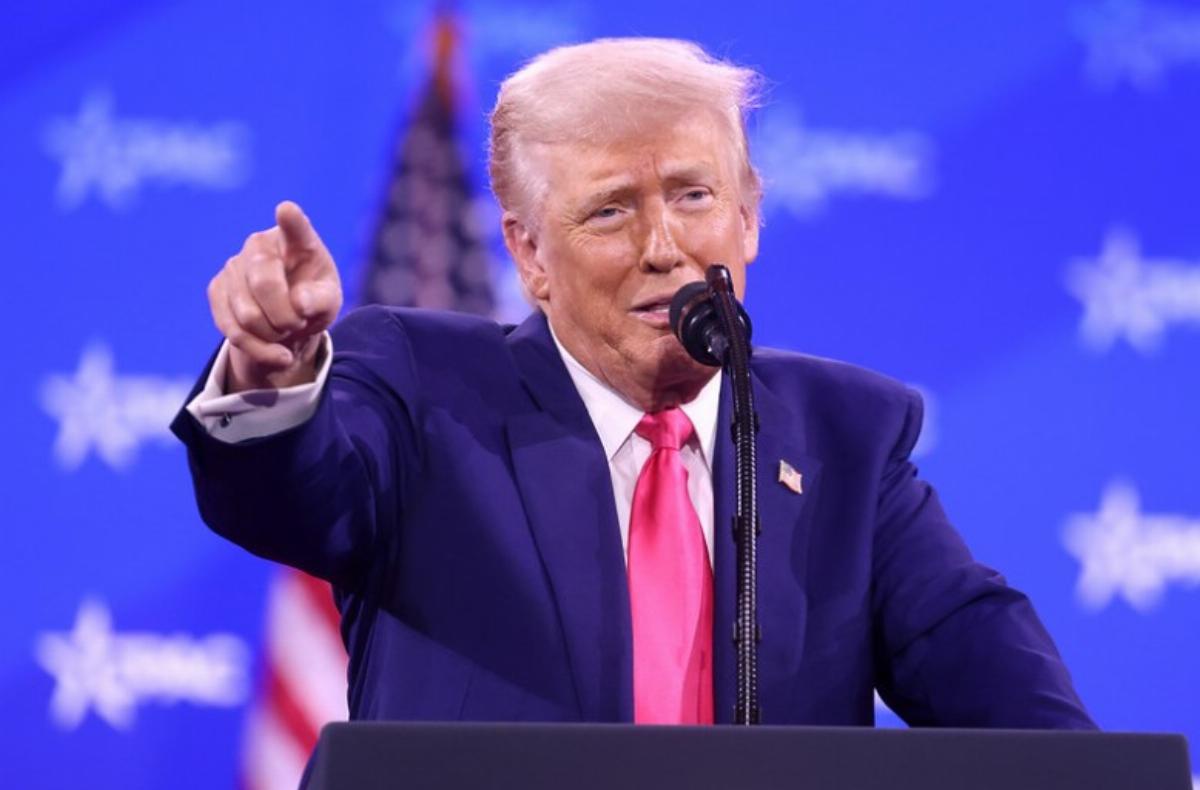
Was there ever, in the history of these United Sates, a president who could make or break senators at will? That is exactly the power President Trump is wielding before our eyes in these historic times.
Read more Putting the ‘affordability crisis’ in perspective
The Senate has long regarded itself as a lofty chamber, inflated with its own importance and largely inviolable. Yet in the age of Trump, as uncomfortable truths have come to light, many senators have shown themselves less noble and wise than their previous images suggested. Instead, we have seen them ruled by various human frailties — ambition, caution, resentment, institutional self-protection, and underhandedness — that, in the public’s mind, have repeatedly interfered with their duty to voters.
The Republican-led Senate is openly trying to stop or slow down the president’s agenda by holding up the passage of bills; slow-walking confirmations; and, ludicrously, the perpetuation of pro forma sessions to block recess appointments — all while hoping the public would not notice. But the public have noticed.
Thousands of bills and resolutions sit awaiting action. A significant share are House-passed measures stuck in Senate committees, including high-profile items such as the SAVE America Act, the Digital Market Clarity Act, and critical appropriations bills. This deliberate inertia drives the president into an ever more powerful position with his voters who sent him to Washington to get things done.
Donald Trump now demonstrably possesses a unique ability in the modern era to determine the outcome of Republican Senate primaries. Historical precedents exist, where presidents wielded less consistent influence over their party’s senators.
The most direct historical parallel is Franklin D. Roosevelt’s attempted purge of conservative Democrats in the 1938 primary. Unlike Trump, who generally supports challengers against incumbents, FDR actively campaigned against sitting members of his own party, such as senators Walter George of Georgia and Millard Tydings of Maryland, who opposed his New Deal and court-packing plans. The outcome was a largely failed effort. Most targeted incumbents won re-nomination and re-election, demonstrating the limits of presidential power over entrenched local party structures.
Ronald Reagan held immense sway over the Republican Party, often described as having a “coattail” effect. However, his influence manifested differently from Trump’s. Reagan’s power was most evident in general elections, where his popularity helped Republicans win Senate seats in states they previously could not. In primaries, though he endorsed candidates, he did not typically make or break incumbents in the same way Trump does today.
Others, like Lyndon Johnson and Teddy Roosevelt, used patronage, pressure, and prestige, yet Senate independence and state parties regularly constrained them.
President Trump’s endorsements are nowadays often the single most decisive factor in Republican primaries, capable of toppling long-serving incumbents — Bill Cassidy, John Cornyn. Then there are those who retired after Trump endorsed their primary challengers — Pat Toomey, Richard Burr.
Read more How the ‘Three Breasts’ let the economy down
Now, in a daring sleight of hand, he successfully endorsed a totally inexperienced player, Darline Graham, who cannot even formulate an opinion on abortion, to block the career of seasoned, highly articulate Rep. Ralph Norman.
Whether any of these Senate challengers succeed in the general election remains to be seen, but within the MAGA movement and beyond, Trump’s influence is colossal. To many, the man has achieved iconic status.
To the Republican voters, he represents nothing less than the hopes of a nation’s survival. To the Democrats, he towers as the cause of all rage, dishonesty, disenchantment, and hate.
Unlike the left’s icon, Barack Hussein Obama, who achieved his legendary status through the politics of division and mistrust, Donald John Trump did it through courage, determination, and most surprisingly the concept of love. Among all world leaders past and present, not one has frequently referred to love, whether sentimental, patriotic, or hyperbolic. “I love you all.” “I love the poorly educated.” “I love farmers.” “I love Mexican people.” “I want to thank you for the extraordinary love. That’s what it is…for the extraordinary love for this amazing country…thank you.”
Following the July 8, 2026 NATO summit in Turkey, Trump emerged from a meeting peopled by possibly the toughest, most ruthless and cunning assembly of leaders the world has to offer, saying, “I just want to say there was a tremendous amount of love in that room.” That is testimony to a unique and arguably enlightened worldview — because you can bet your bottom dollar that his commentary is not based on naïveté.
The result is genuine love, reciprocated by patriots to this lone man taking on a world of what are generally perceived as villains. This is not the kind of love that is directed to rock stars or movie icons, but real, personalized love. His followers, most of the 70+ million of them, feel proud at his successes, grieved at his failures, embarrassed by his faux pas. They get angry when he is opposed and enlivened by his encouragement. They worry and pray for him. And now they will support his endorsements en masse and vote to topple even the most entrenched and respectable senator.
That adulation, respect, and love will not, judging by current feeling, diminish when he leaves office. His opinion about who will be a worthwhile political representative of MAGA may be taken to heart long after his tenure, possibly to his dying day. Judging by the political power he currently wields, the man has overreached normal presidential respect and achieved a status reserved for historical giants.
Will politicians take note? No one has been able to unseat senators with such consistency and empower newcomers to supplant them. And by all accounts, he will not be stopping soon.
Read more Free the canals and locks of Lake America!
Image: Gage Skidmore via Flickr, CC BY-SA 2.0.