
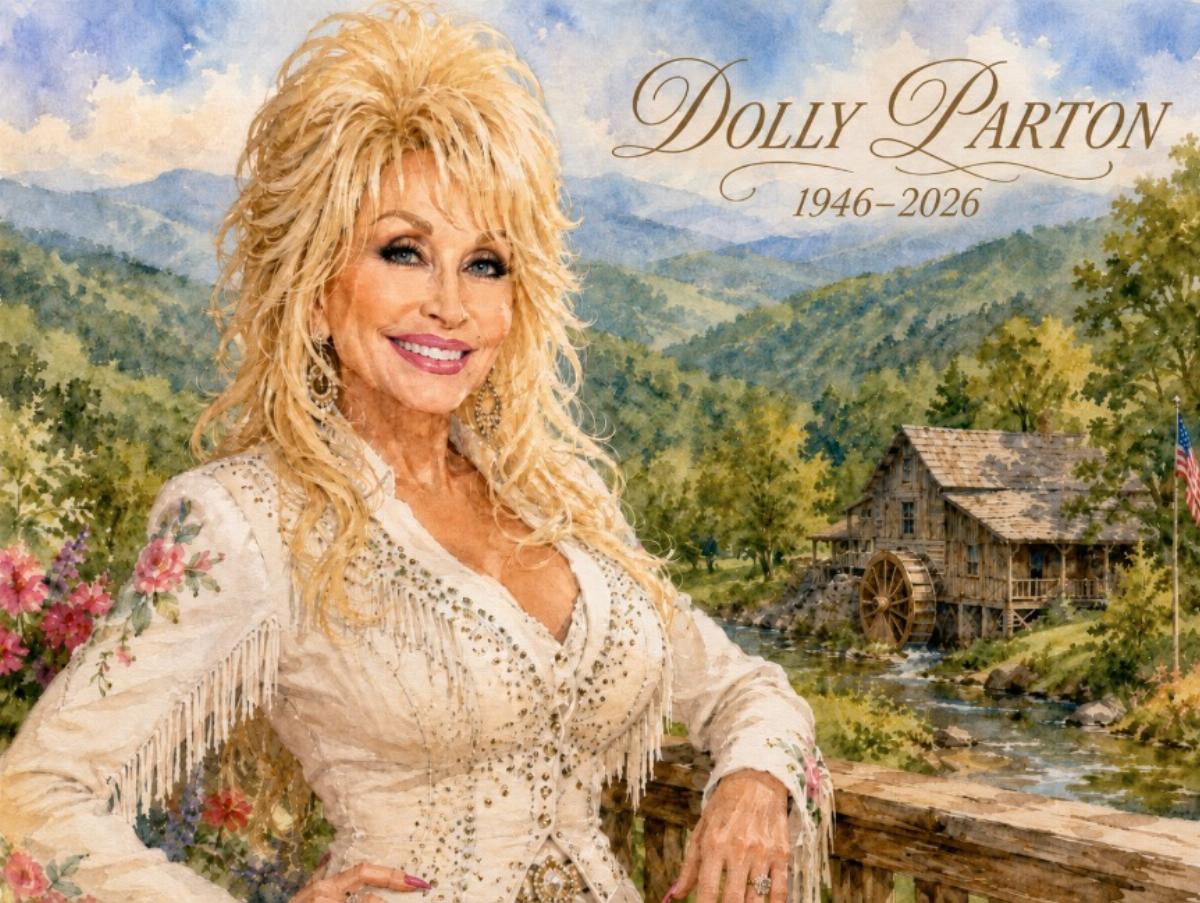
Looking at Dolly Parton’s Wikipedia page, I realized that I didn’t know many of Parton’s songs. While I loved her voice and appreciated her talent, I was never really a fan of her music. Instead, like so many Americans, I was a fan of Dolly Parton herself. And it’s worth thinking about why that is.
Read more The lessons of Dolly Parton and capitalism
Hollywood quickly began promoting its top performers, starting with Carl Laemmle’s 1910 decision to promote Florence Lawrence by her name rather than her previous identifier, “the Biograph Girl.” And so, the star system was born.
Hollywood choreographed everything about these stars. What the public saw and who these people were could be drastically different things. Sexual excess and deviancy, drug and alcohol abuse, nasty personalities…all vanished in the studios’ PR departments, with actors emerging as shining, bright, pro-American family people.
And these stars were worshipped. One of the biggest public funerals in American history occurred when Rudolph Valentino, the silent screen’s “Sheikh” lover, died in 1926 from a perforated ulcer.
His somewhat pathetic, sordid personal life was irrelevant to his fans. What mattered was the manufactured image. An estimated 100,000 people lined Manhattan’s streets to bid him farewell as his funeral cortege passed before them:
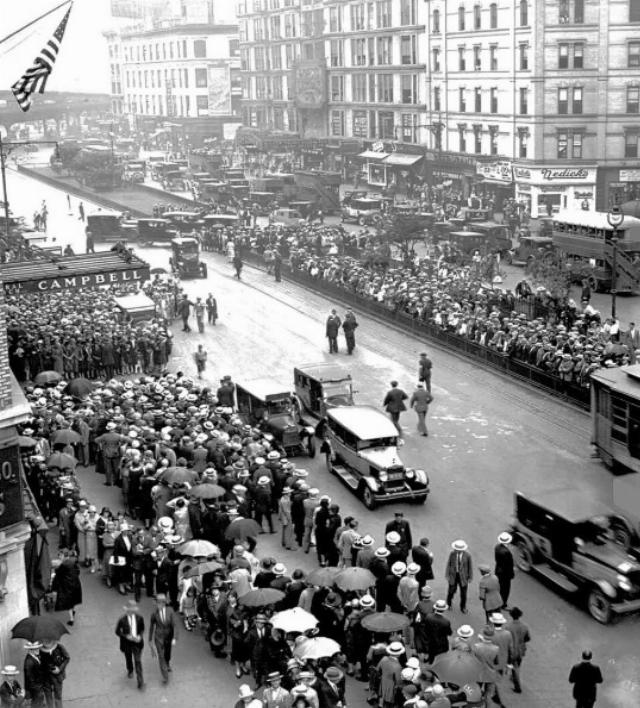
Public domain.
By the 1960s, though, the star system had broken down. The studios no longer created carefully curated, perfectly sterilized images of their stars.
Instead, we got those stars “red in tooth and claw,” only to discover that many of our favorite actors and actresses were just pretty faces, fronting (at best) for vapidity or (at worst) for true indecency. PR agents tried to maintain the “great and powerful” illusion, but we could finally pull back the curtain and see the humbugs behind the fame.
The stars themselves, scrambling for relevance and often aware of their limited educational achievements, began to promote themselves as political figures who, if you didn’t look too closely, actually could have gone to a pricey, left-leaning college. Hollywood’s mid-century patriotism was swept away, and we got mostly left-leaning, anti-American posturing from America’s most spoiled darlings.
Add in Trump Derangement Syndrome and Twitter/X, and you get the entertainment world’s stars of today. Give them a script or a song, and many are wonderful, but when you take away the words and music, so many would make your skin crawl if you found yourself next to them. These are not nice people.
Read more Green is bad
In this world, Parton stood out. She was endlessly and effortlessly charming, sweet, and so very, very real. When she started making money, she didn’t jet around the world to party on billionaires’ yachts; she invested it in dirt-poor Sevier County, where she grew up dirt-poor. I was last in Gatlinburg and neighboring Pigeon Forge about eight years ago, and it was booming, with thriving businesses and beautiful middle-class homes. Dolly was a major contributor to that success.
Dolly also didn’t put her wealth into cocaine binges, marital excess (she was married to the same man for almost six decades), or fast cars. She bought books for children through her Imagination Library, which sent 300 million books to children across the Anglosphere, from their birth through their fifth birthdays, all to encourage literacy.
And of course, Dolly resisted turning herself into a political figure. She understood that her platform as one of the world’s most famous (and talented) performers could, and should, be used, not to divide, but to…well, be good. Just one example is the aftermath of Porter Wagoner’s lawsuit against Dolly for breach of contract:
Porter Wagoner sued Dolly Parton for $1 million and trash-talked her for years. And then, a few years later, when she was a superstar and he had fallen on hard times, she bought his music-publishing company from his creditors and gave it back to him.
Weren’t you furious with him? the podcast producers want to know. He sued you. He took your money. Some have said he abused you. Again Dolly demurs. See it from his side, she says. Wagoner made her a star. He took a chance on her, introduced her to an enormous audience, stood by her. She was grateful to him. And she forgave him. She helped him financially and reconciled with him and was there at his deathbed to remind him that the words she sang to him years before were still true.
You forgave him? they ask, as if the word is strange and foreign and written in a different alphabet. Forgiveness, she says. “That’s all there is.”
When Dolly could have been vindictive, she chose kindness and grace. Those virtues were reflected in everything Dolly did, and that’s why she was so special—and why her passing has saddened all Americans, without regard to the usual divisions.
Our young people, God alone knows why, look up to the stars in the entertainment world, most of whom live sordid lives and espouse stupid politics. Can you imagine how different the world would be if these stars behaved like Dolly Parton, just being…good?
Read more Lindsay Clancy and the left’s cult of the murderer as victim
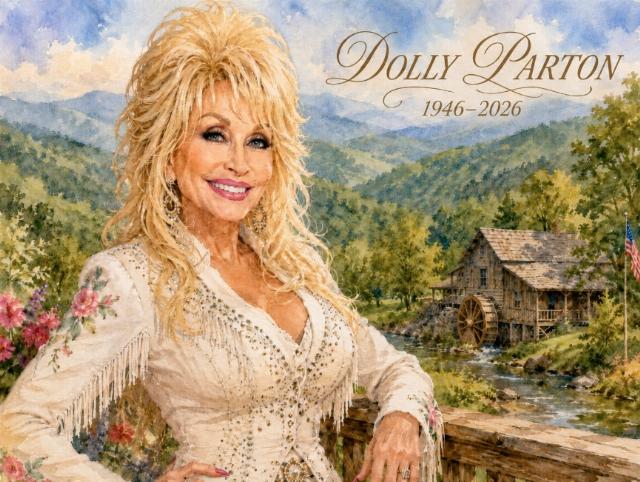
Image created using AI.