
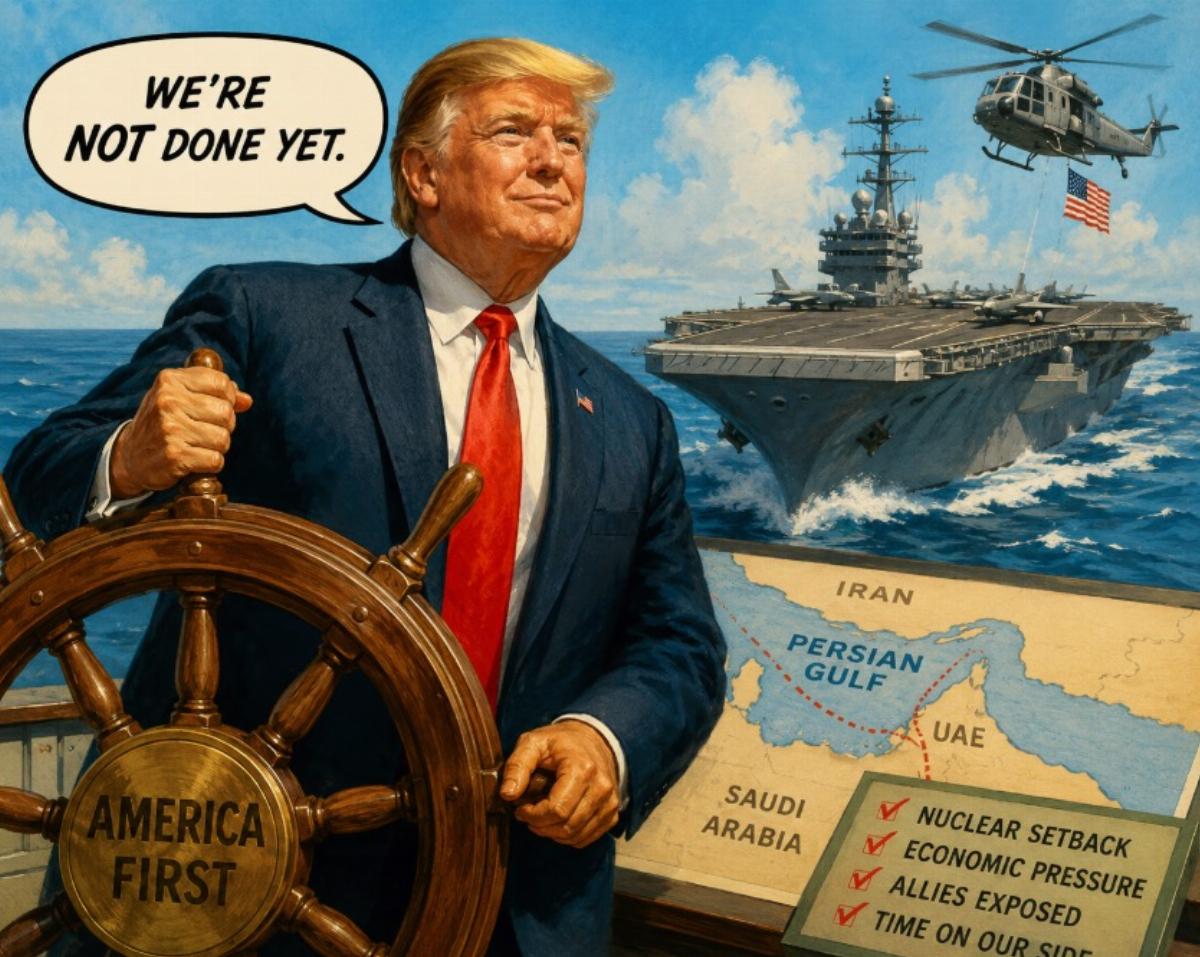
The headline at Fox News states, “Iran fails to strike deal with US as deadline passes and Trump calls for ‘white flag of surrender’: Disputes over Tehran’s nuclear program, sanctions relief and commercial navigation remain unresolved six months into the war.” What exactly does this mean?
Well, it’s not as good as I’d like it to be, but I think that Trump didn’t lose from it, because he has achieved significant goals despite serious headwinds; Iran is still in dire straits, no matter how they bluster; and JD Vance did not come off looking like a top-flight negotiator. Let me break this down.
First, here’s more from Fox News:
Iran failed to reach a final deal with the U.S. by Monday’s deadline, leaving disputes over Tehran’s nuclear program and the Strait of Hormuz unresolved nearly six months into the war.
Tehran instead announced an understanding with Oman on a new commercial transit route through the strait, but the plan cannot take effect without U.S. approval, and leaves unresolved Washington’s blockade, Iran’s nuclear program and the broader negotiations.
Hormuz, where a fifth of the world’s oil traverses, remained at the heart of the deadlock, leaving the two sides without a path to a broader agreement on ending the war or resolving the nuclear dispute. Iran insists it must retain authority over passage through the strait, while the United States has demanded unrestricted commercial navigation.
President Donald Trump insisted on Monday that Tehran wants to strike a deal with Washington, but claims they are unwilling to accept necessary terms to end the stalemate.
“They want to make a deal, but they’re not going to make the kind of a deal that I feel is necessary,” Trump told reporters in the Oval Office, adding that Iran “cannot have a nuclear weapon.”
Naysayers will insist that, without a deal, Trump has lost. I’m not so sure. Indeed, I think he’s in a better position than he was on February 27, the day before the war started, and the mullahs, for all their bluster, are in a much worse position.
The day before the war started, Iran was frighteningly close to having enough weapons-grade material for a nuclear arsenal. Now, although it still has some fissile material remaining, it’s nowhere near ready to go. And while it is already trying to restart its program, there’s still more time for Iran to be non-nuclear than the world had on February 27.
The day before the war started, the mullahs had a mostly functional economy, despite the depredations of the drought and the fact that they direct a great deal of money to terrorism. Now Iran’s economy is in shambles. China is trying to prop it up, but it can only go so far.
The day before the war started, Iran thought it could destroy Israel. Now, it’s been months since it last attacked Israel, a telling fact.
Read more The corrosion of confidence: Assessing the risks to the dollar’s global role
Since the war started, the Strait of Hormuz has definitely been a weak spot for Trump. It is, after all, a major artery for non-American oil, and the oil market is global. If supplies stall there, prices go up here.
However, a few things are worth considering.
First, America is doing a great business selling oil to the world.
Second, China is suffering economically from problems getting Middle Eastern oil. It’s still getting the oil, but it’s more expensive.
Third, Gulf countries are beginning to avoid Hormuz altogether with pipelines. That’s a slow process, but it substantially weakens Iran’s threat level to the Gulf nations.
Trump, of course, claims that the Gulf is now totally safe:
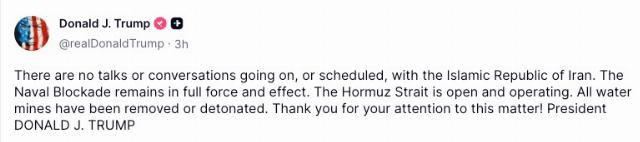
Those statements, however, don’t address the fast boats or missiles aimed at ships. And as long as ships are worried, they’re going to be leery of traversing the Gulf. On the other hand, if America maintains a strong naval presence there, it can win back some confidence.
Another benefit for Trump was that the war clarified who America’s friends really are—and there aren’t many. Trump will rightly put pressure on all the countries that have taken America’s generosity for decades, and refuse to provide any loyalty at all. It’s a two-way street. The point of our generosity was to have stability and allies, and these countries broke the bargain.
So, that’s all in Trump’s favor.
And what about the peace process itself? It was never a good deal. And I think it’s a very bad look for JD Vance that he negotiated this deal.
That said, I think Trump always knew the deal would fail, meaning sending Vance to negotiations in Pakistan and Switzerland was a fool’s errand if the real goal was peace. However, that may never have been the real goal. In fact, since peace was always unlikely, Vance did achieve one thing Trump needed: time.
Oil prices stabilized during the peace talks window, and the American economy is slowly but steadily gaining strength in some sectors. That’s the most important thing right now, with the midterms coming up. Combining a stable economy with the Democrats’ open Marxism gives the Republicans a chance to retain Congress. If they do, Trump will be off the leash for another year vis-à-vis Iran. And if they don’t, he’ll still be off the leash.
Overall, things are as good as can be expected when one of the two major political parties really wants America to lose a war against an existential enemy because it would help them regain and maintain power.
Read more Governments Don’t Like It When We Gather without Their Permission
Image created using AI.