
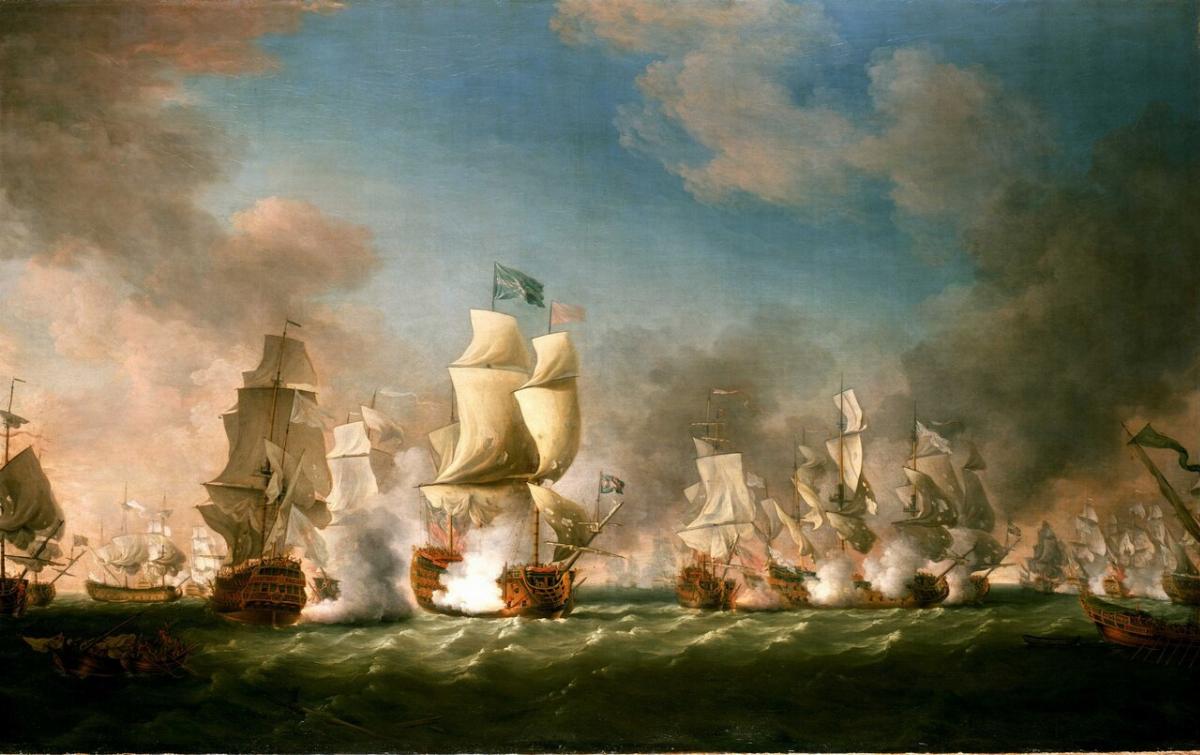
Maybe you are old enough to remember when Argentina tried to take “Las Malvinas,” or the Falklands, back in 1982. It was a call to action in the UK and PM Margaret Thatcher sent the fleet to keep the UK flag flying over the islands far away in the South Atlantic. It was a big flop for Argentina, in large part because the UK sent the fleet.
Read more A critical campaign in Virginia
Could the UK do that today if Argentina tried again? I don’t think that Argentina will do it again, but the point about the Royal Navy is real. Let’s check this very long but informative report by Steven Wills at War on the Rocks:
The Royal Navy’s descent from the world’s second-most powerful fleet in 1945 to a force increasingly constrained by regional and coastal requirements might raise the question today of how many of the King’s warships might actually be at sea to defend the United Kingdom at home and its interests abroad in the immediate future.
By the 2030s, the Royal Navy surface fleet may consist of just thirteen Type 26 and Type 31 frigates, an unknown number of legacy Type 45 destroyers, and perhaps the first Common Combat Vessel. Will the Royal Navy again scramble to reactivate a decommissioned Type 45 as it did HMS Tiger and HMS Blake in 1982?
A credible hybrid force could still help arrest this decline, but only if Britain treats it as an addition to naval power rather than a budgetary escape from manned combatants. That would require sustained funding, industrial discipline, experimentation at scale, and cross-party political commitment — far more than a promising concept and an ambitious delivery schedule.
In practical terms, Britain would need something approaching the seriousness of the Naval Defence Act of 1889: a national decision that seapower remains essential and must be paid for accordingly. That legislation provided the United Kingdom with over sixty new vessels over the next decade, including ten capital ships.
Read more Gabriel Delivers a Message
Without such a similar commitment to robust naval capability, 2026 may be remembered not as the year the Royal Navy entered the future, but as the year Britain accepted the sunset of its last genuine means of projecting combat power at range.
Britain needs to act quickly in its application of hybrid fleet concepts and in the requirement to staunch the bleeding out of its current ship and submarine capacity.
Bleeding indeed. This is not your grandfather’s Royal Navy, as they say. Another question: Does the UK have the political power to do the right thing? I hope so because we’ve always seen them as our important ally in NATO.
So, could the Royal Navy keep the Falklands British today? I am not sure, but I hope the islanders understand that this is not 1982 anymore. Get your own guns because the British may not be coming.
On another subject closer to home, could the UK play a major role in keeping the Straits of Hormuz open? Again, I don’t know, but it makes you wonder after looking at the UK today.
Read more Jason Arday: You Did It, Liberals
P.S. Check out my blog for posts, podcasts, and videos.
Image: Richard Paton