
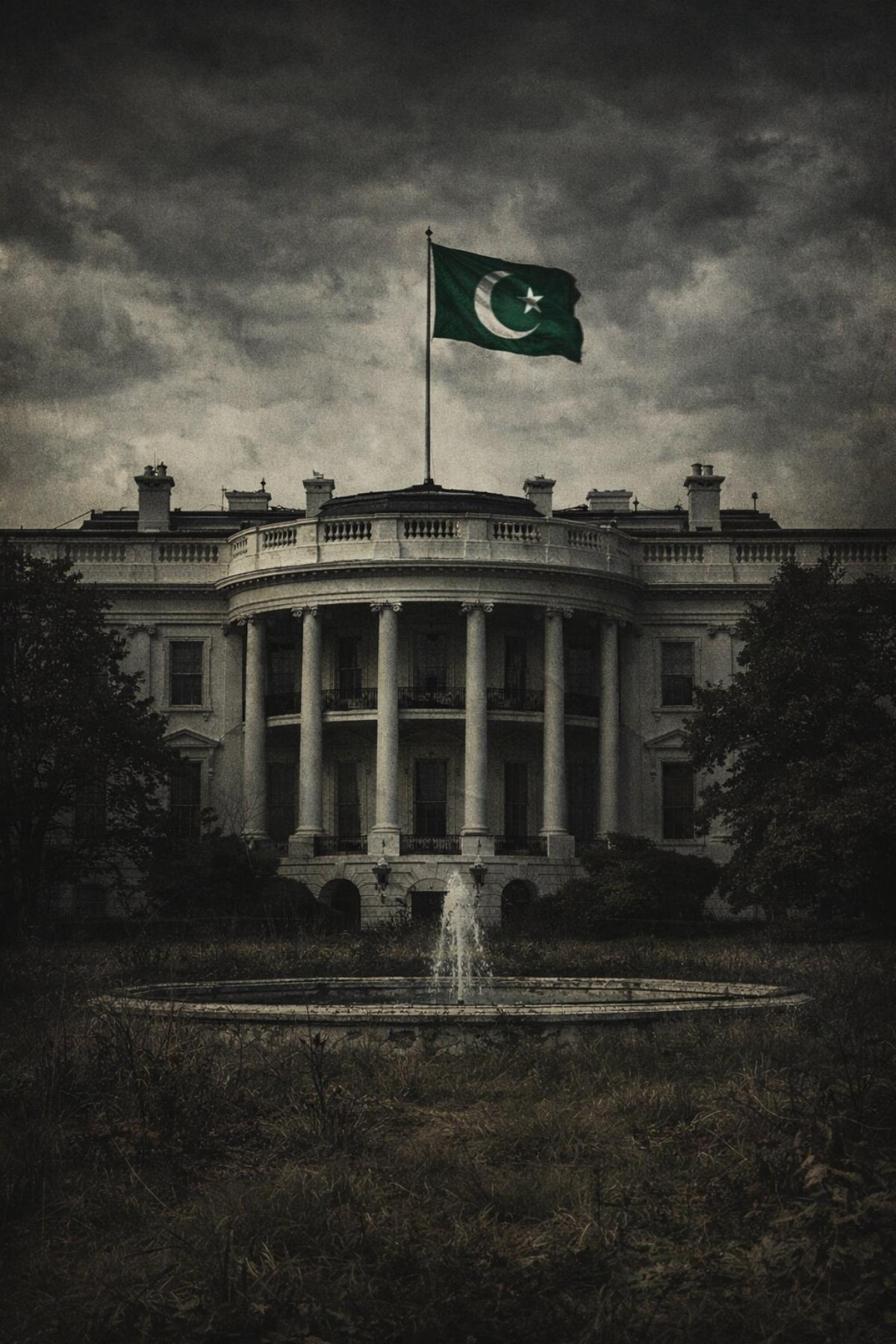
For years, I’ve tried to understand the growing rancor between the Muslim community and the American population. It seems there is never a time when the two groups have lived comfortably with each other. And in these times of Muslims also becoming part of our political community, of the strife in the Middle East, and the ongoing conflicts in Muslim-majority countries, there is no sign of relationships improving.
Read more The new American class war is between owners and dependents
Although some Muslims have migrated here and have made satisfying lives for themselves, a large number of Muslims are dissatisfied or uncomfortable with their new home. It has been helpful to try to understand the mindset of these Muslims and then explore the implications of their beliefs and commitments.
Muslims and native-born Americans have fascinating and different explanations for the Muslim dislike of the U.S. If you ask Muslims, many of them will say that their reactions are due to the recent steps that the Trump administration has taken against Muslims in this country and around the world:
1. Muslim Ban: The first executive order you issued in 2017 when you took office the first time was a call for a ‘total and complete ban on Muslims entering the U.S.’
2. Jerusalem Embassy Move: You moved the U.S. Embassy from Tel Aviv to Jerusalem, thereby violating U.S. and international laws. You recognized Jerusalem as the capital of Israel. This was a betrayal of the Palestinian dream.
3. Annexation of Golan Heights: You gave Israel the green light to annex the occupied Golan Heights and officially recognized the Golan Heights as being under the sovereignty of Israel.
4. Cutting Aid to Palestinians: You cut off ALL $390 million in U.S. annual aid to Palestinians.
5. PLO Office Closure: You closed the PLO office in Washington, D.C.
6. Anti-Muslim Policies and Rhetoric: You even suggested in 2016 that American Muslims be required to register in a database. You called for all mosques in the U.S. to be put under surveillance or completely shut down.
Although these actions and policies can be explained and even justified, some of the Muslim community sees them as a rejection and betrayal. Certainly, the U.S. treating Israel as an important ally is perceived as treachery, too.
Also, many Muslims did not come here for the benefits they would experience. Liberty, freedom of movement, and the many choices they have when they locate here can be both disconcerting and confusing. Many Muslims come from countries that are at war or have political conflicts: Syria, Yemen, Pakistan, India, Iran, Lebanon, Sudan, Afghanistan and Somalia make up a partial list. It’s likely that most of the Muslims were reluctant migrants, since they were forced to move to other countries with very different cultures. Even if they came here willingly, the difficulty of assimilation can be overwhelming.
Although a new poll of 750 Muslim Americans indicates that 95% expressed pride in America, 47% of those Muslims admitted they had stronger ties to their home nations. And the numbers are intriguing regarding foreign relations:
Read more Charter schools keep making the case for school choice
More concerning signs are evident when discussing international affairs. Thirty-three percent of respondents side with the Iranian regime, while only 32 percent support the United States in their ongoing standoff. (Notably, Sunnis more than Shi’a backed the ayatollahs.) Thirty-five percent even express sadness that Ali Khamenei was killed.
Sixty-six percent hold a favorable view of the Muslim Brotherhood, certain chapters of which were recently designated as foreign terrorist organizations. Thirty-five percent support Hamas. Forty-seven percent believe Jews are too frequently portrayed as victims, and 17 percent admit unfavorable attitudes toward Jews.
Many members of the Muslim community also encourage this dissension: community leaders, educators and religious leaders can foment hatred. Here’s an example:
Muslim women in particular can have a difficult time adjusting, given the expectations from their own families:
Women’s transition from their country of origin to the United States might not give them an easier life. Sayigh noted that American Muslim immigrant women have huge responsibilities, as on one hand, they are ‘often face the contradictory expectations of maintaining their family’s ethnic identity and cultural continuity based on practices and beliefs of their country of origin, while at the same time helping family members be successful in their host country,’ and on the other hand, they struggle as individuals to live in America. This has disturbed the picture painted of the United States as the ‘land of the free,’ especially when it comes to Muslim women, for whom the land of the free ‘has brought pain, frustration, and insecurity rather than liberation.’
But challenges arise for both genders:
Modern-day immigrant Muslims continue to face challenges as residents of the United States, and they are addressing these in a variety of ways. Questions of identity, occupation, dress, and acculturation are particularly significant for many American Muslims. Other major issues include the relationships among different racial and ethnic Muslim groups as well as with other American Muslims; how and where to provide an Islamic education for one’s children; and appropriate roles and opportunities for women.
We have been duly warned about the dangers of Islamism by a man who celebrates America, and whose father founded Hamas:
Picking up and leaving America and returning to their homes of origin can be a dangerous decision, if the strife continues in their home countries. And yet, for those who are deeply aligned with Islam, will they ever be happy living in this country?
Although there are some Americans who make dramatic statements about expelling them, is that the kind of image we want to portray to the rest of the world about how we respect human rights? Would we be demonstrating a kind of savagery? Is it even realistic at all?
Read more Jeff Bezos talks about growing the population but tip-toes around the obvious