
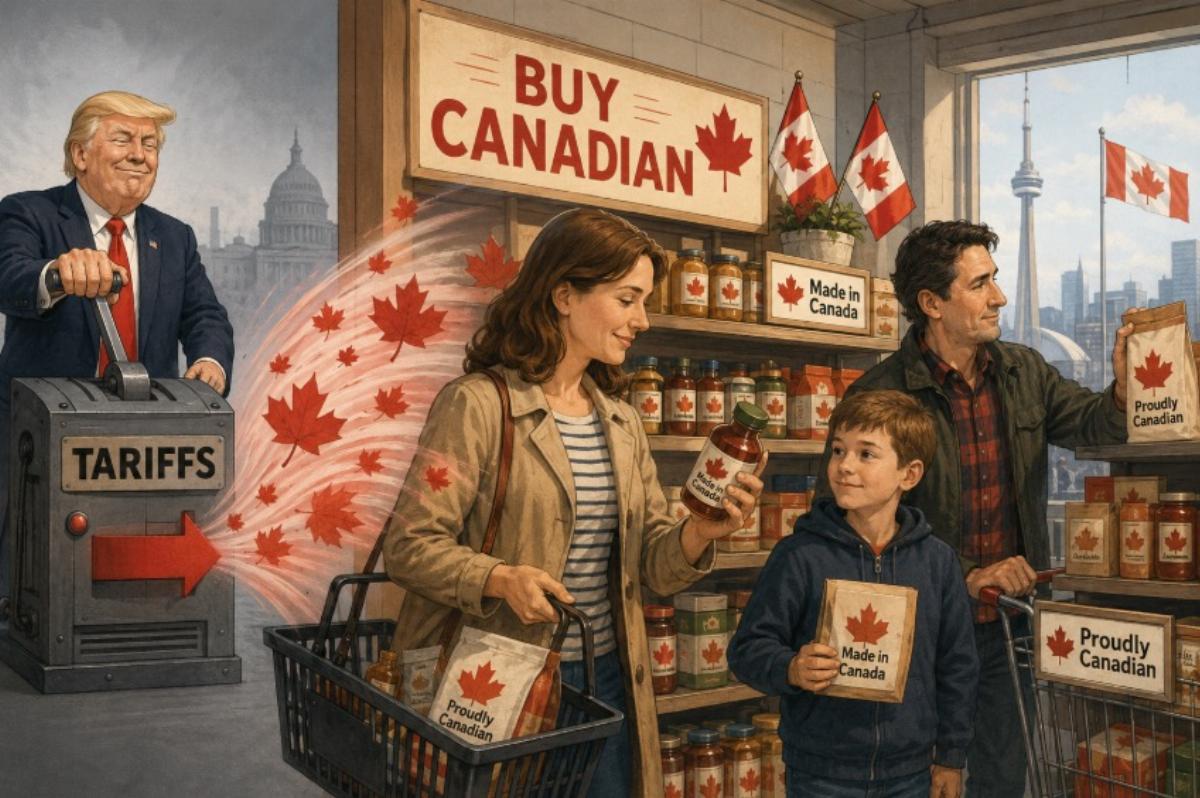
In the long and complicated relationship between Canada and the United States, economic tensions are nothing new. Trade disputes, tariff battles, and political disagreements have shaped the cross‑border dynamic for decades. But every so often, an unexpected consequence emerges—something neither government planned nor predicted.
Read more A conservative versus the homeowners’ association
During my recent visit to Toronto, walking through grocery stores, drug marts, and major retailers, I witnessed one of those consequences firsthand: a quiet but unmistakable rise in Canadian patriotism. And ironically, it appears to have been triggered not by Canadian politicians or media campaigns, but by Donald Trump’s tariffs on Canadian exports.
At first glance, the connection seems unlikely. After all, Canadian media, political leaders, and much of the general population have spent years expressing strong disdain for Trump. His policies, rhetoric, and personality are routinely criticized north of the border. Yet despite this widespread disapproval, the economic pressure created by his tariffs appears to have awakened something in Canadians—a renewed appreciation for their own country, their workers, their companies, and the products made within their borders.
The evidence was everywhere. In store aisles, I saw labels proudly displaying the maple leaf alongside phrases such as “Prepared in Canada,” “Grown in Canada,” “Made in Canada,” and “Proudly Canadian.”
These weren’t isolated marketing gimmicks. They were consistent, standardized, and clearly part of a broader national effort to highlight domestic production. Shelf tags explained the meaning of each designation, distinguishing between food and non‑food products. Even multinational brands were emphasizing their Canadian manufacturing roots. This wasn’t just packaging. It was identity.
Beyond labels, I noticed something even more symbolic: Canadian flags displayed more prominently in stores and restaurants, flying above buildings, and proudly displayed outside homes. It felt like a cultural shift, a collective decision to embrace Canadian identity more visibly and confidently.
The question is: Why now? And the answer, ironically, leads back to the very political figure Canadians claim to despise.
When Trump imposed tariffs on Canadian steel, aluminum, and other exports, the immediate reaction was outrage. Canadian politicians condemned the move. Media outlets framed it as an attack on Canadian workers. Citizens expressed frustration and disbelief.
Read more Antisemitism is so rampant there’s now a website tracking dangerous places for Jewish travelers
But beneath the anger, something else began to form—a sense of unity. Canadians started paying closer attention to where their products came from. Retailers responded by highlighting domestic goods. Manufacturers leaned into Canadian branding. And consumers began choosing Canadian‑made items not just out of necessity, but out of pride.
This is a well‑documented phenomenon in economics: external pressure often strengthens internal cohesion. When a nation feels challenged, its people instinctively rally around their own institutions, industries, and identity. Trump’s tariffs, though intended to pressure Canada economically, inadvertently encouraged Canadians to rediscover the value of their own production capabilities.
In effect, Trump triggered a “Canada First” mindset—not through speeches or political ideology, but through economic friction.
This emerging Canadian patriotism mirrors aspects of the American “America First” movement, though expressed in a distinctly Canadian way. Canada’s version is quiet and consumer‑driven. But the underlying sentiment is similar: support your own country, your own workers, your own economy.
In a strange twist of geopolitical cause and effect, Trump—a man widely disliked in Canada—may have done more to promote Canadian patriotism than any Canadian politician in recent memory.
Yet, here lies the great irony Canadians do not see. Not the media. Not the politicians. Not the population itself. But it is visible in every maple leaf label, every “Made in Canada” sign, every flag hanging. Whether they realize it or not, Canadians are living in a moment shaped by the very figure they claim to reject—and they are more patriotic because of it, and there is nothing wrong with being proud of your country. “Make Canada Great Again.”
Read more Historical myopia
Image created using AI.