

President Trump and Prime Minister Netanyahu pose the first credible existential threat to the Iranian regime since 1979. Yet the regime seeks to survive by running out the clock through negotiations and a war of attrition. To prevent an Iranian nuclear cataclysm, President Trump must adopt a new military strategy to ensure the regime’s imminent downfall.
Read more The dark side of property tax relief
Iran’s murder of tens of thousands of Iranian civilians plus the targeting of about 17 countries, including civilians and critical infrastructure, has proven that its goal is to inflict maximum devastation on those within range of its weapons. The recent battles with Iran demonstrate the devastation the regime would wreak if it were ever to possess a nuclear arsenal.
Precipitating the regime’s fall is the only way to resolve these far-reaching security threats. If it remains in power, regardless of any deal, it will resume rebuilding its nuclear program and IRGC military infrastructure. Although the U.S. and Israeli strikes on Iranian military and nuclear targets degraded Iran’s military capacity, there is no indication that the regime is significantly more likely to fall as a result.
Adopting a strategy based on Operation Inherent Resolve’s defeat of the ISIS Caliphate in Trump’s first term is essential. A similar plan would have a significant chance of toppling the Iranian regime within months. This would allow a new bright future for Iranians, with a new government led by Reza Pahlavi, or another popular pro-Western Iranian leader.
The regime’s drive to acquire nuclear weapons is evident through its tens of thousands of centrifuges, verified 970 lb of uranium enriched up to 60 percent, the well protected , and Israel’s revelation of Iran’s Amad Plan, detailing Iran’s sophisticated nuclear weapons program.
Senior Iranian officials confirm Iran’s nuclear weapons program. Former foreign minister Salehi acknowledged that Iran has all components necessary to assemble a nuclear bomb; supreme leader adviser Kamal Kharrazi confirmed Iran’s technical capability; and former deputy speaker Ali Mottahari admitted, “From the very beginning, when we started with the nuclear activity, our goal was to build a bomb … but we were unable to maintain confidentiality.”
Striking Iran’s nuclear facilities merely delays the timeline to the bomb; assisting Iranians to overthrow the regime and replace it with a pro-Western government removes the nuclear impetus permanently. The regime must fall soon, while political leadership in the U.S. and Israel remains favorably inclined to that outcome.
If the regime remains in power, it will also have the capacity to threaten the lives of President Trump and others in his family. This would follow multiple assassination plots against President Trump, including in October 2024, prior to the U.S. strikes on Iran and President Trump’s election victory, and an attempt on Trump’s life in July 2026. This direct national security threat must not persist.
A New Plan to Topple the Regime – Proof of Concept
A military campaign focused on regime collapse addresses critics’ concerns about Iran’s refusal to permanently stop nuclear work while significantly mitigating risks to U.S. personnel. Operation Inherent Resolve demonstrates this is feasible: The ISIS Caliphate fell to U.S.-backed Kurdish ground forces with air support and minimal U.S. casualties, losing territory within weeks and almost its entire territory in under a year. Similarly, in Libya, Gaddafi fell in about seven months in NATO’s Operation Unified Protector, without Western boots on the ground. And in Syria, a weakened Assad regime fell in twelve days in late 2024.
Read more Learn to listen, listen to learn
A popular uprising is feasible if pro-Western Iranians are armed and trained. The initial phase involves U.S. strategic coordination with armed Kurdish and Balochi allies — equipping and training them while embedding Joint Terminal Attack Controllers (JTACs), communications gear, and limited special forces to direct air cover and neutralize regime threats, allowing the establishment of secured border corridors. Real-time intelligence delivered to these allies would mitigate risk and maximize success, either solely with U.S. support or jointly with Israeli air power and intelligence.
Prior to allied ground advances into peripheral cities in Iran, the U.S. would eradicate IRGC threats to air dominance and ground forces. This would ensure that any new potential threats to U.S. air dominance over these areas are removed and would also soften up any otherwise significant IRGC threat to US allies on the ground.
Initial targets for an estimated 20,000 allied-supported Kurdish forces (PDKI, PAK, Komala, and Khabat) include the northwest Kurdish strongholds — Piranshahr, Mahabad, Baneh, and Sanandaj — to secure border corridors. Concurrently, U.S. forces would seize Kharg Island to cut oil revenue and secure strategic targets around the Strait of Hormuz, while indigenous pro-Western Balochi fighters secure southeastern Balochi strongholds. Once IRGC mobility is in check, Phase 2 immediately arms and coordinates with local Ahwazi Arab fighters to liberate Ahvaz and Abadan and with Azeri forces to liberate Tabriz and Urmia from within. Liberated regions would immediately vet, arm, and train Iranian volunteers to expand the new army with U.S. air, intelligence, and communications support, while seizing offensive and defensive weaponry from local IRGC depots.
Rapidly expanding force size through civilian volunteers and vetted Artesh soldiers guaranteed amnesty enables the new army to replicate first-wave successes. Interlinking U.S. air power, intelligence, and communications with allied ground forces would secure a second series of cities and provinces, vetting and training for successive waves of attacks until the regime is completely displaced.
Electoral Implications
The midterm election stakes are profound. With Democratic Socialists winning key primaries in competitive districts, the House is in play. Reports reveal that the regime seeks to deal Trump a serious political blow by drawing out negotiations and leaving the conflict with no end in sight. The regime believes flipping control of Congress would ensure it retains power. Conversely, battlefield victories with a clear trajectory pointing to regime collapse would help Republicans retain control of the House and Senate.
A recent Marquette poll shows 30 percent approval for President Trump’s handling of the war versus 70 percent disapproval, driven by the appearance of a quagmire. The Iranian regime has proven that diplomacy cannot resolve threats to U.S. national security. Therefore, political disapproval can be overcome only by demonstrating a convincing and undeniable trajectory toward regime collapse before the midterms.
Fight until Total Victory
This campaign must continue until the regime falls and ensure that Iranian, Kurdish, Balochi, and other allies on the ground are not abandoned mid-fight. Sustained U.S. support for several months could ensure that the regime falls. Prematurely withdrawing support would likely spawn a civil war eclipsing the over 50,000 Iranians murdered by the regime in January 2026, allowing the regime to reclaim control, with the U.S. snatching defeat from the jaws of victory.
Averting an Iranian nuclear cataclysm largely depends on adopting a proven ground strategy, led by pro-Western Iranian forces in conjunction with U.S. military support. The time to remove this existential threat once and for all is now.
Read more The race they said was over may be just beginning
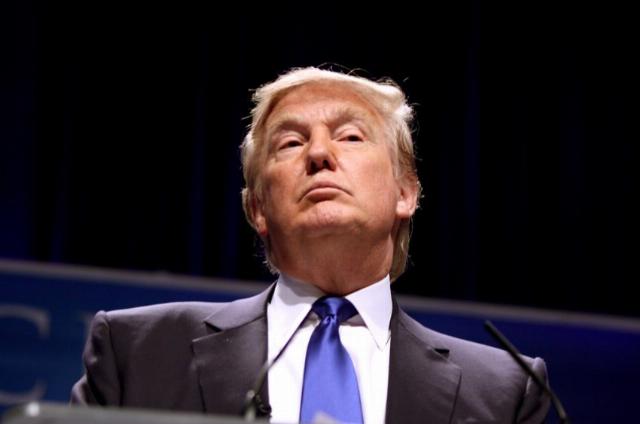 Flickr, CC BY-SA 2.0.” class=”wp-image-1367″ width=”640″ height=”424″ />
Image: Gage Skidmore via Flickr, CC BY-SA 2.0.