
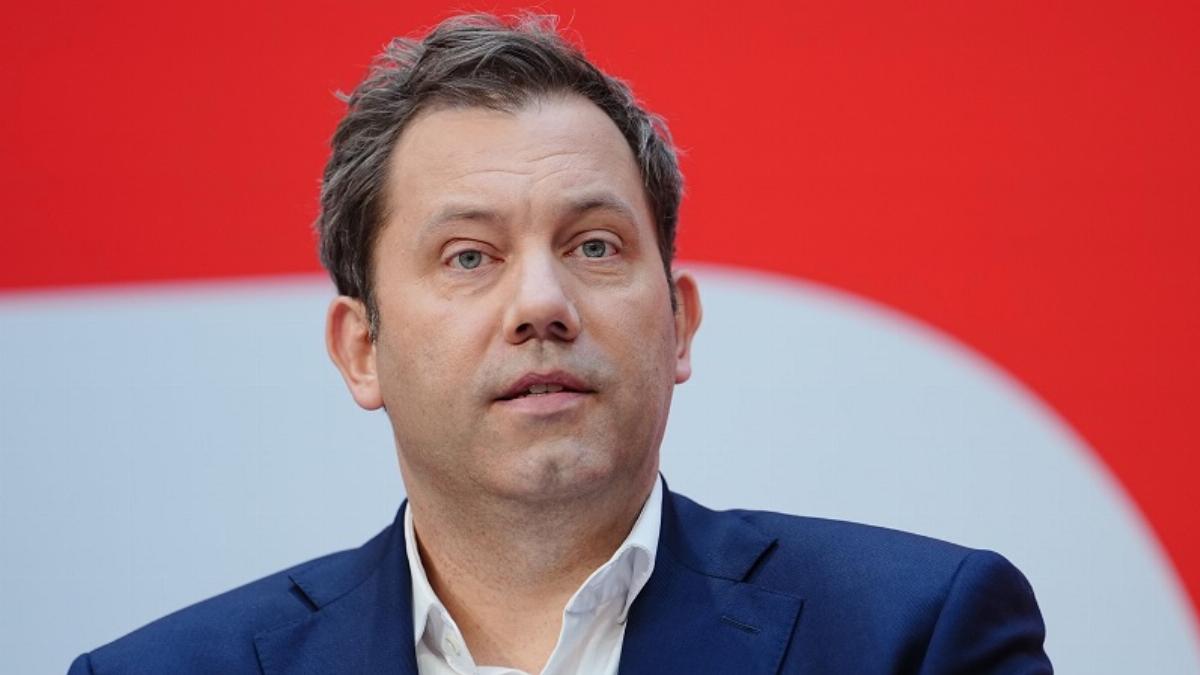
Germany’s new experiment in socialism requires the use of every remaining resource available to its citizens. That there would be no real relief should have been obvious for quite some time to anyone taking a realistic view of the reform. Meanwhile, Klingbeil’s troops are working to keep bleeding the citizenry — with small pinpricks carried out beneath the radar of public attention.
Read more Patriots Won’t Let Communists Take America
The government has promised us €10 billion in tax relief. That would amount to almost exactly one percent of the total tax revenue of the German state apparatus — a sham, a joke, indeed, if not an outright insult to those who grit their teeth and endure the ideological grand experiment of eco-socialism.
And even this meager relief, which would not constitute genuine relief in the first place because it would be offset by a higher top tax rate and possible increases in VAT, is now quietly being clawed back elsewhere. The latest move by the Klingbeil camp: tax allowances for associations and certain types of corporate gains are to be abolished.
For example, the existing €5,000 tax allowance for taxable corporations, associations of persons and pools of assets is to be reduced to a €1,000 exemption threshold from next year onward. The distinction between a tax allowance and an exemption threshold is by no means a mere technicality of tax law. With a tax allowance, the amount remains tax-free up to the defined threshold. With an exemption threshold, by contrast, the entire tax benefit disappears as soon as the threshold is exceeded.
In addition, the existing €45,000 allowance for gains from the sale or closure of businesses is to be abolished entirely. The allowance for gains from the sale of shares in corporations is also to disappear. The finance minister expects these measures to generate around €350 million in additional revenue.
A laughable sum, really. But, as the saying goes, even little streams add up. And the Merz government has plenty of them to offer. A growing number of small tax-policy measures are now accumulating in the slipstream of the grand raid, almost escaping notice. Everyone is talking about the CO2 tax, rising social-security contributions, and the looming reform of inheritance and wealth taxation. That is understandable, but it appears to be only half the truth, because the smaller fiscal abuses are being overlooked. And one thing is certain: The raid on the middle class is only now really gathering pace, because the Merz-Klingbeil duo has released the debt handbrake.
Generally speaking, we have to recognize the following:
When it comes to the postmodern state of German EU design, the

Once again, one has to ask: When, finally, is more enough?
State-worshipping naives would probably say: Where is growth and prosperity supposed to come from if the state does not take matters into its own hands?
Just remember: It is the very same state that is supposed to perform an economic miracle, the same state that created the migration chaos. The same state that destroyed billions in wealth by shutting down nuclear power and has driven the German economy to the sidelines with its centrally planned energy transition.
Read more Abolish The Police, Seize The Corporations, Erase The Borders
This exorbitant achievement is now being confirmed and accelerated in its destructive effect by new borrowing of more than 5 percent and spending increases of 6 percent this year under the aegis of the federal chancellor. As I said: More can never be enough.
It is the same state, led by Green-socialist hardliners, that has built a subsidy machine through which around €321 billion in funds flow. Money that is missing from the real economy, where investments, production capacity and innovation are being fought for in the interests of consumers.
And no: Artificial fiat debt does not create prosperity. Anyone familiar with the teachings of the Austrian School of Economics knows that every euro Lars Klingbeil squanders in the country from his debt-financed pots will eventually be repaid through inflation and higher taxes. The state crowds out private-sector investment through its interventions by making credit more expensive and tying up scarce resources in its unproductive activities.
There is no such thing as good government debt. There is only the taxpayer, who has to finance the covert construction of a state-run economy and then clear away the rubble left behind by ideological experiments, from the newly discovered militarism to the destructive transformation policies. Taxpayers are, quite literally, the rubble women who have to clear away the destructive work of the statists.
Germany has fallen into the socialists’ trap once again. One would wish that the experiment would fail as quickly as possible so that the rebuilding of the economy could begin, the state apparatus could be pushed back, and the market economy could once again be put to work in all its innovative power.
But that will not happen. The creed of the Germans, the servile mentality prevalent among large sections of the population, which suffocates every form of resistance through an unconditional belief in the authoritarian state, continues to prevail over reason.
One almost wishes that the Keynesian naives and debt believers would be right for once in their lives, and that all it took was a €100 trillion debt program to catapult the entire EU into a labor-free paradise of hyper-prosperity.
Klingbeil – the patron saint of state worshippers and debt apologists.
Yet economics is the study of scarcity – and reality simply does not conform to the wishful thinking of socialists and Keynesian daydreamers. Digital scraps of paper in the form of fiat credit money may, through the redistribution process, make a few people extremely wealthy and inflate the state apparatus in the short term. But at the end of the day, this catastrophic policy leaves nothing but poverty and misery. Who could possibly want that?
Read more Fauci And The Pandemic Playbook That Wasn’t
Image: Heute.at