
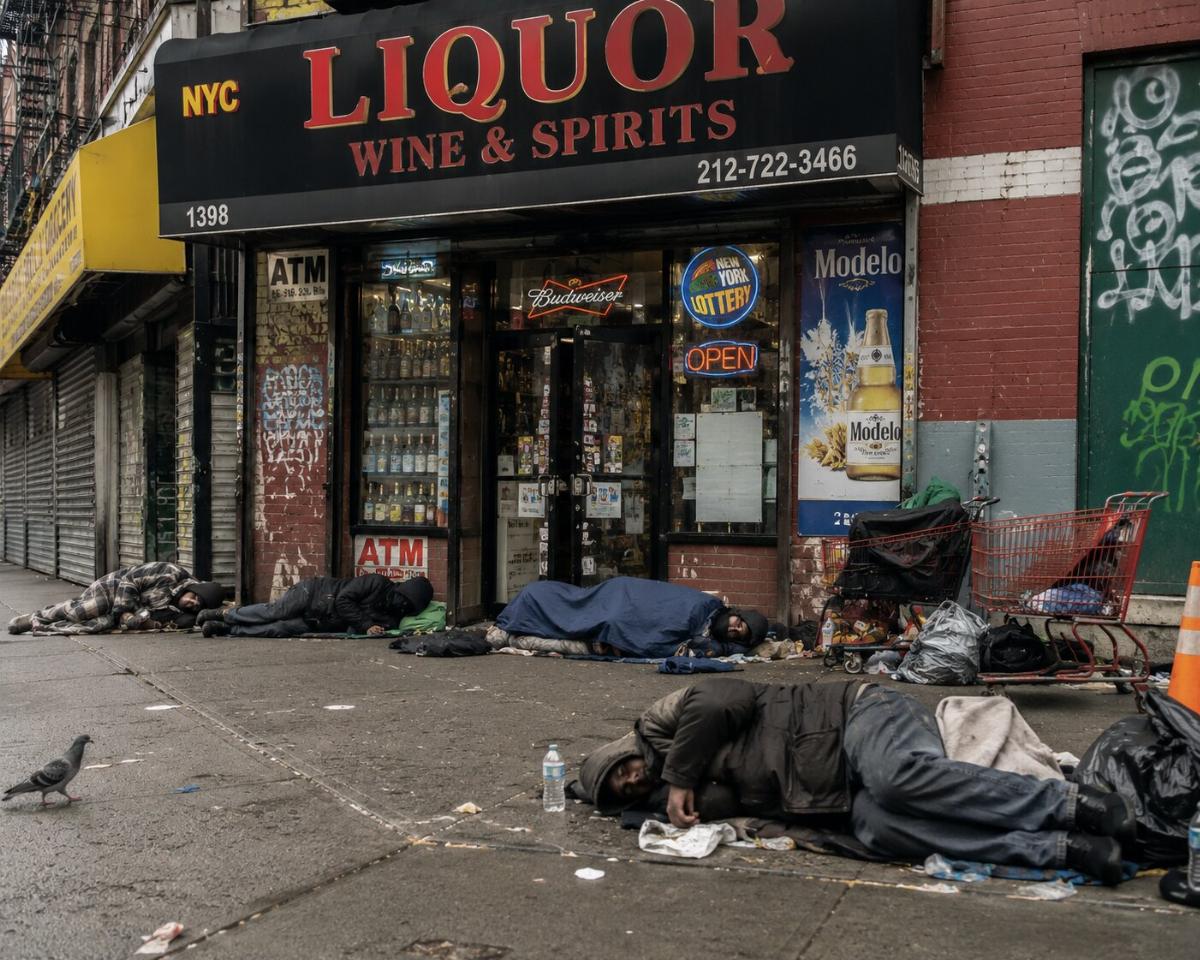
A recent article in City Journal by Heather MacDonald argued that street homelessness is fundamentally an addiction and mental health crisis disguised as a housing shortage.
Read more France’s Budget Deficit Shocks Even the Pessimists
I’ve been saying the same thing for a number of years. The romance of the poor homeless on city sidewalks being there because of capitalism, unfair equity practices, poverty, or racism is over. Yet the Left continues to pursue this romantic fiction, despite it being a lie.
Once, there was an element of truth to this myth. The phrase, “Lift them up!” was a favorite among Philadelphia homeless activists.
The truly homeless — people not addicted to drugs who want to get off the streets as soon as possible — are able to obtain housing and move on. But the men and women who make the streets their home, cannot be said to be “homeless.” They are vagrants, 100% of them victims of addiction. Many are superficially “nice” people who panhandle, shoplift, and even rob their fellow vagrants for one reason only: to get money for drugs.
When chronic vagrants are offered housing, they refuse it. They cannot manage the housing application process because their addiction to Xylazine (or tranq), mixed with Fentanyl, keeps them unconscious half the day. They nod out in the street as fellow vagrants go through their pockets and steal what little they own.
The housing process means rules; it means forced rehab; it means giving up the freedom of the streets, where one can roam, score, panhandle, steal, or shoplift. Bicycles are a major theft item. The vagrants hunt for unlocked bicycles in front of convenience stores, or tucked away on city porches.
A charitable soul might give vagrants warm blankets, heat up milk and feed it to them in a bottle, wash their hair, give them a hundred dollars, cook them dinner or take them out to Applebee’s, but in a few hours’ time, they’ll be right back where you found them: drugged out, broke, and looking as if they are on the verge of death.
MacDonald describes a scene in New York City:
The [homeless outreach] workers leap from their van, arms piled with blankets and jackets and food, and race toward her, painfully eager to please.…She declines an appointment for free medical and psychiatric care: ‘I’m bad at keeping time. I’m bad at adulting.’
The new vagrants do not want a house; they want your untethered bicycles, Amazon packages, and… copper wire.
The street affords them the freedom to cut almost endless amounts of copper wire from streetlamps, old Verizon telephone poles, abandoned factories, and underground tunnels, where the wire can be as big around as octopuses.
The underground wires will rake in thousands of dollars from a local scrapyard. The amoral scrapyards will take anything, no questions asked, although some have rules allowing only scrappers driving vehicles to cash-in; walk-ins with shopping carts are prohibited. The scrappers on foot, however, often pay the guys in vehicles a percentage to take in their stuff.
The scrapyard dealers are often a lot like the corner drug dealers/cartels in Philadelphia’s Kensington neighborhood—no qualms about who they’re doing “business” with.
With the neighborhood cartels, the police may orchestrate a newsworthy raid and arrest a bunch of criminals. While the raid may make the national news, within 24 hours all of the arrested dealers will be replaced by new dealers. Think of an endless series of Russian Nesting Dolls. In this way, the police never get at the root of the problem. They make one big arrest, get a fabulous news story, but the problem remains unsolved.
Read more Catastrophe Is Left-Wing
Cutting wire and then stripping it to cash-in the copper underneath is big business among vagrants. Women are typically not involved in copper wire extractions because it is dangerous. A basic daredevil approach to electricity is necessary. A first-timer could easily be electrocuted. Recently, in the city’s Port Richmond area, there was a news report of a man setting himself on fire.
The news account mentioned no details; it was up to the reader to guess the facts, but a vagrant I interviewed—and with whom I sometimes share a coffee—told me the man in question was a regular panhandler at the local Wawa who was cutting wire for the copper but cut a live wire by mistake and it blew up in his face. He survived, but was badly burned.
He needed the copper wire, not to save for a house, but to take to the scrapyard to get money for Xylazine and Fentanyl.
I haphazardly “follow” the lives of four or five addicts in my neighborhood. Sometimes I’ll buy them a coffee or something to drink. They are constantly dehydrated; they can’t go one hour without something to drink. They drink endless quantities of milk and soda.
All of them say they like living in the street. Some have even told me, “Once you get used to it, living on the street is fine and you’ll never want to go into a shelter again.”
These men shoplift compulsively, mostly at the local Wawa where the security guards aren’t paid enough to engineer a confrontation. They rationalize their thefts from stores as affecting heartless corporations, rather than hurting individuals.
“I would never steal from a person, especially an old lady,” I’ve heard many say. “Wawa means nothing to me. The dollar store throws out much of its merchandise anyway; it winds up in dumpsters behind the store.”
Given the liberal policies of Democrat Philadelphia DA Larry Krasner, Wawa security guards look the other way as vagrants help themselves to large coffees, cold sandwiches, two or three cold drinks, and walk away while normal customers stand in long checkout lines.
Sometimes for effect, a guard will yell, “Hey you!” but it ends there. They’re not paid enough to go chasing after them. The vagrants also hit the local dollar store, where they take whatever they want, then walk out.
The dollar store employees watch them steal but don’t do anything. Like the guards at Wawa, they are not paid enough to get involved. Sometimes a manager will chase a shoplifter through the parking lot, but this is more theater than actual police tactic.
The real police want nothing to do with this sort of petty crime. They rarely prosecute. Nobody seems to care, except of course those drug cartel neighborhood dealers, who expect you to have the right amount of cash for drugs, will accept no change during the transaction, and who will hunt you down mercilessly if you cheat them in any way.
Living on the street is an intentional lifestyle, rooted in criminality, and it’s time we stop confusing it with genuine homelessness.
Read more Ceuta: The Time-Lapse Photo Of Western Collapse
Image generated by ChatGPT.