
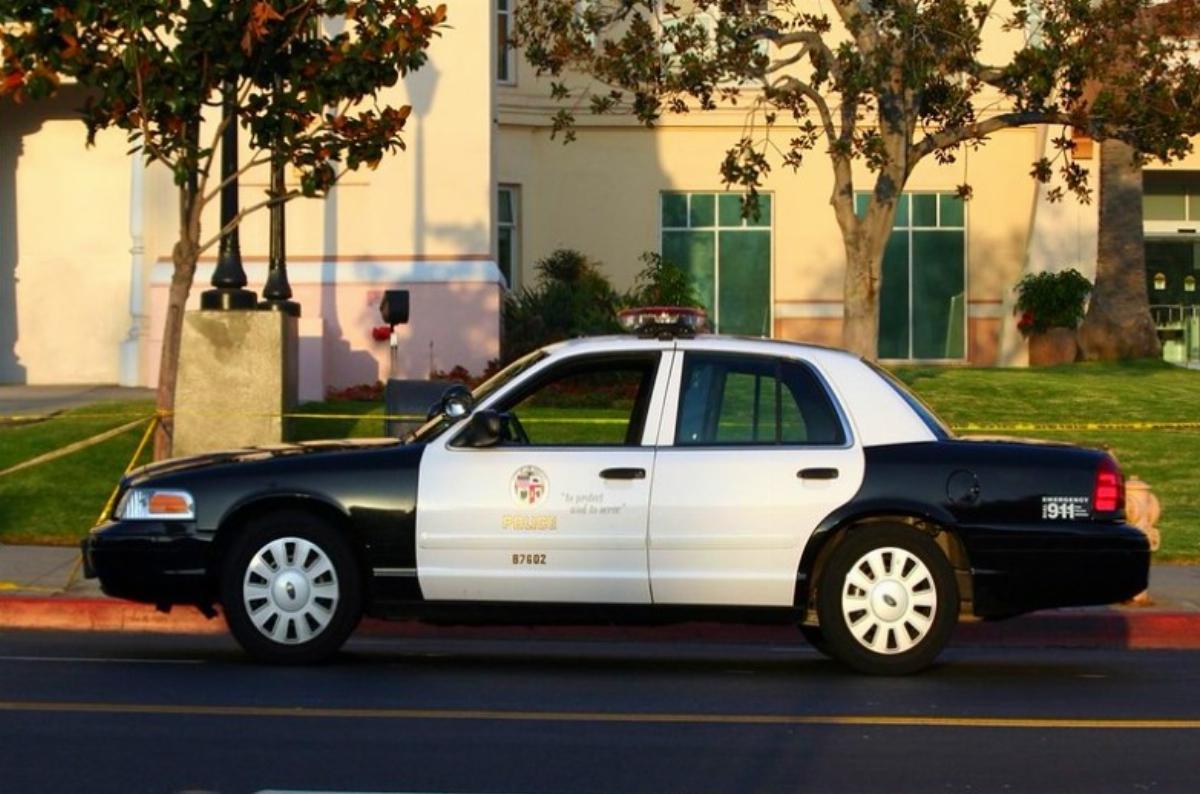
In 1995, as a Valley Traffic Division motorcycle enforcement officer in Van Nuys, I noticed something that bothered me about how the press covered the Los Angeles Police Department. The reporters were not lying, exactly. They were doing what reporters do: taking the department’s official statement, taking a critic’s statement, splitting the difference, and printing the result. The problem was that the department’s side of the story arrived at the newspaper through a small communications office, got compressed into two or three sentences, and then competed with whatever the loudest critic of the week had to say. The public read the result and concluded that the department was either hiding something or was incapable of explaining itself. Often it was the second.
Read more The Dollar And How America’s Financial Power Shapes The World
There was an obvious fix. The department could speak for itself, directly, in its own words, without a middleman, twenty-four hours a day, to anyone in the world who wanted to read it. The technology to do this had just arrived. It was called the World Wide Web.
I did not ask for permission. I obtained server space through a private consulting firm I ran on the side, donated it to the department, and built a Valley Traffic Division website at thrutraffic.com/vt. Julie Tamaki at the Los Angeles Times wrote it up. Other LAPD officers and other departments began calling to ask how to do the same thing. I helped several U.S. and international agencies put up their own sites before the responsibility for police internet work was eventually transferred to a thirty-person office that did not exist when the work started.
The story is not about me. It is about what was possible inside the LAPD in 1995, and what is no longer possible inside the LAPD in 2026.
In 1995, a commanding officer could look at his patrol officer’s side project, see that it served the public, see that it cost the city nothing, and say go ahead. The chain of command above him agreed. There was no committee, no risk-management review, no public-information directorate, no general counsel pre-clearance. There was a problem the department had — the public was getting a distorted picture of what it did — and there was an officer who saw a way to solve it. The institution had not yet acquired the antibodies that would later make such a thing impossible.
I joined the LAPD in 1980 after six years in the United States Marine Corps. I served the department through twenty years — patrol, vice, narcotics, motors, court-qualified expert testimony in narcotics cases — and retired honorably in 2000. The department I joined and the department I retired from were not the same institution. The uniform was the same. The badge was the same. The radio call signs were the same. What had changed was the answer to the question what is this department for?
In 1980, the answer was to protect and to serve. That is what officers said to one another, and that is what the department said to itself in its training, its promotion criteria, and its day-to-day decisions about how to deploy people. A peace officer was a person who, by his presence and by his judgment, kept ordinary life from sliding into disorder. He used force when he had to and not when he did not. He testified truthfully in court. He earned the trust of the neighborhood he worked. The mission and the method were one sentence long.
By 2000, the answer had become we manage liability. The shift did not happen overnight, and it did not happen because anyone announced it. It happened because, over the course of two decades, every operational decision inside the department began to be filtered through the question what will this cost us if it goes wrong? This is a necessary question, but when it becomes the first question — before is it the right thing to do? and will it keep the peace? — the institution has changed its mission without telling anyone, including itself.
Read more Antisemitism in the Medical World
The inflection point most observers point to is the 1991 Rodney King incident and the Christopher Commission report that followed it. That is correct as far as it goes, but it is incomplete. The Christopher Commission named real problems and made real recommendations. Some of the recommendations were sound. The deeper consequence, however, was not the recommendations themselves. It was the establishment of a permanent mode of operation in which the department now had to justify itself, continuously, to an external oversight structure that did not exist before. The operational center of gravity inside the department moved, year by year, from the watch commander’s desk to the legal affairs office.
By the time of the 1997 Rampart scandal, the transformation was visible to anyone paying attention from the inside. Rampart was a real scandal involving real misconduct by a small number of officers, and the department was right to address it. What it was not right to do — and what it did anyway — was to use Rampart as the occasion for a wholesale reorganization in which every officer was treated, by default, as a potential liability event. Discretion at the patrol level shrank. Reporting requirements expanded. The number of officers who would, in 1985, have used judgment to keep a minor matter from becoming a major one began instead to file forms and let the matter run its bureaucratic course. The street learned this faster than the department did. Officers learned not to act unless they were certain that the action would not generate a paper trail that someone, somewhere, would later use against them.
This is what I mean by institutional capture from inside policing. The old operating system asked, What does this neighborhood need? The new operating system asks, What does the department need to protect itself from? Both questions can be asked by good people in good faith. Only one of them produces a peace officer. The other produces a risk-management technician in a uniform.
An officer who exercises discretion and gets it right is rewarded with a quiet shift. An officer who exercises discretion and gets it wrong — even modestly wrong, even in a way that another officer in 1985 would have handled with a conversation — is now exposed to a chain of internal-affairs reviews, civil litigation, federal monitoring, and media coverage that did not exist as institutional realities a generation earlier. The rational officer learns not to exercise discretion. The neighborhood loses the peace officer. The department gains another technician.
I retired in 2000 because the department I had joined was no longer there to retire from. I served twenty years, and I am proud of every one of them. I am also clear-eyed about what happened over those twenty years, and what has continued to happen in the twenty-six years since. The LAPD is not unique. The same transformation has run through every major American police department on roughly the same timeline, driven by the same incentives, producing the same result.
If we want peace officers back, we will have to rebuild the conditions under which sergeants and captains can look at a good idea, recognize that it is a good idea, and say go ahead. That culture is built or destroyed one decision at a time, by people whose names will never appear in the Los Angeles Times, in departments whose problems are too local to be interesting, in moments when the right thing to do is obvious to everyone present and the institution either lets it happen or does not.
Read more The Nationalism of St. Joan of Arc
In 1995, it let it happen. I do not believe it would today.
 Flickr, CC BY-SA 2.0.” class=”wp-image-398″ width=”640″ height=”423″ />
Image: jondoeforty1 via Flickr, CC BY-SA 2.0.