
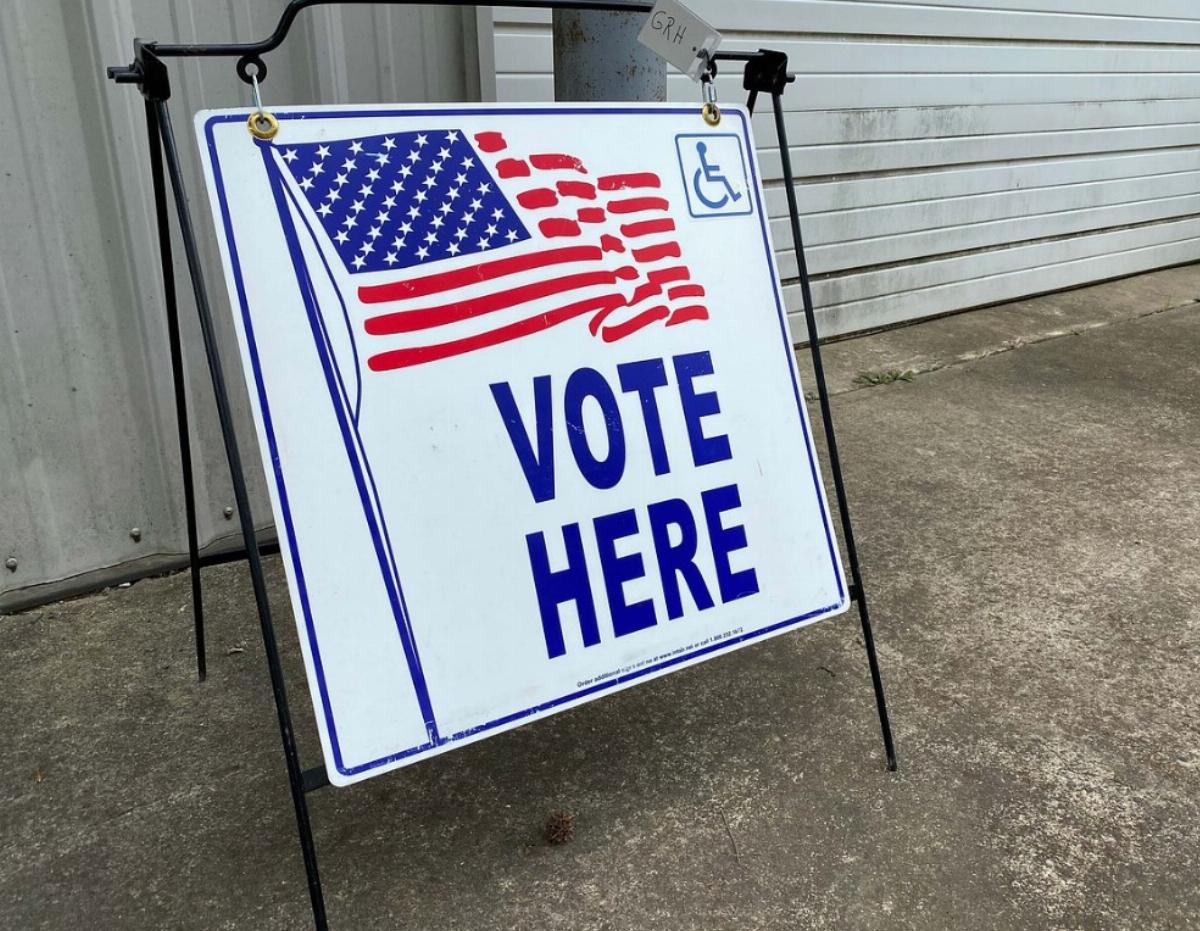
Liberals and moderate Democrats should vote Republican — just once — and make clear exactly why they are doing it.
Read more Damning data: Foreigners are taking all our jobs
Not because they suddenly became conservatives. Not because they joined MAGA. Not because they abandoned long-held liberal beliefs on health care, abortion, climate change, or social programs.
They should do it as a statement that the Democrat party is no longer recognizable to many Americans who once formed its center-left backbone.
The goal is to save the Democrat party by empowering moderates who have been silenced or politically marginalized by an increasingly radical activist left that now defines far too much of the party’s moral and political identity. Political parties reform after losses.
Many Americans believe that the Democrat party has become incapable of correcting itself internally because the people capable of restoring balance no longer appear to control the party.
Leftists with radical viewpoints no longer merely influence the Democrat party; in many areas, they define its moral and political boundaries. Moderate Democrats still exist, but many now fear activist backlash, donor pressure, social media outrage, and primary challenges should they openly dissent from progressive orthodoxy.
Americans watched as “Defund the Police” moved from activist slogan to mainstream political discussion. Riots were repeatedly described as “mostly peaceful.” Masked demonstrators blocked highways, occupied campuses, vandalized businesses, intimidated opponents, and disrupted public life while political leaders often appeared reluctant to restore order decisively for fear of backlash from activist constituencies.
Many Democrat leaders now appear politically trapped by the very activist movements they once encouraged.
At the same time, basic border enforcement increasingly became treated as morally suspect. Sanctuary policies expanded. Rhetoric minimizing illegal immigration entered mainstream discourse. Even liberal cities eventually acknowledged that unlimited migration without enforcement was unsustainable.
The Democrat party increasingly allowed ideological activism to replace practical governance.
Perhaps nowhere has this shift become more alarming than in the explosion of antisemitism following October 7.
Instead of universal moral clarity following the massacre, torture, rape, kidnapping, and murder of Israeli civilians by Hamas terrorists, many Democrats and much of the media immediately pivoted toward moral relativism, rationalization, or outright hostility toward Israel itself.
Criticizing Israeli policy is legitimate. Israelis themselves debate their government vigorously. But questioning the legitimacy of the world’s only Jewish state is something very different.
Zionism, stripped of slogans and propaganda, is simply the belief that the Jewish people have the right to self-determination in their ancestral homeland after centuries of expulsions, persecution, pogroms, and ultimately the Holocaust.
Yet increasingly, the left insists that the one Jewish state is uniquely illegitimate. The Jews are among the only peoples continuously tied to the same land, language, religion, and identity for more than 3,000 years. In what historical framework does an indigenous people — conquered eleven times, yet never fully removed from its ancestral homeland and repeatedly returning to it across centuries — become redefined as “colonizers”?
Many Jews now ask whether this obsession is really about Israeli policy at all. The answer becomes clearer when activism shifts from targeting governments to targeting Jews themselves.
Read more Park pervert alert: Arab (presumed) migrant starts aggressively masturbating in front of everyone
After October 7, synagogues, Jewish schools, and Jewish neighborhoods across the United States became sites of intimidation and harassment. Protesters shouted “Globalize the Intifada,” “Go back to Auschwitz,” and “Khaybar, Khaybar ya Yahud” — a chant historically associated with anti-Jewish violence. Demonstrators blocked entrances to synagogues in Los Angeles, Brooklyn, Manhattan, and elsewhere while chanting slogans such as “We need to make them scared.”
They targeted Jews praying, gathering publicly, or simply existing openly as Jews.
This is not an isolated incident. It is the progression of fringe radical leftism into organized political influence inside the Democrat party itself, while the mainstream media increasingly function less as a skeptical observer and more as an ideological participant.
In New York City, mayoral candidate Zohran Mamdani alarmed many Jewish and moderate voters not only because of his socialist politics, but because his broader ideological movement increasingly appeared hostile toward Zionism, policing, and traditional liberal norms. Mamdani’s wife publicly “liked” social media content celebrating or glorifying the October 7 murders of Israeli civilians, alarming many Jewish and pro-Israel voters.
Meanwhile in Michigan, Democrat Senate candidate Abdul El-Sayed aligned himself with “Medicare for All,” hostility toward private insurance systems, and rhetoric associated with “defund the police” activism. He also associated himself with controversial far-left influencer Hasan Piker, who openly celebrates Hezb’allah, has used rhetoric encouraging political violence, and has repeatedly made comments about America and Israel that many moderates view as extremist and profoundly irresponsible. Yet Democrat candidates still seek his support because of his influence among younger voters — evidence of how successfully radical ideology has been normalized among a rising generation.
There was a time when mainstream Democrat politicians would have viewed associations with rhetoric excusing terrorism, glorifying violence, or demonizing America as politically toxic. Increasingly, that no longer appears to be the case.
Many moderates struggle to reconcile that Democrats are too insulated from scrutiny, accountability, and serious internal criticism by either the media or the Democrat party itself until it is no longer credible to insulate them.
When progressive politicians are accused of extremism, agenda-driven media often appear eager to minimize or redirect attention elsewhere. When conservatives are accused, the presumption often appears to be immediate guilt and moral disqualification.
At the same time, massive fraud investigations in Minnesota involving billions of dollars in alleged public misuse, ongoing corruption investigations in Los Angeles, and catastrophic governance failures surrounding the Palisades fire response further erode public confidence in one-party progressive governance.
Add it all up, and the conclusion becomes difficult for many moderates to avoid: The Democrat party increasingly appears captive to ideological activism while marginalizing moderation.
One figure can be dismissed as an outlier. A handful as coincidence. But when hostility toward dissent, normalization of disorder, anti-police rhetoric, antisemitism, and the courting of openly Marxist influencers whose rhetoric many Americans view as deeply anti-American and increasingly supportive of political intimidation all converge within the same political movement, one must recognize that the center of gravity inside the party has changed.
That is why many lifelong liberals may need to consider doing something politically uncomfortable: voting Republican once — not out of loyalty to Republicans or devotion to Donald Trump, but as a strategic intervention designed to empower moderate Democrats to wrestle back the soul of the Democrat party.
Healthy democracies require two sane, functioning parties capable of governing from the political center. When one party drifts too far toward ideological extremism, electoral defeat may become the only mechanism capable of forcing introspection and course correction.
Far from being a betrayal, this may be the only remaining path back toward a Democrat party once again capable of representing ordinary Americans in the political center and center-left.
Read more Anti-American Mamdani supports who?
Image via Pixabay.