
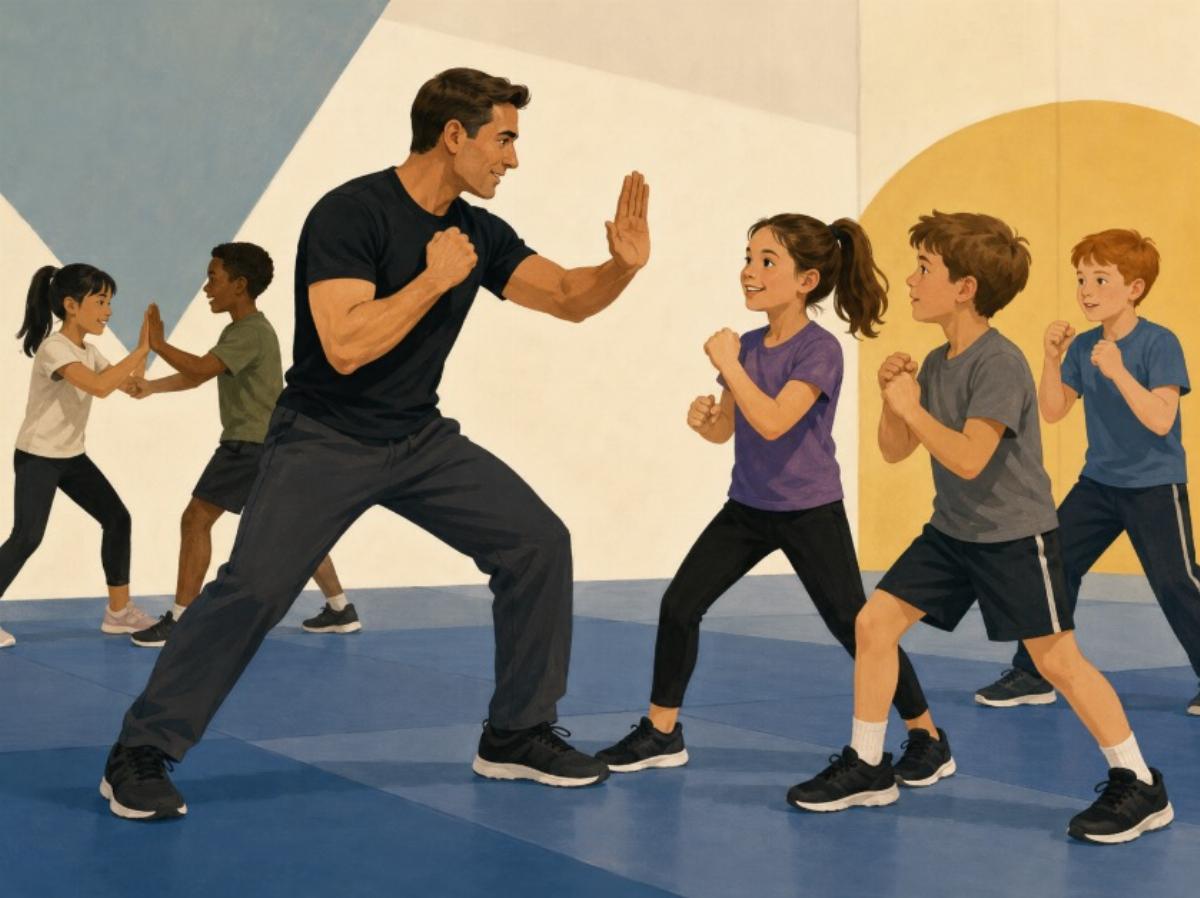
As a parent, I have the same concerns as many others. I want my kids to learn discipline, to hold proper values, and to know right from wrong. I grew up in Israel and trained in martial arts my whole life, and I’ve spent years teaching it since. Both of those tell me the same thing: Physical training is a mandatory part of raising a person who wants to live in peace.
Read more Consumer sentiment during the COVID lockdowns
Many parents worry that exposing a child to striking and physical contact will turn the child into an aggressor. I think that fear is pointed at the wrong thing. The pull toward violence comes far more from movies, video games, and hours a day in front of a screen rather than from an hour on a mat with a coach watching every move.
Consider how much of ordinary life already runs on safety. We manage risk many times a day without noticing. Which street to take and which to avoid. Who feels safe and who might be a threat. Safety shapes so much of what we do that I find it strange people fear their child “becoming aggressive” more than they fear their child being unprepared. The danger doesn’t disappear because we look away from it. A kid meets it either way. The only question is whether he meets it ready.
That readiness changes how a person carries himself. People who can handle themselves are steadier, and they take on more in life because less of it frightens them. So let me define the thing plainly. Self-defense is not violence. It’s the ability to respond to a challenge. That ability doesn’t create conflict. It helps you avoid it.
And it comes with a responsibility to be better and more reserved. Any teacher grounded in the art teaches that first, because strength without restraint is just a threat wearing a uniform. Children take this in faster than adults do, and it changes the shape of their lives when strength becomes ordinary to them. Restraint is hard. It’s a form of resilience, not surrender.
Underneath all of it is something simpler. A child who learns to defend himself learns that he’s worth defending. It starts with self-love. When you love yourself, you protect yourself and the people you love. Everything else in the training is built on that.
The real value of the work has almost nothing to do with fighting. Training doesn’t look like an UFC match. It begins with the small things, like how to keep your balance and move well.
Read more Islam: when they tell you they want to kill you, believe them
What children pick up almost right away is how to stay steady under a little pressure without coming apart. A ten-year-old who flinches and freezes the first time a partner reaches for her wrist will plant her feet a few months later and respond instead of panicking. That change doesn’t come from a talk about confidence. It comes from doing the same small thing under a bit of pressure, over and over, until her body stops reading that pressure as an emergency.
People lose this part when they talk about kids and martial arts. We say the word “confidence” so much it barely means anything now. What I actually watch happen is smaller and more useful. A child who used to look away during an uncomfortable moment starts looking right at it. That skill has nothing to do with punching anyone. It shows up at school, at a birthday party, in a fight with a sibling, long before it would ever show up on a street.
There’s more reason for this now than there used to be, though maybe not the reason you’d guess. The kids I train aren’t undisciplined. If anything, they’re overscheduled and underexercised, spending hours a day inside a screen that asks nothing physical of them.
A phone won’t tell a child to stand up straight or hold her breathing steady while she waits for a partner to move. A mat does. There’s something almost old-fashioned about a room where kids spend an hour fully present with other people and no phone within reach, and I’ve watched that hour do more for an anxious, distracted kid than almost anything else I know.
None of this makes a child invincible, and I’d be careful around anyone who tells you it does. Training doesn’t replace good parenting, and it won’t fix a kid’s struggles in a handful of classes. Time and commitment will. What it gives a child is one more real place, away from a screen, to connect with others and learn how to huddle pressure instead of getting overwhelmed by it. Childhood has fewer and fewer of those places left, and I don’t think that’s a small thing to offer.
Do something amazing,
Image created using AI.
Tsahi Shemesh is an Israeli-American IDF veteran and the founder of Krav Maga Experts in NYC. A father and educator, he writes about Jewish identity, resilience, moral courage, and the ethics of strength in a time of rising antisemitism.
Read more Four Airlines Is Not a Market