
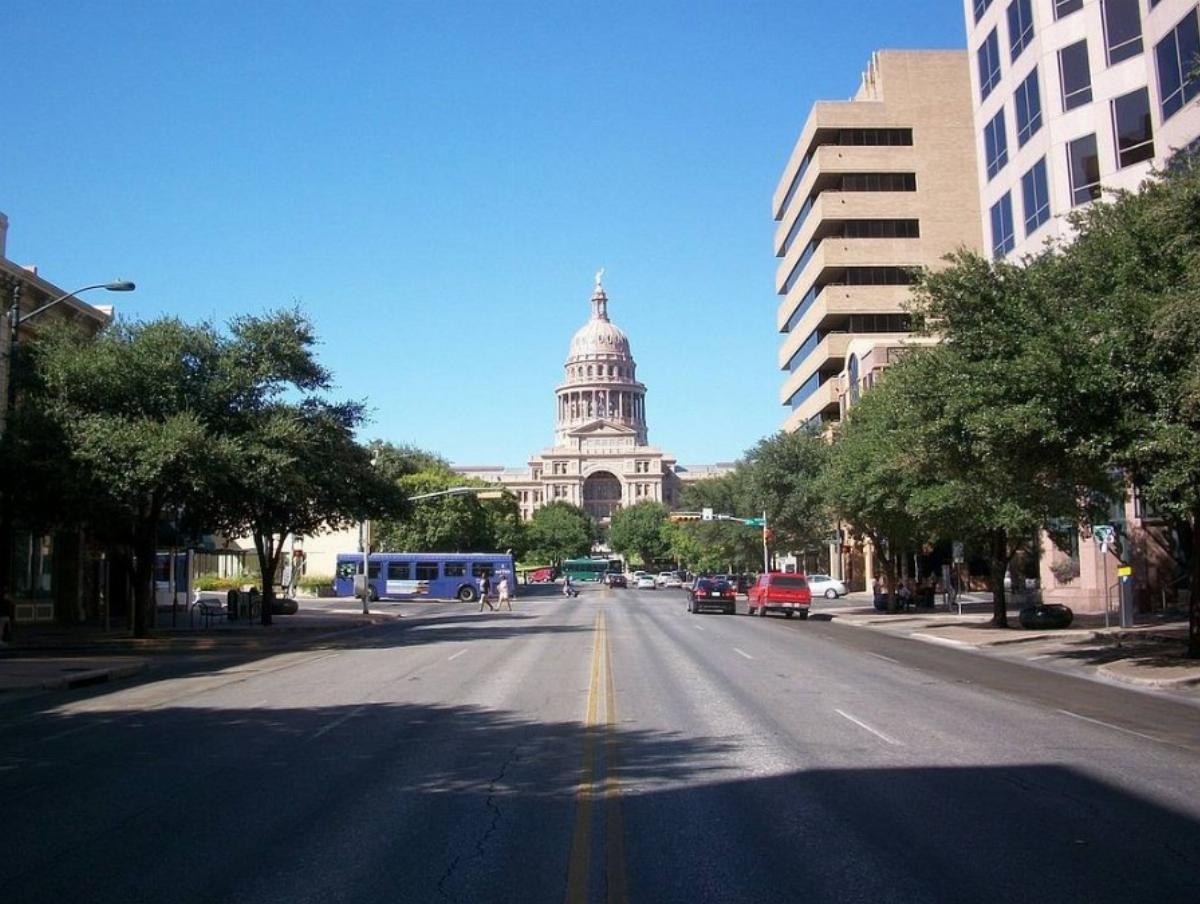
Resisting national standards, federal pressure, and outside influences, Texas historically has exercised its constitutional right to determine what Texas students will learn. The State Board of Education (SBOE) has had control over the content suitability of instructional materials and open education resources.
Read more Bombshell Biden memo: More illegals means more illegal voters
With the Legislature’s passage of Senate Bill 6 in 2011, control over content was stripped from the SBOE. Open to the whims of unelected and unaccountable publishers heavily influenced by national teachers’ unions, academic content was fused with Common Core, social justice, LGBT, Critical Race Theory, and wokeism.
The use of taxpayer money by districts to purchase non-approved technological products, especially online learning, exploded after 2011. This began the shift away from textbooks to online learning and wide use of SBOE-unapproved open resources.
With the implementation of SB 6 in 2011, NAEP math and reading scores began a steady decline. Texas parents, angry over ideological indoctrination, demanded transparency and control. Their demands were met with the passage of House Bill 1605 in 2023, which restored total control to the SBOE over the content of instructional materials. Texas reclaimed the right to determine what its students would learn in the classroom.
That principle has been undermined again.
Now the debate is over Personal Financial Literacy and who controls what Texas students will learn. The passage of in 2025 distinguished financial literacy as a standalone graduation mandate. It removes traditional economic principles and much of the free enterprise that constituted the previous financial literacy course. Remaining is content that, ostensibly, helps students learn practical skills such as budgeting, saving, investing, credit management, and taxes — bookkeeping skills. They won’t learn why prices have gone up for a college education, or housing, or a gallon of gas at the pump.
HB 27 directs the SBOE to “develop a list of free, open-source, and publicly available curricula.” As with SB 6, districts can purchase non-SBOE approved open resources with taxpayer money. Because these digital materials are controlled by third parties, they can be updated or revised at any time without any approval by the SBOE or any parental knowledge.
Now a red flag flies high, signaling danger ahead.
Recently, SBOE District 2 member LJ Francis (R) that would strip entrepreneurship from the Personal Financial Literacy standards scheduled for a September vote. Internal records obtained by Texas Scorecard revealed that a California non-profit, Next Gen Personal Finance (NGPF), worked with Francis in revising the free market lessons and stripping entrepreneurship from the course.
NGPF is a provider of free open resources with a “Mission 2030” strategy to implement its financial literacy framework in all fifty states — a framework that includes Critical Race Theory. In “Racial Discrimination in Finance,” finance is viewed through an “anti-racist” lens — oppressed vs. oppressor — in each of the lessons.
Read more The Fifth Column inside the US and UK
In the lesson “Racial Discrimination and Financial Wealth,” students “consider the role of reparations to redress the harms of slavery and violence against Black Americans and other historically excluded communities.” In “Racial Discrimination in Banking,” students “identify how racial discrimination has impacted two key functions of banks: keeping deposits secure and lending money.” In “Racial Discrimination in Housing,” students are to “analyze historical and current housing practices and policies that have prevented, and continue to prevent, communities of color from generating wealth.” In “Racial Discrimination in Education and Employment,” students 1) “examine how systemic racism has impacted access to higher education and student debt” and 2) “consider the impacts of racial discrimination on employment and wages.”
The NGPF curriculum could face legal challenges in Texas with its ban on teaching Critical Race Theory. Regardless of whether the curriculum could be successful against legal challenges, it should be rejected.
Texas law mandates that students learn about the failures and atrocities of communism. Yet the new financial literacy course removes instruction about the alternative of free market capitalism that has made America the freest and richest nation in the world through private property, entrepreneurship, competition, voluntary exchange, and economic freedom.
Support for capitalism by American youth has steadily declined over recent years, with only 39 percent in favor, according to the Harvard Youth Poll. A survey by Newsweek found that American youths do not understand capitalism. Consequently, they are easily lured by the false promises of Democratic Socialists of America (DSA), as evidenced by Gen Z and Millennials turning out en masse to elect DSA candidates in New York City.
Public education has failed to educate American youth about free market capitalism, which is responsible for much of America’s standing as the world’s largest economy and the most innovations over the past century. They listen to criticism without recognizing that free market capitalism has brought economic freedom and lifted more than one billion people out of poverty worldwide.
SBOE members have an obligation to Texans to restore the economics, free enterprise, and entrepreneurship principles that have been stripped from the Personal Financial Literacy standards. They must affirm the mandate in HB 1605 that requires they have full control over all instructional materials funded with taxpayer money. And last, the Texas Legislature must amend the irresponsible HB 27, which contradicts their excellent HB 1605, and include traditional economic principles and free enterprise in the financial literacy course.
Carole Hornsby Haynes: Education policy/curriculum adviser, historian, classical pianist/organist, and financial services entrepreneur. www.drcarolehhaynes.com [email protected]
Read more ‘Never again’ is being replaced by ‘almost here’
Image via Pexels.