
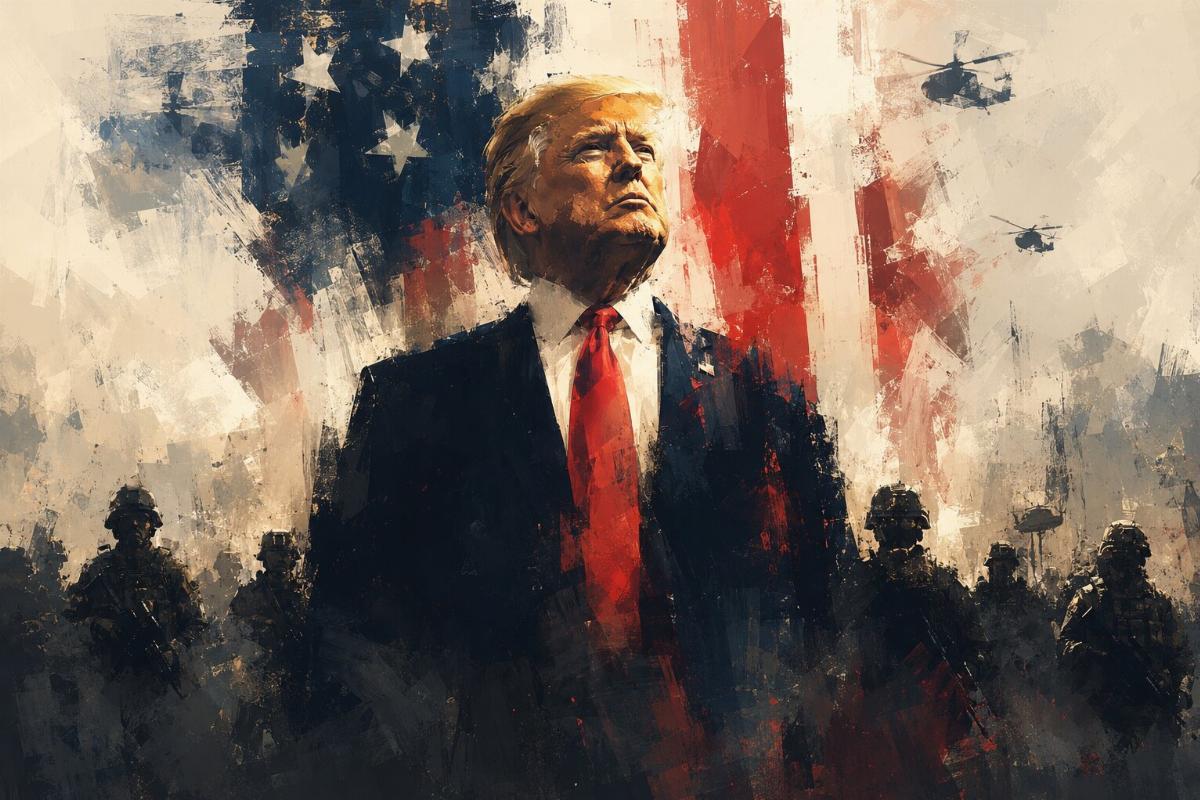
There is much wishful thinking, self-deception, and media bias concerning the Iran war. Nearly all political progressives currently assert that Iran has somehow “won,” and more important to them, that the U.S. and Israel have “lost.” This is accompanied by sweeping claims of a decline of the West. It is a partisan indulgence of moralizing rather than critical thinking, especially over an imaginary legal order.
Read more The Solvency Trap: Anguish over SNAP revocations miss the real scandal
War always invokes the concept of international law, and whether it can be summoned to enforce a settlement or punish combatants. It can do neither because there is no working functional enforcement body for international relations. This is an old legal theory that has been debated for decades, especially after World War II. The Nuremberg Trials created the impression that in the end, law “works.” Those trials, however, were the actions of allied victors in a tribunal, so it’s hard to say if the law was “working pure” in that regard. Moreover, when Germany was split in two, it was simply policed militarily and politically by the West and the Soviet Union. The Berlin Wall was not eventually torn down by court order.
That won’t stop the progressive Left from insisting that an imaginary force called international law can still intervene, and tell the U.S. and its allies what to do in the Middle East.
The president of the American Society of International Law claims in a NYT opinion that, if only the U.S. had gone politely to other countries first, and to the United Nations, it would have realized that it needed the consent of the Arab states, the EU, and the UN in order to properly establish a basis for pursuing its interests. As she states, “The United States attempted to essentially go it alone. Acting only with Israel, President Trump believed he could use the unparalleled might of the U.S. military. The president did not seek approval from the U.N. He did not consult with partners in the region before starting a conflict.”
What is fascinating about this view, which is the progressive Left’s collective verdict on the U.S. and Israel, is that it rests on a naive intellectual abstraction about superpowers: that they are “collectives” that work through global institutional consensus. That is a logical fallacy in a number of dimensions, but especially because there is no stable global international consensus that is even possible.
The world is not run by overt partnerships or by leaderless, soft institutions like the U.N. Superpowers don’t go around and ask if it’s O.K. to be a superpower. That is not an argument for recklessness or hegemony. It is a reality of the nature of power and interest. Indeed, that is why the EU is not a superpower, and never will be: it is an assembly of quarrelsome relatively minor states, and overseen by an ideological bureaucracy in Brussels that fancies itself a unified voice in foreign affairs.
The biggest illusion that the global political Left is indulging in its criticism of the U.S. is twofold.
Read more RIP ‘Maestro’
In the first instance, it assumes that the other actual superpowers—China and Russia—are somehow allied together against the U.S. and Israel, and that Iran is enjoying their protection. That is difficult to square in realpolitik terms. China and Russia care about China and Russia. That is among the reasons they are superpowers. As for oil, they have plenty of their own, and can buy it and sell it on the open market. The Caspian is surely a prize and won’t be surrendered by anyone on the Eurasian continent, but it will still be subject to international exchange regardless of who may claim it (the same is not true of the Ukraine, which will eventually be reabsorbed by Russia, because Russia has the absolute power to do so—and it won’t be going to the UN or Brussels for permission, nor will China over Taiwan).
The second illusion from the political Left about the Iran war involves a completely premature and naive judgement about military power. As one insightful observer put it concerning the use of force and relative power, the U.S. and Israel have been fighting with one hand tied behind their back. That is, despite claims—and wishful thinking—that the U.S. is tired and subject to international pressure, and that Israel has been intimidated by Iran and having second thoughts, the reality is that U.S. military restraint has been observed, and overwhelming use of force has been held in abeyance.
Iran and its allies in the liberal West, are still suffering from wishful thinking about the nature of power. That includes a misconception about international law as a supranational force that mediates international disputes.
International order isn’t made by bureaucratic charters and treaties, but by common interests in an eventual “deal” made by people.
President Trump instinctively understands what real law is, and is giving a lesson to those who believe in an illusory international legal order that works through the magic of paper-work and institutions. This is not an argument for casual foreign policy or unbridled violence. It is merely the pragmatic reality of superpower force: it does not start with international permission, and it does not end with international law.
Matthew G. Andersson is a former aerospace CEO and law and policy author. He has testified before the US Senate, and is a graduate of the University of Chicago.
Read more Crime … and no punishment
Image generated by ChatGPT.