
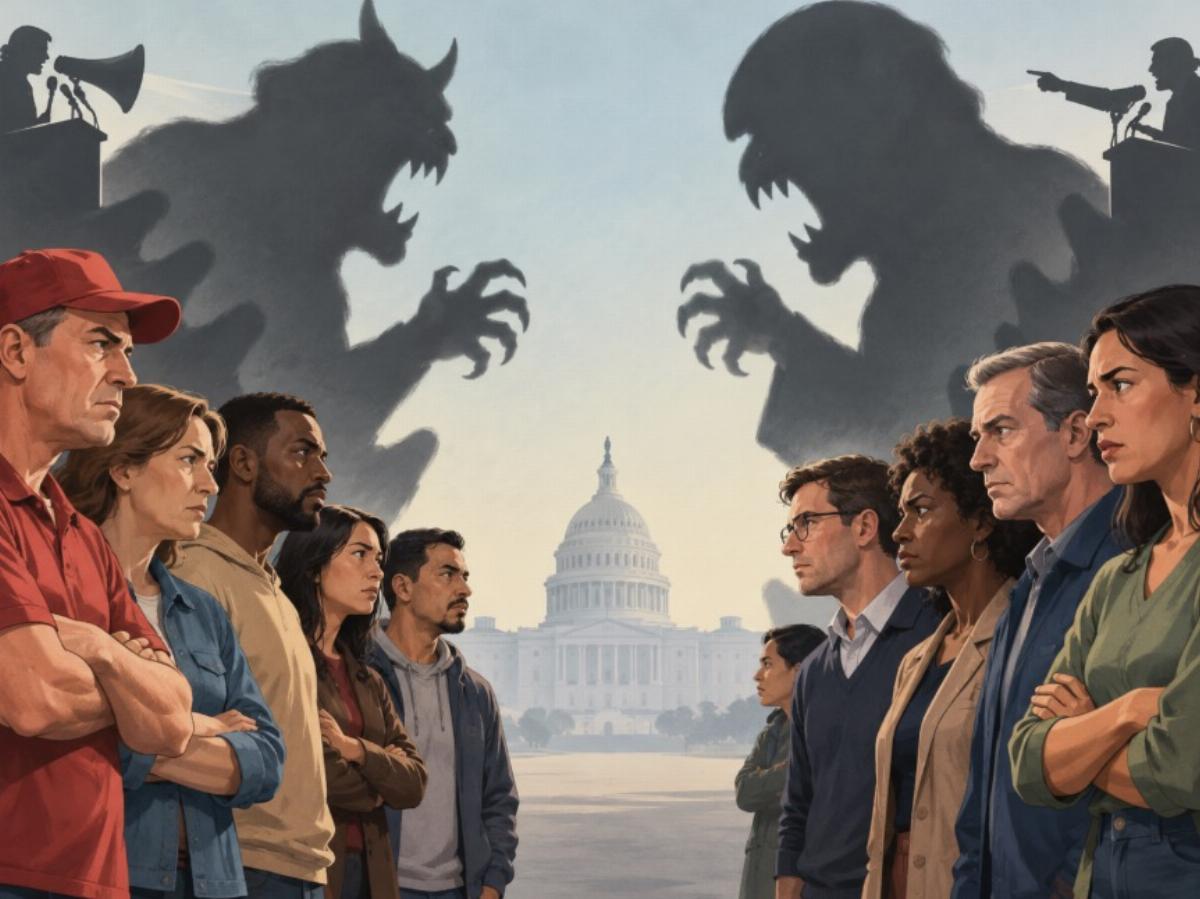
In the last few years, political violence in this country has increased at an alarming rate. Assassination attempts, shootings of executives, violent protests, and other deadly occurrences seem to be happening on a regular basis. The questions that arise are: What are the causes of the violence? Why are the number of attempts increasing? And is there any way to lessen their occurrence?
Read more A so-called ‘transwoman’ police officer in Germany is accused of grotesque sexual crimes
One person I’ve come to rely on for his insight and credibility is Jonathan Turley, professor of law at Georgetown University. He predicted this social breakdown years ago as he watched conditions in this country begin to replicate the lawlessness of the French Revolution. As incidents unfolded, he provided this observation:
For years, politicians, pundits and professors have fueled political rage by claiming that those with opposing views are seeking to end democracy, bring back the Confederacy or turn citizens into slaves of the oligarchs. Such apocalyptic claims give a sense of license to people to free themselves from all social and moral constraints, allowing them to hate completely and unreservedly.
To explain the traditional understanding of political violence, , at its core, as the use of force by a group or individual for a political purpose or motivation. This isn’t limited to acts against the state—it’s a multi-directional phenomenon.
Political violence can include:
- State violence against citizens: Police brutality or torture
- Violence against government: Rebellion or insurrection
- Violence between groups: Clashes between political militias or communal violence.
But today, many threats are not coming from large, well-organized groups. Instead, they come from rioters, lone-wolf attackers, and small groups such as Antifa that sometimes strike with little warning. Attacks by individuals also appear with increasing frequency.
Examples include the assassination attempt on Charlie Kirk, the two assassination attempts on President Trump, the murder of a Minnesota state lawmaker, and attacks on CDC headquarters and its officers.
According to the Department of Homeland Security, the risk is high and is escalating:
- Domestic terrorism investigations have surged 357% over the last decade
- The FBI is investigating 2,700 domestic terrorism cases, up from 850 just three years prior
- The U.S. Capitol Police track 7,500 active threats against Congress members, and threats against local officials increased 10% from 2023 to 2024.
The causes behind these acts are multilayered. In particular, when citizens believe their votes do not matter or that lawmakers are not paying attention to their needs, they may come to believe that extreme action is necessary. Sometimes, violence can begin to seem like the only recourse. In addition, political disagreements can escalate into dislike and distrust of those on the other side of the aisle and eventually grow into hatred.
The consequences are dire:
Our democratic institutions are crumbling, we’re debasing our universities, we’re compromising our media infrastructure, we’re challenging long-standing scientific truths and undercutting our public health regime.
Read more The infotech vocabulary is lacking
Exchanges between those who disagree have become increasingly hostile over time. The other side is no longer viewed simply as wrong, but as the enemy. One associate professor from Dartmouth College makes the following claim:
Fewer than 2 percent of Americans believe political murder is acceptable. The core problem is not a widespread desire for violence, but a profound misperception of the other side. My data also show that Americans estimate nearly a third of their political opponents support partisan murder. This belief that one is facing a vast, murderous faction — rather than a few isolated extremists — creates a phantom enemy that makes the country feel far more dangerous than it actually is.
This may be a misperception, but it is highly unlikely to be corrected anytime soon.
One strategy for turning down the heat and rhetoric might help, but it would require lawmakers to take responsibility not only for refraining from inflammatory rhetoric themselves, but also for condemning those who employ it. As one expert explains:
Experiences elsewhere show how difficult it is to slow down such cycles of political violence, but that it is not altogether impossible. To achieve this, two things are likely to be particularly important. First, political and civil society leaders from across society need to work together to re-establish norms that inhibit violence. Robust criticism and condemnation are needed of all such violence, regardless of political stripes or putative causes. This, of course, is difficult in a context where criticism of political violence has for some time now run along partisan lines.
Second, it is crucial to acknowledge that this violence is not limited to one particular segment of society — this is not a problem of one violent movement, but of a social and political system that, as a whole, is increasingly conducive to violence.
Will our lawmakers and other leaders recognize their role in inflaming the rhetoric and refrain from using it? For years, we have heard calls from both sides of the aisle to tone down their speech, yet little has changed. Before we can mitigate this deadly approach to politics, we may first have to figure out how to live with it.
Read more The Trump Kennedy Center closes
And watch more people die.
Image created using AI.