
Jalāl al-Dīn Muhammad Rūmī is the full name of “Rumi,” the most important Persian poet, supreme in his time and still beloved by readers around the world. In Rumi’s lifetime, it was common for his verses to be set to music (just as those of Dante were set to popular melodies and sung by ordinary people in the region that would become Italy). Although he was a devout Muslim and proclaimed the superiority of Mohammad among the prophets, Rumi believed that all humanity is one and that all religions worship a single God. His followers in the city of Konya, where he lived much of his adult life, included Muslims, Jews, Christians, and those of other faiths.
Read more Revenge is Sweet
It is revealing to reflect on the difference between Rumi and his Sufi followers and the hard-line leadership in Iran today. To begin, Rumi is often called the “poet of love,” and indeed his writing is filled with teachings of the love of self and of others and a rejection of what we would call ideology. He rejected the idea that one must look to a particular church or God “in the sky” to find the truth. One of his key points is that one must look within, not to outward officials, schools, or even churches to find the truth one seeks. Although Rumi revered the Quran and the example of Mohammad, like others of his day, he believed that the contemporary leadership of Islam had become corrupt and misguided, and that it must be reformed and purified by a spiritual order of belief centering on asceticism and divine love within the heart of the believer.
It is important to consider that there are no poets or philosophers of Rumi’s stature in modern-day Iran, and there are few outsider Iran who would call the leadership of present-day Iran, particularly the IRGC, a religion of love. Rumi welcomed followers from all regions and faiths, and he taught them in his schools and via lectures, letters, poetry, and song. No major poet in world history was more enlightened or less parochial.
It would be inspiring to see the current leadership of Iran return to Rumi’s ideal of universal love — an ideal that he spent his entire life disseminating and inscribing in his books, lectures, and songs. The fact is that Iran’s present leaders, even those more open to discussions with the West, do not seem to come close to this ideal of love for mankind. Nor, I suppose, do a large segment of Iran’s population that back the regime. One can hardly say that Iran’s present leaders and their followers “love” Jews, Christians, or even other Muslims outside Iran. They speak in a hateful manner of destroying other peoples, and their speech is backed up by thousands of attacks on Israel, America, and its allies. Instead of releasing one’s ties to material goods and power, as Rumi taught as the only path to truth, Iran’s leaders now speak of conquest, collecting tolls, and seizing the assets of others.
Read more Lindsay Clancy’s Revolt
There is nothing of Rumi’s wisdom in the rhetoric of the IRGC, whose leader has been quoted as saying, “We have crushed the enemies’ bones in all battles. As you can see, they fled the region in humiliation and from now on, they will not have a room in this region. We know what the enemies want as well as the depth of their intentions. They want to diminish the divine light.” Or another: “In Lebanon, tens of thousands, even more than one hundred thousand missiles, are ready to be fired to create a hell for the Zionists at the moment of making the divine predestination happen.” Or regarding the United States: “The country that has the Statue of Liberty does the most work of oppressing, suppressing, and hanging of the freedom-seekers in the world and produces most of torture devices in the world and sends them to all dictators around the world and teaches torture techniques to them in order to imprison the seekers of truth, justice and freedom.”
It is preposterous to hear Iranian leaders accuse the United States of killing and torture, when their recent history is filled with just that. According to a Jan. 25, 2026 Time article, some 30,000 protesters have been killed by the Iranian government, and that is only through January of this year. Many of those who were killed were also tortured. Although similar practices prevail in other authoritarian countries, Iran’s modern-day death toll in this and in other situations, such as the Iran-Iraq war, in which some 200,000 young men and women died, is enormous, even for a radicalized country of 87 million. Alongside these deaths, there are an estimated 15,000 political prisoners in Iran, dozens of them on death row and hundreds who have already been executed for offenses such as speaking out against the regime or engaging in political activity, including 19-year-old champion wrestler Saleh Mohammadi, who was hanged in March 2026. The bloodthirsty history of modern-day Iran stands in stark contrast to the enlightenment of 13th-century Persia.
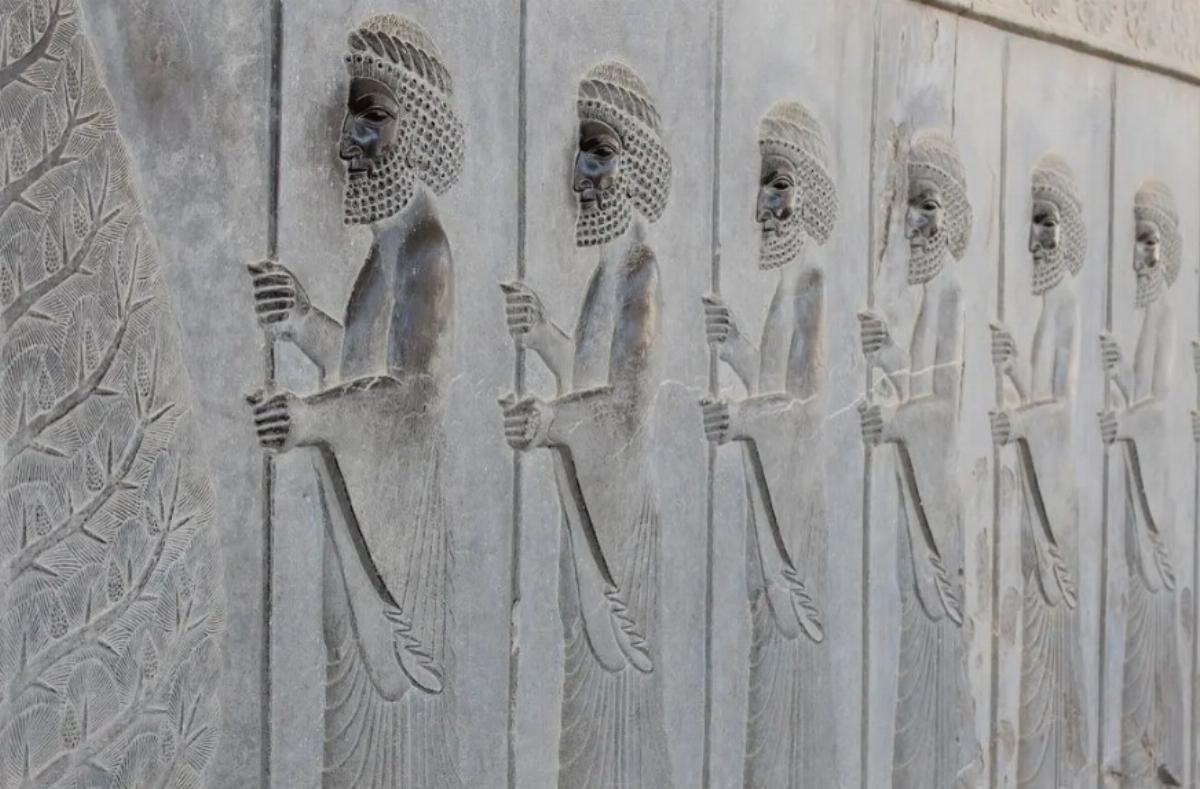
Rumi’s writing is just one indication among many others of the high level of civilization in ancient Persia, at a time when the West was still in what is called the Dark Ages. Nothing like that can be said today: As the West, and America in particular, flourish with per capita incomes as high as $70,000 per year, Iran is collapsing, as all authoritarian dictatorships eventually do. Iran’s per capita income in 2025 was less than $4,000, and presumably far less in 2026, and this in a country with some of the world’s largest oil and gas reserves. It is infuriating, and bizarre, to watch Iran’s leaders appear on their state media claiming that they are winning the war with America, when Iran’s economy and military have already been devastated. There will be no new Golden Age in Iran as long as its leaders and people continue to be ruled by hatred, the emotion that Rumi spent his life preaching against. Rumi’s writings are still alive today, among the most popular published work in the world some eight centuries after he lived. It is unlikely that anything of the kind will be said of the words “Death to America” and “Death to Israel” coming out of Iran today.
Read more All Hands on Deck for the Midterms
Image via Picryl.