
Reading about the riots in France, one recalls an earlier time when there was something called the reading of the Riot Act. Colloquially, that meant the behavior prompting the reading had to stop, or there would be severe consequences.
Read more Bypassing politically active elites
One could point out the demographics of the rioters there, but the problem of modern-day riots, and the responses available to them, is not confined to relations with any particular group and actually goes much deeper.
The problem can be seen by statistics such as these: it was reported that, in relation to nationwide disturbances (half a million rioters by official estimates), the French police arrested 2500 persons, but that in making these arrests the police suffered 1000 injured.
Just for a second, let us make sure the seriousness of the rioting is understood:
On 17 October 2026 the Interior Ministry recorded roughly 550,000 participants nationwide and 2,397 arrests, alongside 997 police and gendarmes injured. Those raw figures sit next to concrete physical results: an estimated 2,000 shops looted or damaged, public buildings attacked or set on fire (including Limoges’ historic town hall), and extensive arson and vandalism across multiple cities.
Interior Minister Laurent Nuñez later stated that government forces had “lost control” in places and that he had offered his resignation. French president Macron described the violence as “unbridled,” called the ransacking of city streets “unbearable,” and ordered reviews of intelligence and operational methods plus new tools for prefects and mayors to restrict gatherings.
Now look at the ratios. You will see that the number of arrests was ridiculously low and the number of police injured was ridiculously high.
Arrests versus damage: 2,397 arrests for a day that produced damage to roughly 2,000 shops plus additional arson and vandalism of public buildings leaves the majority of the destructive acts without an arrest on the day. Many of the arrests that did occur were for looting, handling stolen goods, or participation in violent groups, yet the volume of property destruction indicates that containment was incomplete while the disorder was underway.
Arrests versus injured police officers:
French Interior Ministry consolidated figures for 17 October 2026: 997 police and gendarmes injured (7 seriously) against 2,397 arrests. That is roughly 0.42 injured officers per arrest, or about one officer injured for every 2.4 people arrested.
A ratio this high shows that a large share of the detentions involved direct, sustained fighting rather than low-intensity or post-facto processing.
Read more A Michigan sheriff comes in from the cold
So what do we have?
Basically, the police need to wrestle with rioters. When they wrestle, they get hurt, which makes sense. All the wrestling failed to prevent the damage wrought by the rioters, and there is nothing to prevent the riots from continuing.
The Riot Act allowed authorities to read a formal proclamation declaring a state of riot, after which police were authorized to use deadly force to disperse and stop the rioters.
The use of such force would sharply reduce the number of officers injured. It would also raise the cost of participation in a riot, increasing it from the relatively low prospect of arrest that exists today to a potentially far higher one (the loss of the rioter’s life).
Note that if France stripped down coverage of all other crime, it could field perhaps 120,000 police officers for one night in total, which is twice the number fielded during the riots on the 18th, but this would logically result only in about 2000 arrests and no decrease in damages, unless the rules of the game were changed.
What happened to the Riot Act? In the United States it withered under the weight of well-intentioned Supreme Court decisions and other factors, beginning in the 1960s. One could easily write a short legal disquisition on exactly how this occurred, but that is the gist of it.
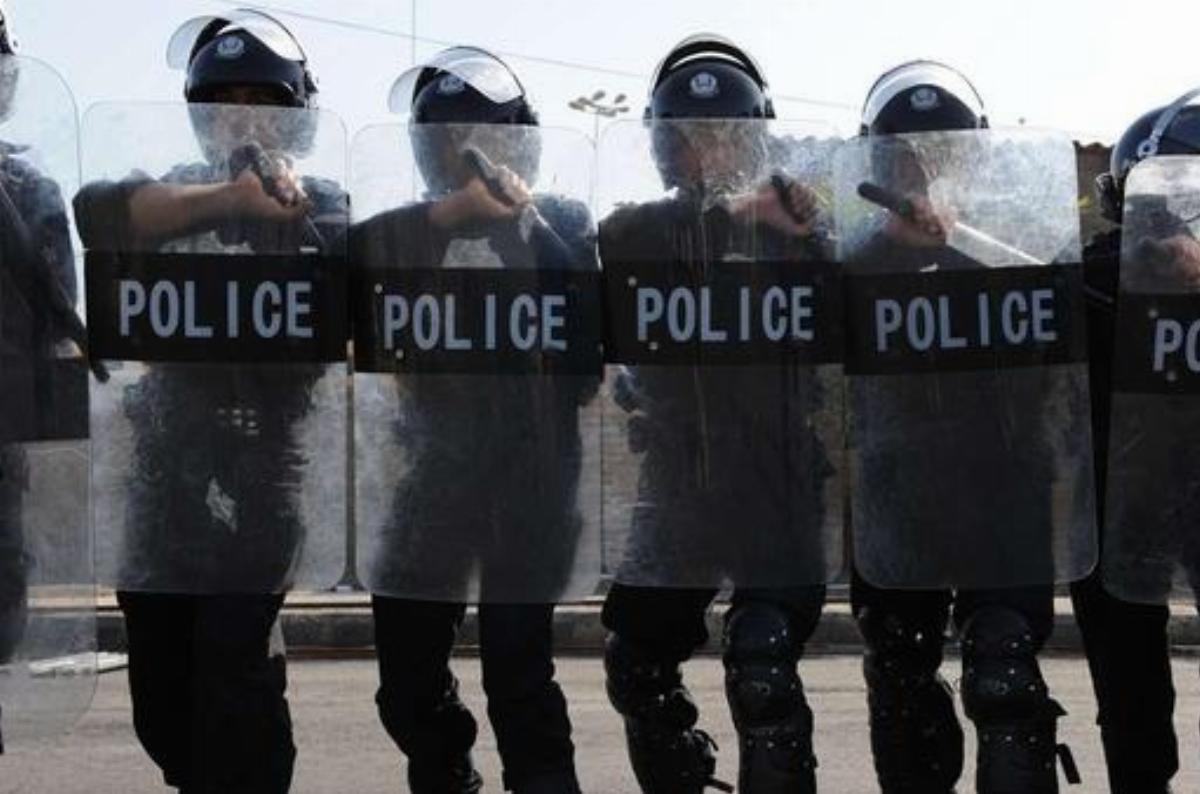
With no Riot Act, all that remains are the pathetic attempts to wrestle rioters into submission, coupled with the bizarre spectacles of police behind shields, with helmets and so forth, like medieval re-enactors.
Most men of good will would probably say that not shooting rioters is preferable, provided they can still be overwhelmed by force of numbers.
The difficulty lies in that last proviso. What happens when they cannot be overwhelmed?
Tadas Klimas, the author of several books, is a former U.S. intelligence officer who was awarded the National Intelligence Medal of Achievement (NIMA). He was also a law professor and, at one time, was chief legal counsel to Vytautas Landsbergis, the Speaker of the Lithuanian Parliament and the first chief of state of the Republic of Lithuania
Read more How can we defend free speech if we can’t define it?
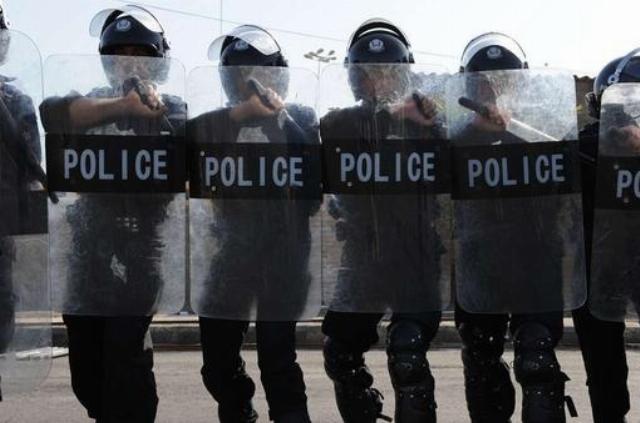
Image: Defense Visual Information Distribution Service