
This month, more details surrounding the rescue of the two members of a US Air Force F-15E aircraft who were shot down over Iran in April–one spending six hours on the ground before being recovered and the other two days—were made public. There were 150 planes involved in the rescues, demonstrating the complexity of such operations, which were completed without any further losses.
While the Iran rescues were impressive, they bring back memories of one of the most challenging recovery operations ever undertaken, also behind enemy lines—one occurring 54 years ago during the Vietnam war. It too involved tremendous courage and brilliance. While it was an extremely costly mission, it stands out for its ingenuity in employing a tactic never used before or since.
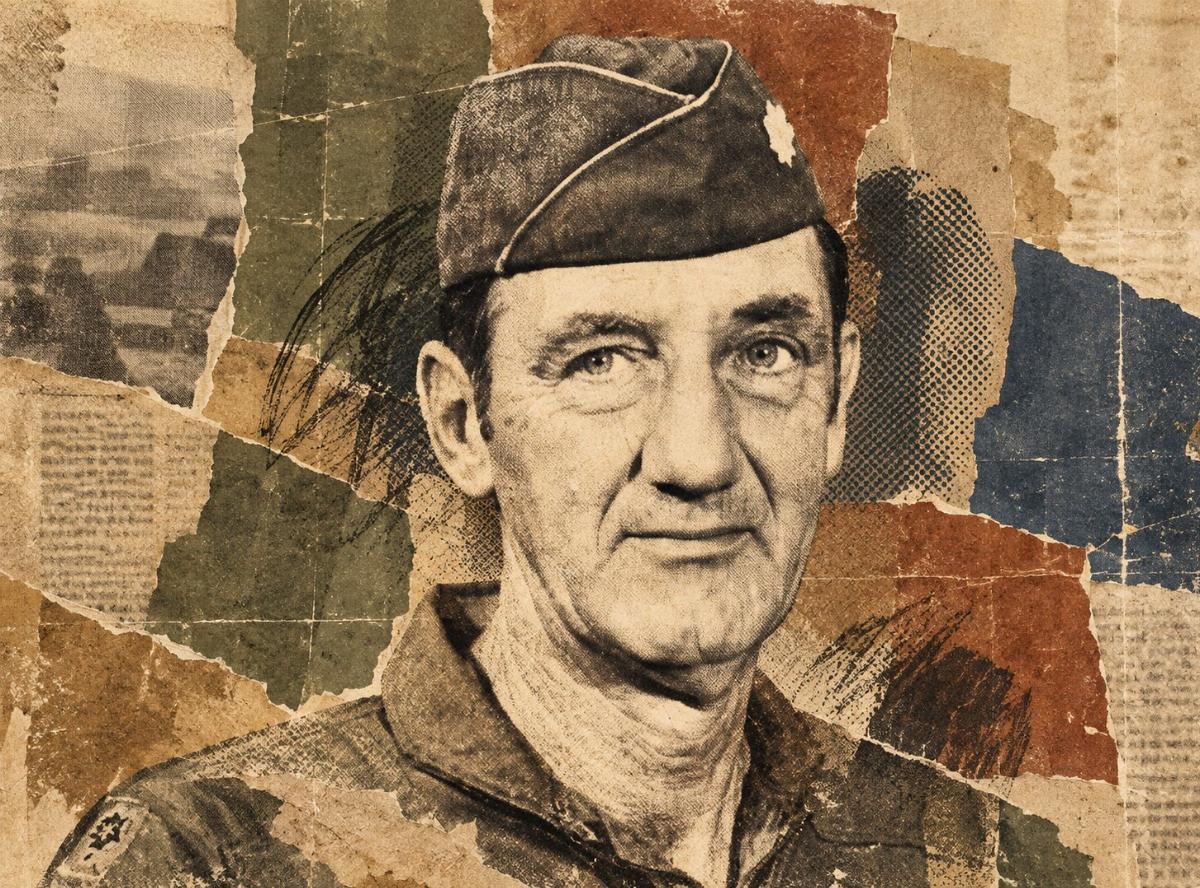
It was April 2, 1972—the third day of the largest combined arms operation of the Vietnam war. Several U.S. aircraft were operating overhead, one of which was a US Air Force EB-66—configured to gather signals intelligence by identifying North Vietnamese anti-aircraft radar installations to implement jamming. The EB-66 navigator onboard was Lieutenant Colonel Gene Hambleton.
Hambleton’s plane was hit by a surface-to-air missile (SAM). He was the only crewmember to eject safely. His rescue became imperative as he was in possession of top secret information and, ironically, was a SAM countermeasures expert. It would by no means be a simple extraction, however. Hambleton would spend more than eleven days evading enemy capture, triggering what would be the “largest, longest, and most complex search-and-rescue” operation of the conflict.
The rescue operation would take a heavy toll. The U.S. suffered the loss of eight aircraft (both planes and helicopters), the deaths of fourteen airmen, the capture of two more, and an evasion effort initiated by another airman—Lieutenant Mark Clark—after ejecting from his plane in a failed rescue attempt. Clark was fortunate as he was rescued quickly.
As U.S. aircraft losses mounted in the Hambleton recovery operation, it was realized why. The enemy somehow had access to all communications. Thus, it became obvious any effort to rescue Hambleton or to direct him to a safer location would be futile since the enemy would know his every move as well as the intended moves of the rescue force. The enemy effectively saw Hambleton as “bait” to draw more U.S. aircraft in for the kill.
Read more Catholic parents have their daughter taken by the State of Massachusetts
At this point, a member on the rescue staff came up with an ingenious idea. Hambleton was known to have a unique talent. Thus, a rescue operation was designed to make good use of this talent. Hambleton was an avid golfer; probably among the best golfers wearing a military uniform. But it was not his golfing talent that they sought to access.
As a golfing enthusiast, Hambleton had an amazing ability. He knew the18-hole layout on many U.S. golf courses. His talent was not only knowing the layout on these numerous courses, but the direction in which one had to navigate between holes. Thus, rather than providing Hambleton with specific directions to get to an eventual safe area, he would be given directions that would be “encoded” simply by providing him with hole numbers between which to navigate on certain golf courses. Given distance as well, in this way, Hambleton knew exactly in what direction to go as well as how far to travel in that direction. The method was very effective. It eventually led him to a river.
Uncertain what he would find there, Hambleton nervously observed a sampan in the water with fishermen onboard. Moving closer, he was able to see some of them were Caucasian. He soon learned these were Navy SEALs, disguised in local garb, waiting to transport him back to friendly lines.
The above rescue stories illustrate the kind of grit about which legends are written. While the rescue operations in Vietnam occurred long ago, the courage of those in uniform who are willing to risk their lives—even today—to ensure no one is left behind remains ageless.
Read more Regarding the Sydney Sweeney ad, the left used to like coyly selective nudity
Image generated by ChatGPT.