
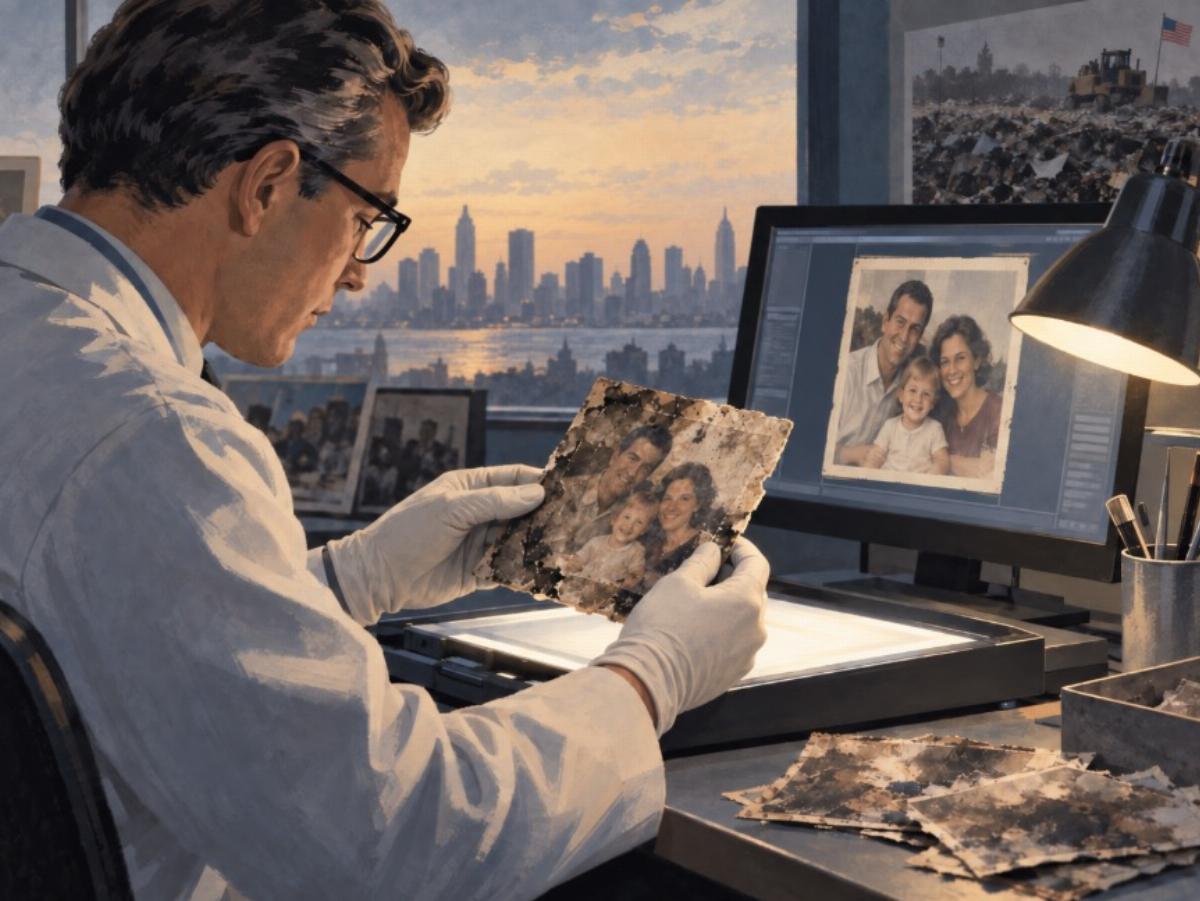
On September 11, 2001, I was teaching an Adobe Photoshop class to employees and photographers at Eastman Kodak research labs. We didn’t know what was going on until we took a lunch break and learned what had happened in New York City.
Read more Colorado spins education failure
I had applied to be a Certified Adobe Photoshop Expert, which included taking a proctored examination. One part of my job was restoring old, faded photos, water-damaged photos, and other damaged images. Watching the horror as the towers collapsed, little did I know how much that event was going to change my life.
Around two months after 9/11, the New York City Police Department contacted Eastman Kodak for help cataloging and restoring damaged photos that had survived being blown out of the buildings when the towers collapsed. My boss came to me and said, “We are sending you to the Staten Island Fresh Kills Landfill to help the NYPD detectives with the 3,000-plus photographs they picked up in the debris fields at Fresh Kills.”
The operation was to scoop up the debris at Ground Zero, put it on a barge, transport it to Fresh Kills, spread it out on the two- or maybe three-acre sorting fields, and walk the grounds picking up personal items belonging to people who were in the buildings when the towers came down.
When we got to Fresh Kills on Staten Island, the NYPD detectives showed us around, and I got to see the flattened pumper truck—I believe Engine 8 or 10—that had been parked next to one of the towers. The usually 10-foot-high engine was at most three feet high, twisted and burned in places.
We were shown into the detectives’ trailer, where they had many boxes of photographs that had survived and had been picked up in the sorting fields by law enforcement. Since the photographs were considered evidence, I had to be assigned to the detective division before the photographs could be released to me.
Read more Britain’s Labor Party boycotts Israel to appease Muslims and the far left
About a week after our visit to Fresh Kills, a special delivery truck brought the boxes of photographs to the Eastman Kodak Research Labs. That’s when my most rewarding and difficult assignment began.
We had imaging computers that allowed us to scan and digitize images, then use Photoshop to erase damage and rebuild parts of the photographs that had been destroyed. The purpose of this restoration was to give families back the wallet and desktop photographs their loved ones had kept in the buildings.
That was the rewarding part for us. The hard part was turning the photographs over to scan the backs and read the words that sons, daughters, wives, husbands, boyfriends, and girlfriends had written there.
In three months, we restored, digitized, and saved over 3,000 images. The police detectives’ job was to find the families and give them the photographs found at Fresh Kills that had belonged to their loved ones, along with a CD containing a digitized copy of our restoration.
This was my life for three months after 9/11—rewarding but really tough. I couldn’t sleep some nights because I would see images and inscriptions during the night, things I had worked on that day. I am fairly sure I suffered from a case of PTSD.
Read more Why are we letting foreign ships pollute our air?
After a few months, the images faded, and sleep came easier.
Image created using AI.