
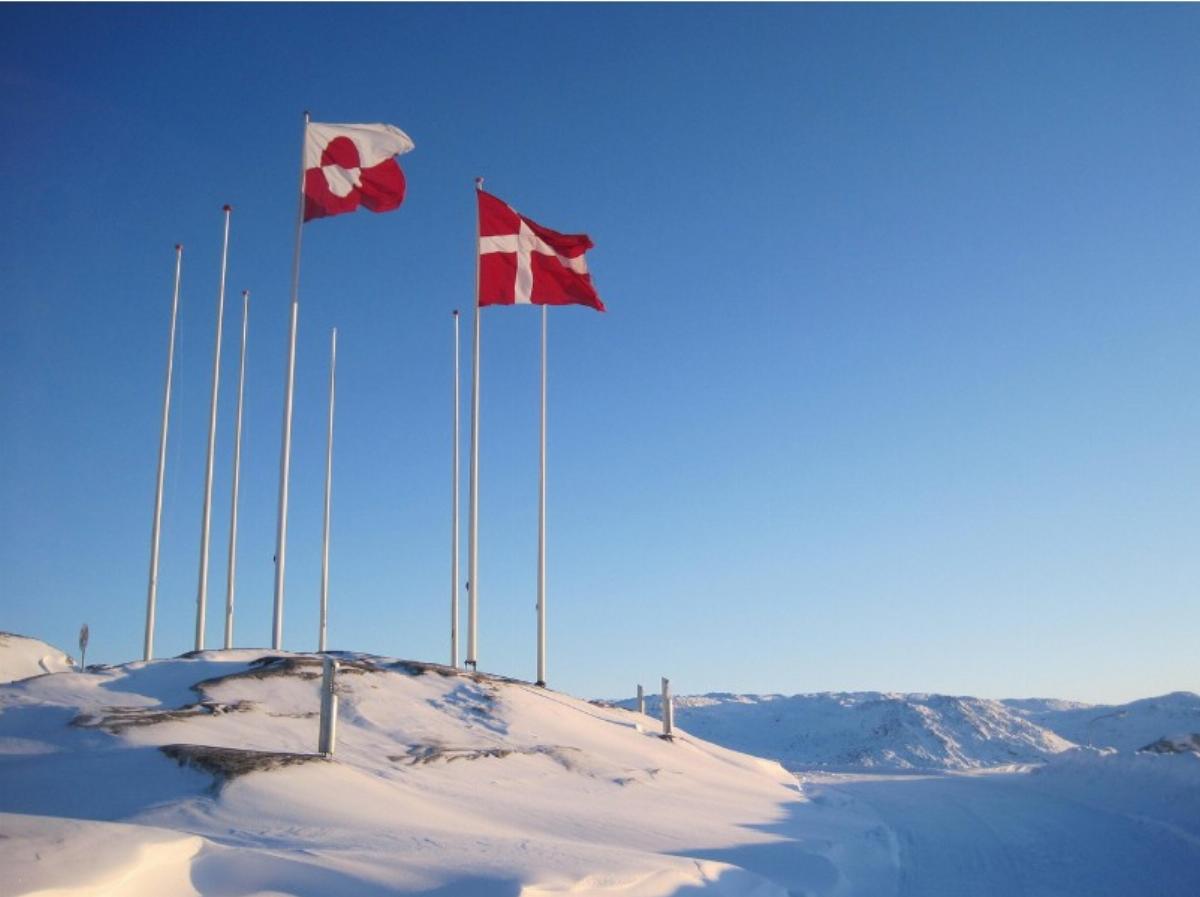
Here in Denmark, the Danes aren’t exactly celebrating the recent deal for U.S. bases on Greenland in the streets of Copenhagen like they did on VE Day.
Read more Mayor Mamdani Kept The Wrong Souvenir From Africa
That said, the media here are doing their level best to praise the Danish government’s deft maneuvering through the dangerous waters of the U.S.-Greenland “problem” they found themslves in over the past 18 months.
The newly signed agreement to “supplement the agreement of 27 April 1951” is not an omnibus agreement that gave President Trump what he wanted.
Neither did it clarify the purposely vague passages in the old agreement that made it problematic.
While Greenland’s prime minister, Jens Frederik Nielsen, said at the signing ceremony that this agreement was a “win, win, win agreement,” he must have been speaking about how the Danes managed to keep Donald Trump from advancing down the path of annexation and staving off any American ownership of Greenland and the ability of the Americans to decide who invests in commercial projects on the world’s largest island.
The agreement was essentially a dusting off and modernizing of the revised agreement of 2004.
It did not give the United States force majeure, but it could leave the possibility of the U.S. implementing it, waiting just outside the door. (A force majeure clause may temporarily suspend contractual obligations — or sometimes permit termination — without liability.
It does not, however, automatically excuse every difficulty. The event must normally fall within the contract’s wording, be beyond the affected party’s control, and genuinely prevent or seriously obstruct performance. It could be invoked by a state of war or government prohibitions.)
So here’s a look at some of the specifics of the agreement:
ARTICLE IV – Defense Areas
While the agreement does help to make the Arctic (Greenland) safer from “adversaries ” such as Russia and China, and recognizes in print the importance of monitoring and cooperation, it is not one that reinforces the administration’s and the president’s claim that anything short of absolute U.S. control is unacceptable.
The U.S. has now been given the explicit “right” to modernize and expand its existing facilities in in Pituffik Space Base (formery Thule Air Base) and to re-establish two other pre-existing bases in Narsarsuag and Mestervig.
This was something that needed to be “negotiated” under the old agreement, but these three specific base improvements have now been made possible because of the agreement.
In short, nothing has changed from the 2004 version; the U.S. still must “consult” with Denmark and Greenland (under Point 3. b in the 2004 agreement) and does not have the power to decide, unilaterally, that a new defense area is necessary.
Nowhere does it address who makes the final decision. It simply says that if the parties cannot come to an agreement after 90 days that “… consultations shall escalate to the deputy minister level, followed by the minister level.”
Advantage: Denmark and Greenland.
ARTICLE V – Unmanned military installations
The same situation with mandatory consultations holds true in this article if the U.S. wants to create new defense areas and establish unmanned installations.
Read more Woke 1.0: A history of the world’s most Satanic movement in pictures
Advantage: Denmark and Greenland.
ARTICLE VI – U.S. military access, basing and overflight
1. The same situation exists with respect to mandatory consultations; “This may also apply to unmanned military installations subject to agreement by the parties on the modalities at the time of establishment.” In short, the U.S. will not have full decision-making control.
2. “… without restriction (to the U.S.) except as mutually agreed upon by the Parties.” (read: denmark and Greenland)
3. Access to and within territorial waters – “… as is agreed by the parties at any given time…”
Again, a requirement to consult and subject to rejection by the Danes and Greenlanders.
Advantage: Denmark and Greenland.
ARTICLE VII – Security of the Defense Areas and prevention of espionage
In this article, the parties pledge to cooperate (“intend to cooperate”) on not using these areas to do anything that would harm the security of the existing areas. It also states that additional access and movement in these areas is subject to the “agreement of the parties.” Again, no clear right of the U.S. to exercise its judgment but must “… mutually determine what steps may be necessary to address any threat.”
Advantage: Denmark and Greenland.
ARTICLE IX – Establishment of manned or unmanned military installations by third states
This article gives an invitation to NATO countries to establish their own facilities, but does restrict non-NATO countries from doing so. It CAN be done, however, if agreed to by the parties: (“…unless agreed to by the parties”) In the case of disagreement, it provides for no course of action .
Advantge: Denmark and Greenland.
ARTICLE X – Foreign direct investment and other activities
This is the most vague of all the articles because it does not address the prior Trump claim to have control over who invests in Greenland and in what like mining for rare earth minerals. It speaks about possible threats to national security and “public order” but does not address 100% commercial investments in non-defense areas.
Furthermore, it gives preferential access to NATO member states’ companies and EU member states’ companies engaged in “activities of such states or investors (that) would not constitute a threat to national security or public order.” It gives the Danish authorities the right to apply their own “investment screening laws.” Again, it requires “close consultation” but this time over the “modalities for that close consultation.” And, finally, it states that those modalities for that close consultation be determined by the “relevant parties” without stating just who those relevant parties are and who decides that which is acceptable.
Advantage- Denmark and Greenland.
When all the jubilation has died down and the cleanup after the party has ended what we are left with is an agreement that is going to give all parties a huge hangover as the implementation phase begins.
The great Arctic security agreement of 2026 between the U.S., Denmark and Greenland will soon resemble a Greenland-size mountain of Swiss cheese that offers more holes to jump through or hide in to escape the inevitabilty of more problems than the old agreement had.
To me, this is reminescent of the old joke: “Question: How many diplomats does it take to screw in a light bulb? Answer: none, because they are all too busy trying to decide how to make it opaque.”
Stephen Helgesen is a retired career American diplomat specializing in international trade. He has lived and worked in 30 countries over the course of 25 years under the Reagan, George H.W. Bush, Bill Clinton and George W. Bush administrations. He is the author of fifteen books, seven of which are on American politics. His latest book deals with the Danish-American relationship, written in both Danish and English. He has penned more than 1,500 articles on politics, economics and social trends. He now lives in Denmark and is a frequent political commentator in Danish media. He can be reached at: [email protected].
Read more The Economy Won’t Win The Midterms For Democrats
Image: Pixabay // Pixabay License