
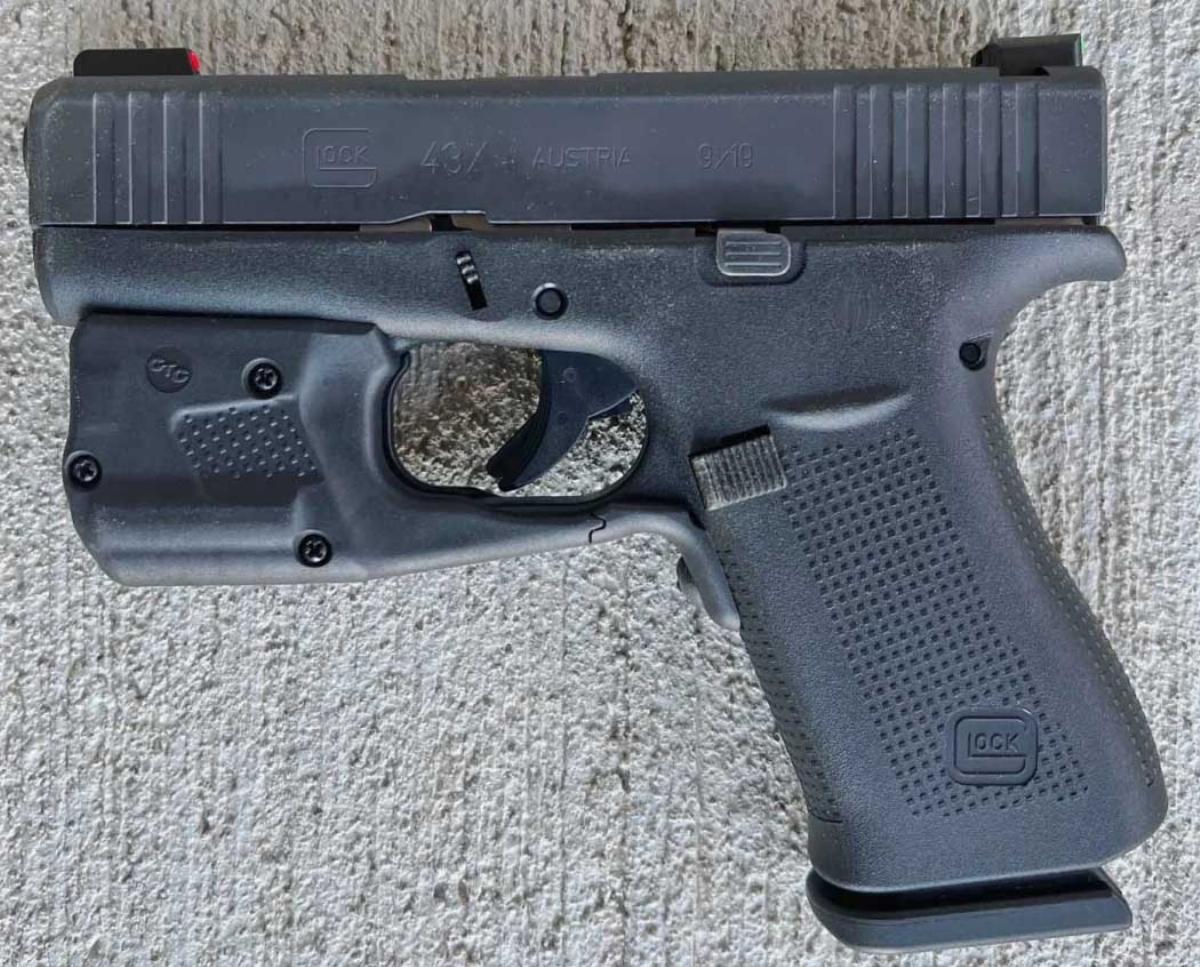
Concealed Carry Reciprocity is a perennial issue for good reasons. Currently, reciprocity is granted only between states that enter into compacts. How many states offer reciprocity? That’s hard to say with precision. Most likely, only 22, and five more require no permit. The devil, as always, is in the details: at least six states–Colorado, Florida, Michigan, Pennsylvania, South Carolina, and Maine–seem to have reciprocity but only honor permits issued in those states.
Read more Zhoran Mamdani’s terrible, awful, no good October 7th
Yes, that’s contradictory and makes no sense, which creates a problem for anyone traveling in those states. If you come to the attention of the police, they may agree no one can be sure of what’s legal and what isn’t, which makes the law void for vagueness, or they may be uninformed, or hard-asses who will arrest you for any offense, real or imagined, and God only knows which sort of judge you’ll draw.
This state of affairs is particularly annoying in that the Second Amendment is an express constitutional right, and the right not only to keep, but to bear arms in public has been repeatedly affirmed by the Supreme Court, subject to limited exceptions, such as “sensitive places” like courtrooms, jails, and the like. Concealed carry permits must be shall-issue rather than may-issue.
None of that matters much to blue cities and states, which grudgingly comply with the letter of the law while doing everything they can to violate its spirit, constructing all manner of blatantly unconstitutional rules and fees to obstruct and frustrate gun owners.
It’s enraging when one considers that every state grants reciprocity for driver’s licenses, marriage licenses, and other common matters. None of these invoke an unalienable, constitutional right like the Second Amendment, the right that secures every other right, yet that’s where the law stands, and probably always will:
The U.S. Supreme Court declined Monday to hear Johnson v. Jacobson, a challenge to Minnesota’s refusal to recognize concealed carry permits issued to law-abiding Americans in other states. The Court offered no explanation for denying the petition, leaving intact a ruling from the U.S. Court of Appeals for the Eighth Circuit rejecting plaintiff Jeffrey Johnson’s Second Amendment challenge to Minnesota’s concealed carry reciprocity law.
That doesn’t make Minnesota’s law constitutional. It just means the Court won’t hear it for now, and potentially, never.
For law-abiding gun owners who lawfully obtain concealed carrier permits, though, the practical problem is already obvious. Americans frequently cross state lines for work, while visiting family and during vacations. Flights are diverted. Highways wind through multiple jurisdictions. Cars break down.
A citizen who has lawfully qualified to carry a firearm at home should not need a law degree and a collection of several different state permits to determine whether crossing an invisible state boundary suddenly places him or her at risk of criminal liability.
Read more Affordability starts with the damage already done
That is why NSSF [the National Shooting Sports Foundation] has long supported enactment of The National Concealed Carry Reciprocity Act, introduced in the U.S. Senate as S. 65 by U.S. Sen. John Cornyn (R-Texas) and in the U.S. House of Representatives by U.S. Rep. Richard Hudson (R-N.C.) as H.R. 38, to address exactly that problem. The current collection of differing carry laws and state reciprocity agreements creates unnecessary uncertainty for law-abiding citizens who are actively trying to follow the law.
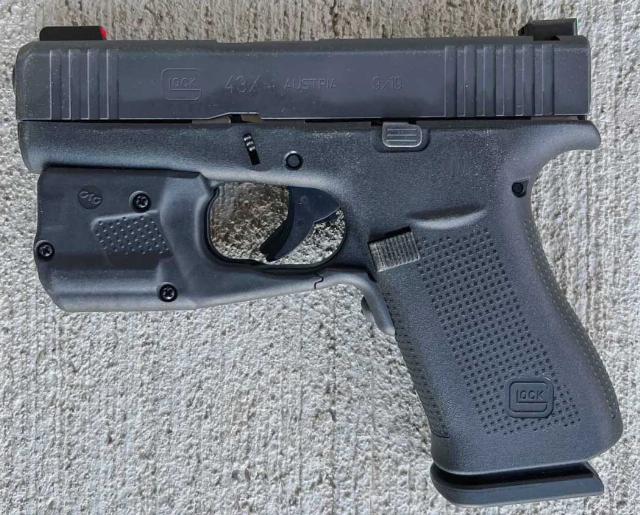
Graphic: Glock 43X, Author
Concealed Carry Reciprocity isn’t like 18 USC 926A, which allows travelers to carry weapons on trips, so long as it’s a continuous journey and the weapon is unloaded and not readily accessible, which makes it essentially useless for self-defense, a primary foundation of the Second Amendment. The ATF has adopted a rule that allows overnight lodging, vehicle maintenance, and similar delays, but that puts the burden of proof on the gun owner and not the government. A Democrat administration would surely overturn that kind of liberty. So, it’s up to Congress:
Congress doesn’t need to invent a solution. The solution already exists; it’s the Constitutional Concealed Carry Reciprocity Act of 2025 that is pending in Congress. In fact, in the House, H.R. 38 was approved (18-9) by the House Judiciary Committee in March 2025. The amended bill was formally reported to the full House on Oct. 3, 2025, where it awaits further House action.
But this is a Congress that can’t muster the will to pass the SAVE Act, which enjoys unprecedented public support in a time of political schism, which means that even with a filibuster-proof Senate majority, which we’re not going to get—it likely wouldn’t be possible even then–it will never pass. And a Democrat majority in either house will doom it as well.
Just another infringement on an unalienable right that specifically says it shall not be infringed.
Become a subscriber and get our weekly Friday newsletter with unique content from our editors. These essays alone are worth the cost of the subscription.
Mike McDaniel is a USAF veteran, classically trained musician, Japanese and European fencer, lifelong athlete, firearm instructor, retired police officer, and high school and college English teacher. He is a published author and blogger. His home blog is Stately McDaniel Manor.
Read more The Obama Death Star is out of hope