
After reading Dara Horn’s book a couple of years ago, People Love Dead Jews: Reports from a Haunted Present, I wasn’t sure I wanted to read her most recent book, The Final Solution to the Jewish Question: A Love Story for the Living. Her first nonfiction book was depressing, a sad tale about the situation of the Jew in society. It wasn’t that her book didn’t make sense; in fact, it probably made too much sense.
Read more Omar’s immigration woes can’t derail ‘her truth’
But I recently heard her interviewed by the podcaster Haviv Rettig Gur regarding her latest book. As difficult as I found her last book, her latest was an inspiration and gave me hope that Jews might be able to make inroads against the curse of anti-Semitism.
The onslaught of anti-Semitic activity over the last few years has been frightening. Even more alarming is that most people I know agree it is getting worse. And although some people and organizations have tried to take steps to at least mitigate the attacks, they are suggesting steps that have already been pursued unsuccessfully in the past. I’ve had little hope that the 21st century would see progress against anti-Semitism and anti-Zionism.
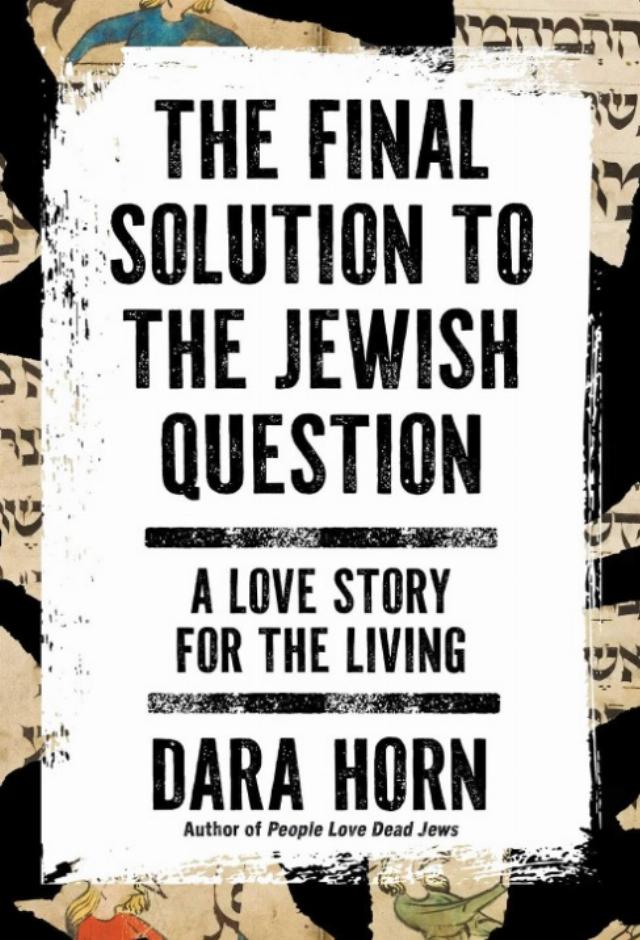
This review describes Horn’s unique perspective and the solutions she offers regarding this never-ending problem. At first glance, they may seem counterintuitive or even impossible, but as I contemplated her ideas and reasoning, I realized she might be on to something.
One of her first premises is that Jews, in coordination with society, have been living One Big Lie. Part of that lie states that we need only educate the rest of society about the Holocaust, and that education will move people to accept Jews:
The bedrock assumption that had endured for nearly half a century was that learning about the Holocaust inoculates people against antisemitism. But it doesn’t
[snip]
Yet after spending the better part of 2022 visiting Holocaust museums and speaking with Holocaust educators around the country, I came to the disturbing conclusion that Holocaust education was incapable of addressing contemporary antisemitism.
Horn found some teachers who decided to take a different approach: educating people, especially children, about “living Jews.” It’s ironic that in 13 years of public education, almost no time is spent telling the story of the Jews in a way that explains that Judaism was foundational to this nation.
A couple of women teachers collaborated to create a program that would educate the gentile public about who Jews actually are by having Jewish young people talk to other young people. The program is called Student to Student:
‘It’s just a positive and engaging presentation about who Jews are. We begin and end with Jewish peoplehood, including Israel and Zionism. We talk about Torah, holidays, Hebrew, the local and global Jewish community, the diversity and variety of Jewish life. That’s honestly it.’
Student to Student, however, is explicitly designed to be not only informative, but fun. The teenage volunteers typically bring in food to share as a way of talking about Jewish dietary laws, for instance; they write students’ names on the board in Hebrew; they demonstrate Jewish life cycle rituals by staging mock Jewish weddings in class. When I asked if the students in the classrooms ever lose interest, Chapel laughed. If the room starts feeling sluggish, she told me, the Jewish kids blow a shofar. I was intrigued.
Read more Trump Can Issue A ‘National Emergency For Elections Declaration’
The program lasts only 60 minutes, and teachers who schedule it are assured that there is no evangelical intent, only education.
Another way to counter the One Big Lie is to say that Jews are not like everyone else! Jews have spent more than 3,000 years living distinctive lives, but by promoting the idea that we want to be like everyone else, we allow anti-Semites to conclude that Jews are responsible for all the evil in the world because we actually live differently. This anti-Semitic narrative says that, if society eliminates Jews, all will be well, and that Jews, by trying to assimilate are hiding how different and dangerous they are.
Horn points out that a whole new way to learn about Jews is to develop everyone’s communication and persuasion skills, as well as their ability to determine the truth and solve problems. Rather than accepting lies, people would need curiosity to learn what is true, and it would take courage, especially for Jews, to speak the truth:
The answer, of course, was that all these efforts were defensive by necessity. This is because the default (and for the most part unacknowledged) assumption in most non-Jewish societies is that Jews are suspect unless proven otherwise. That default assumption is there because people who refuse to conform are perceived as a threat to a dominant culture’s need to feel validated. Why were we not acknowledging and challenging that assumption?
Dara Horn calls for Jews to seize this moment and speak out. She makes these points:
The purpose is to evoke curiosity about what it might take to preserve a counterculture under vast and often violent pressure from dominant societies…
[snip]
In that moment when you finally choose truth and freedom and courage, you don’t only discover your own strength. You also discover the thousands of grateful people who were all waiting for you to say it
[snip]
Jews around the world have reached their Queen Esther moment, presented with the same choice their ancestors always faced. They can choose not to say anything, choose to disappear. That would be the default choice. Or they can choose life, and rise to the occasion.
We can no longer support the One Big Lie that insists we are like everyone else, that states Holocaust education should generate empathy among the gentiles in our communities, and that tells us we must justify our existence.
Read more Our Non-Constitutional Form of Government Is Dysfunctional
It is time to tell the truth.
Amazon Image.