
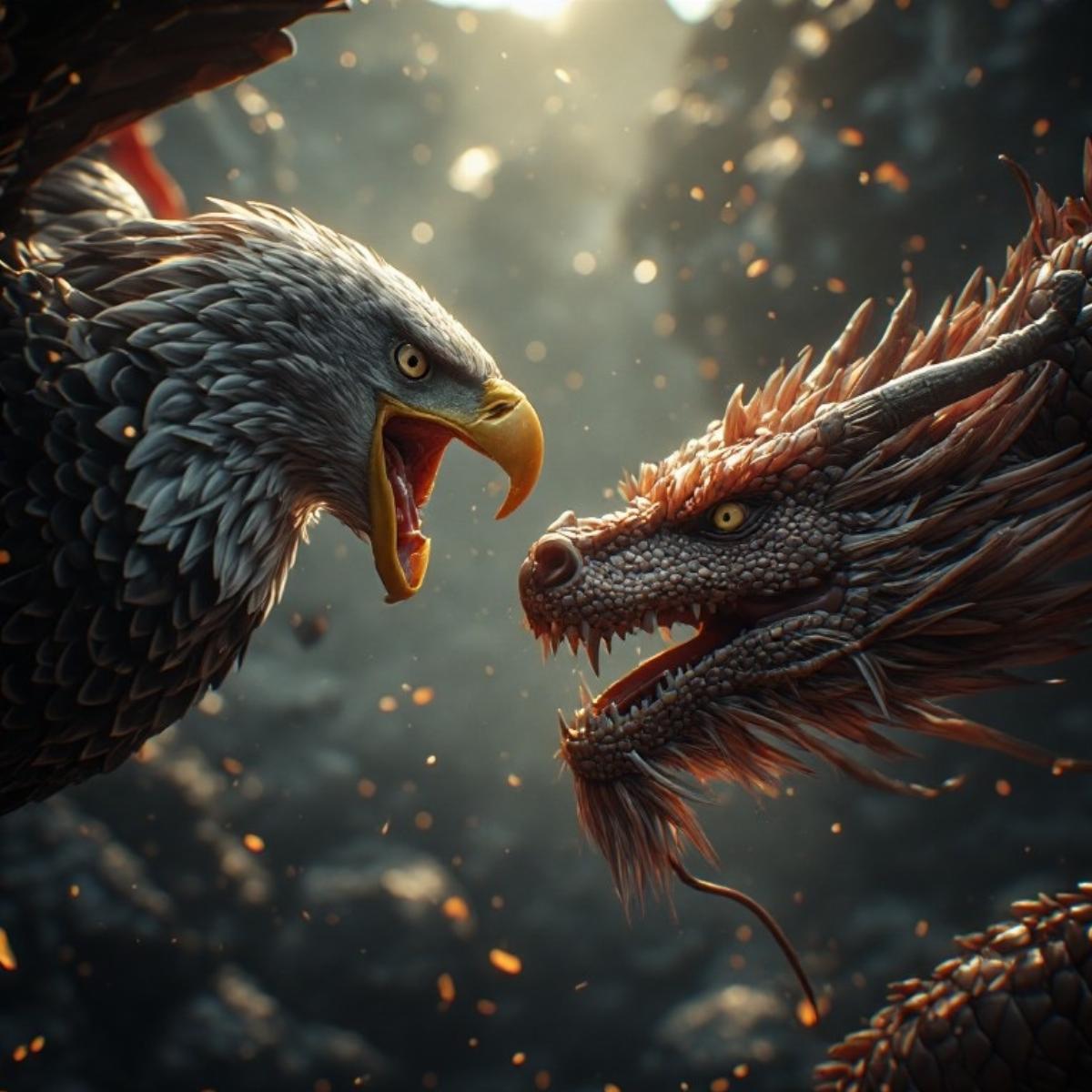
If you chase two rabbits at once, you catch neither. That may be the simplest way to describe American foreign policy today. For years, Washington has said that China is the most important strategic challenge of the twenty-first century. Yet in practice, it still behaves as if the unipolar moment of the 1990s never really ended.
Read more The Soft Bigotry of Historical Amnesia
On paper, the priorities seem clear. Republicans talk about competition with China. Democrats say much the same. Realists, nationalists, and even some traditional interventionists have accepted that the future of American power will not be decided merely in the Middle East, but in the , in supply chains, advanced technologies, strategic industries, semiconductors, shipbuilding, and economic competition with Beijing.
But as soon as a crisis flares up in another corner of the world, the old memory of American foreign policy comes alive again. Washington speaks in a new language. It talks about “,” strategic focus, burden-sharing with allies, and the end of endless wars. Yet its practical instinct is often the same old instinct: a return to the role of global policeman.
The issue here is not merely a contradiction in rhetoric. It is a contradiction in strategy.
The rise of China was not simply the addition of one more rival to America’s list of concerns. It called into question the very foundations of America’s view of the post-Cold War world. For three decades, the United States saw itself as the principal guarantor of the international order — an order resting on American military superiority, the security of allies, the management of regional crises, and a broad military presence across different parts of the world.
But that same order also created opportunities for America’s rivals. Countries that grew under the security umbrella and stability provided by American power were able to devote much of their resources not to security, but to economic development, technology, industry, and trade. China was the greatest beneficiary of this arrangement. Beijing grew within the very world whose security costs Washington was paying.
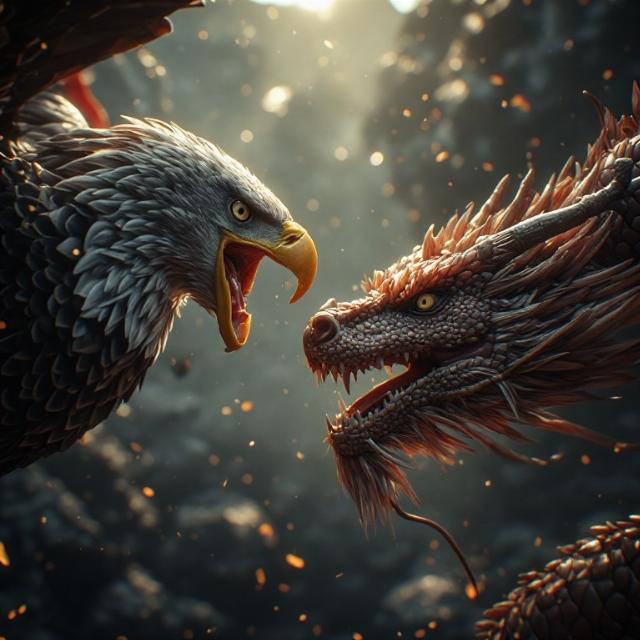
The question was simple: Why should America continue paying the costs of the global order when its own infrastructure is aging, its debt is rising, its industries are under pressure, and its principal rival is using that same order to expand its power?
But diagnosing the problem is not the same as truly changing course.
American foreign policy has changed in language, but in behavior it remains attached to the interventionist logic of the post-Cold War era. Washington wants, on the one hand, an America-centered policy focused on competition with China, and on the other hand, to preserve its role as the principal manager of the global order for its allies. These are the two rabbits America is trying to chase at the same time: focusing on China and preserving global primacy.
The recent confrontation with Iran is a clear example of this contradiction. Regardless of what one thinks about the necessity, legitimacy, or military outcome of that confrontation, America’s very entry into such a crisis revived a fundamental question: What place do such conflicts have in America’s grand strategy? If China is the main priority, how does becoming involved once again in a costly Middle Eastern crisis serve that priority?
Read more Why I carry a concealed handgun
If the goal is to preserve American resources for the decisive competitions of the future, why does Washington still allow regional crises to consume its attention, political energy, military capacity, and diplomatic credibility? If the standard is the American national interest, why should the United States continue issuing blank checks for the anxieties, calculations, and adventures of its regional allies?
Defenders of the traditional approach have a ready answer. They say America’s global credibility, deterrence, and the security of allies require Washington to remain active on several fronts at once. That argument should not be dismissed out of hand. Great powers do not have the luxury of ignoring the world. But if this logic is accepted, then it must also be said honestly that America has, in practice, moved away from “America First” and is merely continuing an updated version of the same post-Cold War order under new slogans.
Part of this impasse goes back to the resistance of the traditional foreign policy elite in Washington — what American critics sometimes call “the Blob,” the entrenched, bipartisan foreign policy establishment. This current was formed in an environment where America was the world’s unrivaled power. For them, any reduction in commitments is a sign of weakness; any act of prioritization is interpreted as retreat; and any burden-sharing with allies is treated as a threat to American leadership.
But the world has changed. Resources are not unlimited. Debt matters. Industrial capacity matters. Ammunition stockpiles matter. Public opinion matters. And above all, priorities matter.
Competition with China requires concentration. Preserving global primacy produces dispersion. The first demands discipline; the second demands permanent readiness to enter new crises. The first sometimes requires saying “no”; the second treats every “no” as a blow to American credibility. These two missions do not easily fit together.
America’s main challenge today is not that it lacks strategic language. Washington has spent years talking about great-power competition, containing China, and rebuilding domestic strength. The problem is that it still has not found the courage to bring its behavior into line with that language.
America cannot forever say that China is its main priority while every regional crisis redirects its attention and resources. It cannot speak of domestic renewal while continuing to pay the full costs of managing the global order. And it cannot promise voters an America-centered foreign policy while, in practice, continuing to behave like the indispensable policeman of the world.
Washington is still chasing two rabbits. Until it decides which one truly matters more, it risks catching neither: not a focused and effective strategy for competing with China, and not the sustainable global leadership it still imagines it can afford.
In the new multipolar world, the central art of a superpower may not be more intervention; it may be the capacity for restraint.