
Sun Tzu made an observation, some 2,500 years ago, that modern coalition politics seems to have taken to heart, though no one credits him for it. Paraphrased loosely: an army does not need every soldier to want the same outcome. It needs them moving in the same direction until the battle is won.
Read more A Dose of Reality for You DSA Kiddies
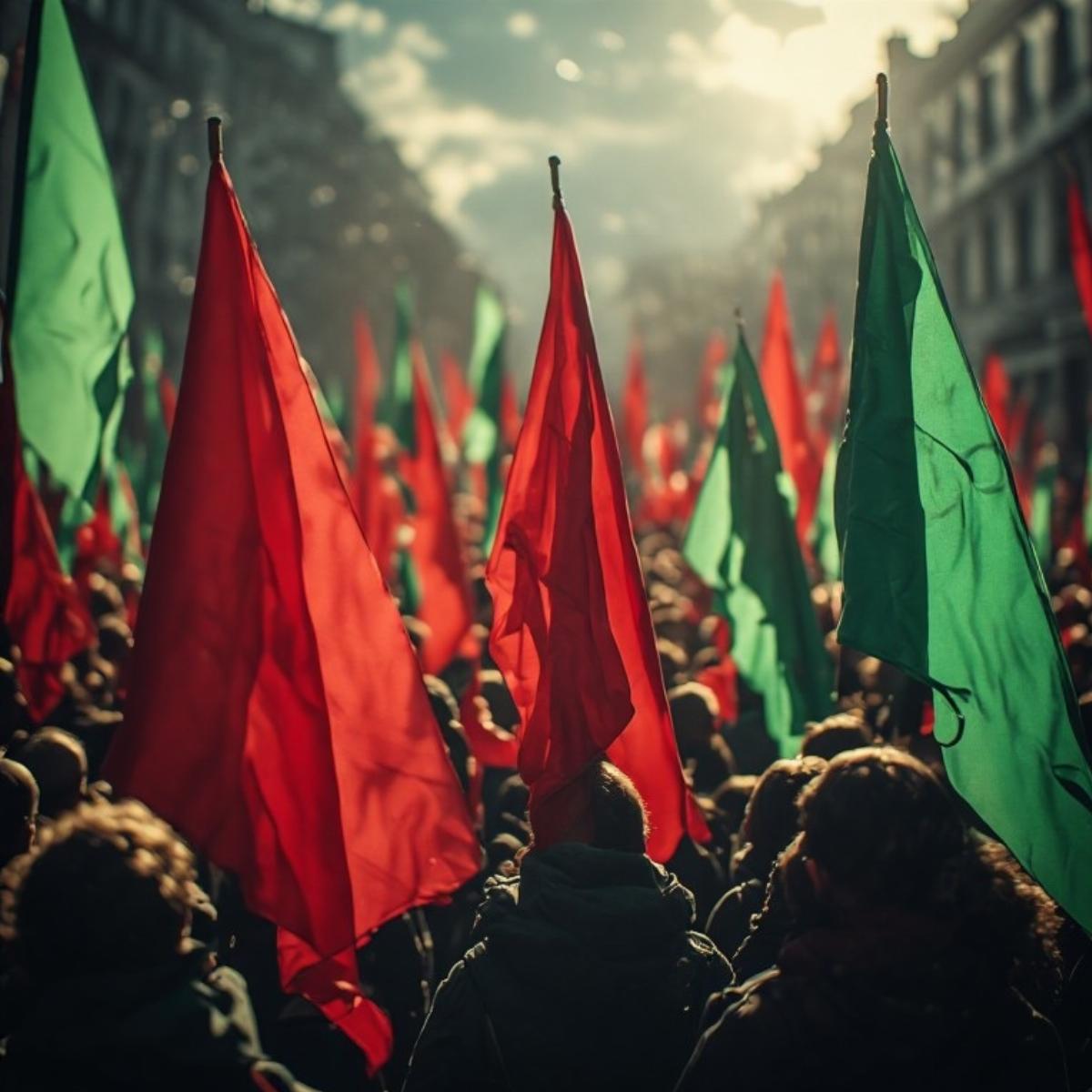
The Red and the Green appear to have absorbed the lesson without ever reading the book. Almost nobody asks what happens once the battle ends and there’s no shared enemy left to hold the army together.
The Red is the socialist left. The Green is political Islam. Different histories, different ambitions, different visions of the society each ultimately wants to build; on paper, that gap should make an alliance implausible. In practice, it hasn’t stopped one from forming. Coalitions never require their members to agree about the final destination, only about what stands in the way of reaching one, and for now, the Democratic Party’s own establishment: its incumbents, its machine, its money, its voters, serves that purpose well enough.
History has already run this experiment. Revolutionary Cuba built its coalition against Batista out of men who agreed on almost nothing beyond wanting him gone. Fidel Castro, his brother Raul, Camilo Cienfuegos, and Ernesto “Che” Guevara fought side by side, but Che was already a committed Marxist, Raul stood further left than Fidel, and Camilo’s own movement had promised a return to constitutional government once Batista fell. That promise did not survive him. Once the enemy was gone, the question became who got to decide what came next, and the coalition answered by leaving almost no one standing who might contest it. Camilo died in what the official record calls an accident, a plane that was never recovered. Che was “reassigned” to Bolivia and executed there. Raul remained, entrenched in a state bearing little resemblance to what the men who fought Batista had separately imagined building.
Start with the Red. The Democratic Socialists of America have published a program advocating democratic socialism, public ownership of major industries, and structural changes to American government, including abolishing the Electoral College and the Senate and replacing capitalism with a socialist economy. A citizen can support that program or oppose it, but pretending it isn’t on the table is not an argument. It’s avoidance.
Now the Green. The subject is not Muslims generally, but political Islam: movements in which religious identity becomes the organizing principle of a political project. Not every Muslim politician or voter is an Islamist, and political Islam spans multiple currents and attitudes toward violence.
That overlap doesn’t make these figures interchangeable or mean supporting them endorses political Islam’s long-term aims. It means only that coalitions don’t require ideological uniformity while there’s an opponent left to beat. A movement that wins repeatedly reshapes the environment around it, and a coalition that reproduces itself becomes an institution. Institutions outlast elections, but they also have to govern, and governing is where shared adversaries stop mattering and shared commitments start to.
That is where the Cuban pattern stops being optional and becomes relevant. The American progressive left has spent two generations building its identity around expanding individual autonomy: reproductive rights, gender identity, secularism, and same-sex marriage treated as settled law rather than an open question. That identity has no version that survives being negotiated away.
Read more Making the World Great One Nation at a Time
Political Islam does not share that center of gravity, and in key respects is built against it. Mainstream Islamic jurisprudence, across the major schools of fiqh treats homosexuality as haram, forbidden rather than merely disfavored. Islamist movements aren’t organized around a live-and-let-live pluralism where competing moral frameworks coexist under a neutral state. Their project restores a fixed religious order, where questions the American left considers settled were resolved centuries ago by scripture, not open for renegotiation. That project has nothing to give away without ceasing to be itself. Two absolutes do not compromise. They wait.
Picture the coalition after it wins, not before. Jeffries and Schumer are gone, the establishment is captured, and what remains are two movements that each require the other’s core commitment to be false for its own to be true. The Red cannot concede on sexuality and gender without abandoning the autonomy politics that define it. The Green cannot concede the same ground without abandoning the order that defines it. There is no wiggle room in that arrangement, because both sides already spent it building the identities that made cooperation possible in opposition and impossible in government.
Havana found itself in exactly that position come 1959. The men who won did not negotiate a shared vision for the country. One faction consolidated, and the others were removed from the board, by exile, by the jungle, by a plane that never landed. Nobody is predicting firing squads for Sacramento or Dearborn. But the mechanism doesn’t require violence. It requires only a coalition reaching power without resolving what it actually agrees on, at which point the resolving happens anyway, later, on someone else’s terms.
None of this is cause for panic so much as attention, nor a claim that these movements lack the right to pursue their objectives. Read the platforms. Watch who campaigns with whom, which organizations supply the volunteers, and where the money moves. If the Red wants to replace capitalism, let it make the case openly; if the Green wants political influence, let it make its case too. What voters do with that, armed with full information, is what democracy is for.
But democracy also depends on voters understanding what they’re voting for, including the parts of the coalition’s future that haven’t been worked out yet. The Constitution doesn’t protect citizens from political ignorance; it hands them the machinery of self-government and leaves them responsible for who operates it. The fight everyone can see, against the common enemy, is not the fight that decides what the country becomes. That fight comes after, between the allies, and history suggests it doesn’t end in a treaty.
Red and green do not blend into some glorious new political color. They make brown, and brown is the color of mud, decay, and shit.
A fitting color for coalitions that confuse a common enemy with a common cause.
Luis Gonzalez is the owner and publisher of The Last Wire, an independent blog covering news, politics, opinion, and the rabbit holes beneath the headlines. He has been writing online since 2000 and is the founder of Boiling Frogs, a personal blog launched in 2008. He hangs his hat at The Briefing Room, where he excels at the role of resident curmudgeon.