
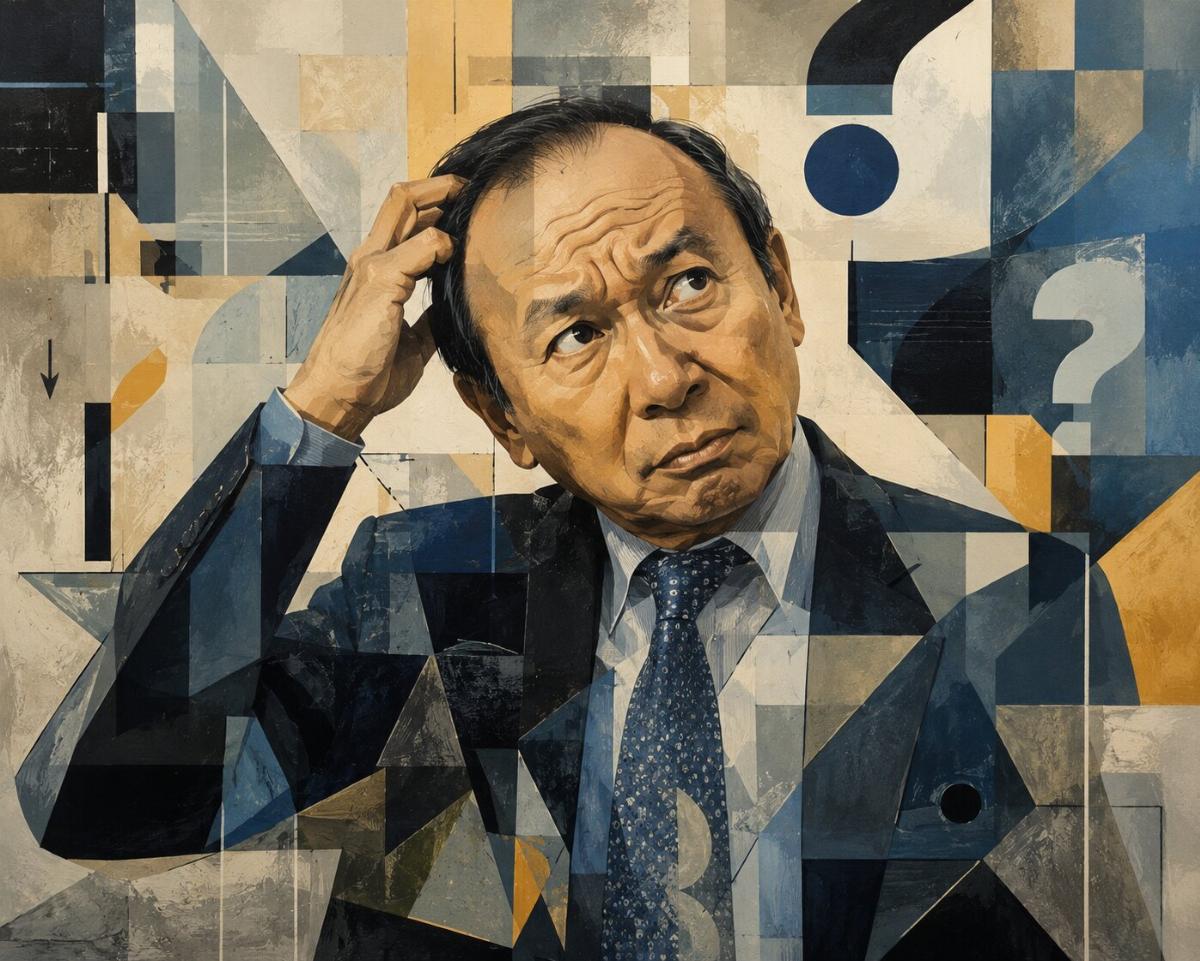
Irrelevant, failed social scientist Francis Fukuyama took to social media recently to do what irrelevant failed social scientists do when they are desperate to re-establish a modicum of renewed relevance: He bashed President Trump.
Read more The Calamitous Legacy of the GOP’s Civility Caucus
All the goodie-goodie talking heads who want a seat at the diminishing corporate media table do this. It’s like virtue-signaling, especially for Never-Trumpers and globalist-leaning political architects who were content to see the United States diminished into a mere “one among many,” ignoring its citizens, opening the borders, pushing a neutralized politics that turned profit into the only nominative value a citizen could have.
Fukuyama’s specific gripe focused on President Trump’s meeting with Xi Jinping. He claimed that President Trump got rolled in the trade talks, and that his treatment at the Beijing summit was lined with subtle insults, disparaging the president and forcing his entourage to submit to quiet indignities.
But first, let’s reflect on why Fukuyama is irrelevant.
In 1989, euphoric like many policy wonks and pundits who witnessed the collapse of the Soviet Union and the rise of a strong (although globalist-aligned) United States, Fukuyama declared “The End of History” had come, even though he added a question mark to the title for respectability. (Just asking questions, perhaps?) Liberal democracy overcame autocracy and dictatorship. No political apparatus could conjure up a better system for governing a country and its people. All the other formulas: corporatism, fascism, communism, had clearly failed.
It’s important to recall that Fukuyama served in the Bush 41 administration, the same president who presided over the denouement of Soviet Communism. He would then announce the launching of a “New World Order,” one which countered the importance—even necessity—of different borders, languages, and cultures.
War in Iraq, the rise of radical Islam, and the resurgence of communist yearnings in Western countries all signaled that intellectuals’ heralding a world with free markets and democratic governments as the cure was premature.
In truth, like many intellectual second-hand dealers in other people’s ideas, Fukuyama was riding the coattails of inscrutable philosopher G. W. F. Hegel, the German Enlightenment thinker who did more to occlude philosophical discourse than enlighten. Hegel’s major claim to fame was expanding Immanuel Kant’s theory of mind (we perceive reality and cause as a fusion of analytic and synthetic propositions) to the cosmic order. All of history, religion, culture, everything could be understood via the Dialectic of thesis, antithesis, and synthesis.
Of course, such musings eviscerated distinctions of right and wrong. Historians trafficking in outlining large themes and systems to explain a supposed Weltgeist working throughout History (note the capital letter!) have come up short, too.
Hegel announced the End of History with the Battle of Jena in 1806, in which the liberalizing forces of Napoleon and the French Empire crushed the Germanic Holy Roman Empire, defined by its sclerotic autocracy and tradition. Liberalism was the worldwide winner, and no system of thought would improve on this victory.
Fukuyama expanded on Hegel’s argument to suggest that the collapse of the Soviet Union affirmed this “End of History” theorizing.
However, Hegel conveniently ignored Napoleon’s aristocratic and dictatorial tendencies, plus his insistence on imposing French rule and custom on the continent. So too, Fukuyama did not consider the overarching concerns that trouble heads of state and their people. Human beings are not just citizens of a polis. They have familial ties, ethnic backgrounds, cultural heritages that define them. These larger measures of meaning determine the values and vision of countries far more than how they buy and sell goods and services, and whom they elect to serve as their leaders.
Civilizational states have become the guiding factor in post-Cold War politics, not a globalist assent to turn every tongue, tribe, and nation into a composite of consumers and companions.
Read more Jefferson and the Declaration
Fukuyama was wrong, and he was naively wrong—and President Trump is the Grand American repudiation of those incorrect beliefs.
Now, let us explore key errors in his latest critique of President Trump:
It was both painful and humiliating to watch the media coverage of Donald Trump’s recent visit to Beijing because it amply demonstrated America’s decline as a great power relative to China. Prior to the summit, expectations were very low. Trump was in a weakened position, beset by inflation and declining popularity, while seeking Chinese help in getting out of the Iran trap that he had created for himself.
Granted, Trump is in a tough spot. He took on Iran. He fulfilled a pledge that previous presidents had discussed but never accomplished. Rationing and lack of exploration defined American energy policy in the 1970s and 1980s. President Trump’s drive for energy production and independence has placed the country on better footing for a protracted war with Iran.
The worst part of the visit was Trump’s constant sycophancy, exclaiming that Xi was a great leader, really a friend, someone from central casting. He effused again and again about how beautiful and impressive China was.
President Trump is a deal maker. He says nice things about people (even Putin!), but then turns the screws on them afterwards. Trump took down Maduro. He’s squeezing Cuba of its communist tendencies. He has forced NATO to pay up, and he’s withdrawing American troops from Europe since they refused to assist his war efforts in Iran.
His failure to say anything about Taiwan’s security stood in sharp contrast to Joe Biden’s clear assertion that the United States would act in the defense of that country.
This comment is particularly egregious. How can Fukuyama foist any praise on the Biden administration? The same Joe Biden who forced American armed forces to flee Afghanistan, with their tail between their legs? The same Joe Biden who communicated nothing but weakness during his failed tenure, which enticed Russia to invade Ukraine and encouraged Hamas to terrorize Israel? This is an unserious critique.
Donald Trump is a politician who is unable to see the world in anything other than personal and self-interested terms.
Fukuyama faulted Trump’s aggressive negotiations with Europe regarding NATO. He complains about Trump’s intent on acquiring Greenland. He suggests that “the United States has become something of a rogue state that is contributing to global instability and disorder as well as something of a laughingstock.”
This is Fukuyama’s festering bitterness, nothing more. Has the former Bush bureaucrat visited Washington D.C. in the last week, a city once mired in graffiti, trash, waste, rampant homelessness, and crime? In the last year and a half, Trump has restored our capital to greatness. He has presided over a secure border, higher wages for American workers, complemented by increased remigration of illegal migrants to their home countries. He has decommissioned entire federal departments and slashed the federal workforce to LBJ levels. Murders are at historic lows in this country. He cares about America, and he is making America great again.
Not Trump, but rather Fukuyama is projecting his own failed worldview on the president and the United States. Throughout his latest diatribe, “The End of History” pontificator goes on and on about decline, decline, decline. President Trump has demonstrated that American decline is a choice, one which has not only been avoided but reverted for the betterment of the country.
Read more Booker’s hesitation may be beginning of end for Platner, and Dem midterm hopes
Image generated by ChatGPT.