
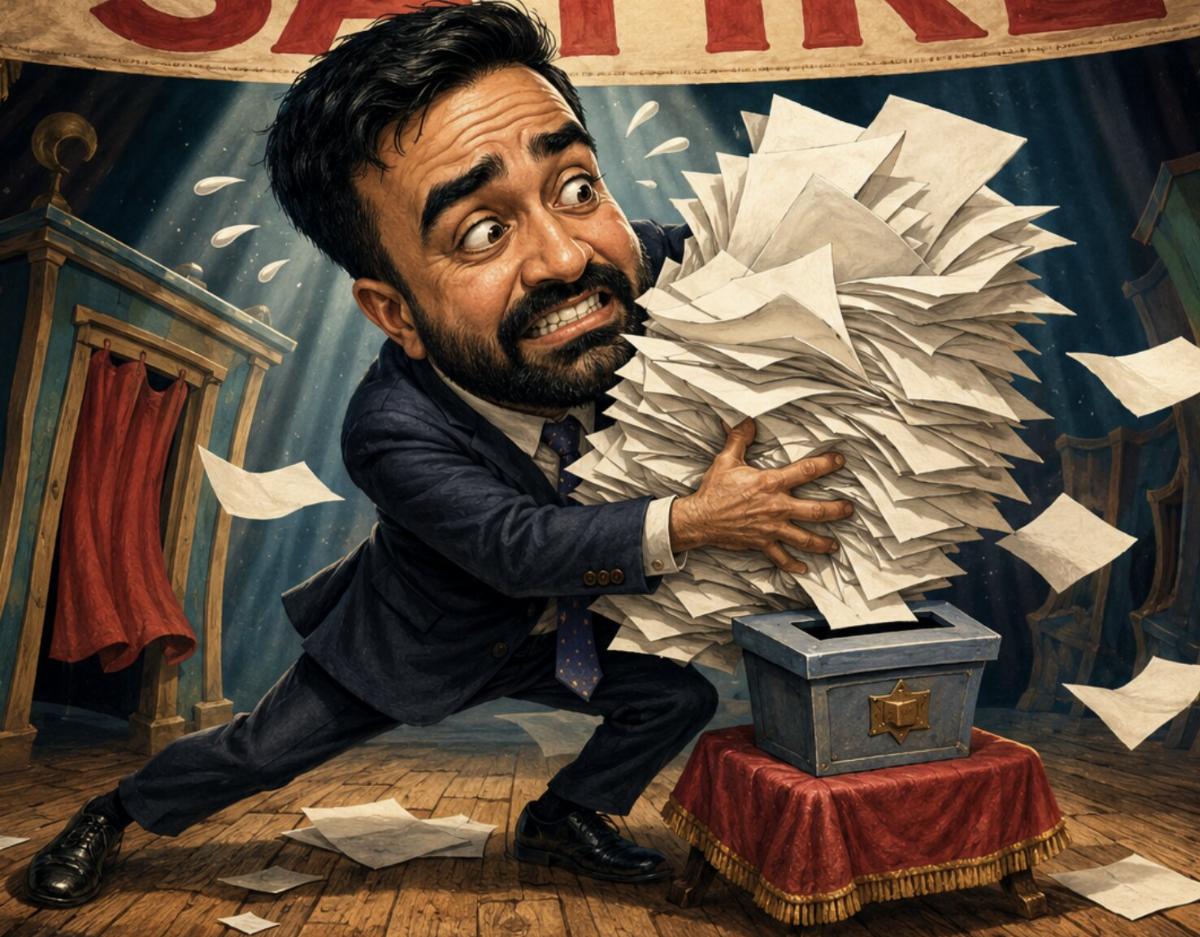
If an aspiring “king” can’t be crowned at home, how can he resist a coronation abroad?
Read more Defining Islam to avoid national suicide
As a dual citizen of both countries, Uganda-born New York Mayor Zohran Mamdani could have easily run for office in the East African nation where his family retains significant ties (and a luxury compound outside of Kampala, its capital).
So why did he instead choose New York City?
Thanks to incredibly lax Big Apple election standards (which jump off the page in a new global study), the choice was made for him.
Comparing election practices in 51 countries and 50 U.S. states, a sneak preview of the forthcoming The Meyers Report 2026 Survey on International Voting Rules tells a shocking story. Utilizing a point-by-point comparison, it turns out that election rules in Uganda are much stricter than New York’s.
Among the most egregious allowed here are several high-risk practices that President Trump, The New York Times, and the 2005 Carter Baker Report have highlighted for reform in the U.S. By contrast, all are completely banned in Uganda.
For example, a biometric ID is required to prove identity and eligibility to vote in Uganda. In New York, we rely on “self-attestation” of citizenship, and eligibility can be validated by a simple utility bill. In other words, in determining who chooses the mayor of New York and 28 members of U.S. Congress, we use the honor system.
Incredibly, Uganda has no early, absentee, or mail-in voting whatsoever. Late-arriving ballots don’t exist, so they can’t get counted. Yet in the Greatest City on Earth, we have a 17-day voting process that includes nine days of early voting, election “day,” and an additional seven days for late-arriving ballots.
Read more Ford markets another electric pickup–in late 2027
Same-day registration is banned in Uganda, while New York allows anyone to register up to the first day of early voting, and those who haven’t can often cast an affidavit ballot as long as they claim the right. Uganda also doesn’t allow ballot harvesting—delivering ballots for voters other than yourself, while “anyone you trust” can deliver yours in New York.
Third-party NGOs are not allowed to register voters in Uganda, while in NYC this was a key element of DSA strategy to elect Mamdani. Voter registration drives have been a core fundraising and litigation component of progressive groups like the League of Women Voters for years in New York, who have fought to keep voter rolls protected from federal scrutiny, list maintenance and removal of invalid names.
And for the kicker, in Uganda, they get election results within a day or two at most.
Is this why Mamdani moved to New York to become king?
Marly Hornik is CEO of RealAmerica.Vote, a Fellow of the Meyers Report, and a frequent commentator on Newsmax, NTD, and NewsNation.
Brian Maloney is Strategy Director at RealAmerica.Vote, a longtime television, radio commentator, and writer.
Read more Welcome to Lake America
Image generated by ChatGPT.