

During President Trump’s first term, I had the honor of being invited to the White House to discuss school choice. I wasn’t there as a policy expert or a politician. I was invited because I was one of the many children whose life has been transformed by school choice.
Read more Milo Yiannopoulos Finally Got What He Deserved
During the conversation, the President looked at me and asked what I had planned. I looked at him and said: “I’m coming for the White House.”
The president laughed along with everyone else in the room, including myself.
It was a surreal experience. On paper, I wasn’t supposed to be there. I wasn’t supposed to make it out of my own neighborhood. I was surrounded by poverty, crime, low expectations, and struggling schools. How did I, a kid growing up in Columbus, Ohio, ever end up cracking jokes with the president? The moment began over a decade prior, when my parents were given the chance to choose something different for their child.
School was difficult for me. My parents weren’t interested in the politics of school choice, they simply wanted what every parent wants: The opportunity to help their child reach their full potential. When Ohio created the EdChoice Scholarship, my parents saw a unique opportunity for me.
Last year, Congress passed the Education Freedom Tax Credit in the One Big Beautiful Bill. For the first time ever, school choice has been implemented at the federal level — putting pressure on states that resist these critical reforms at the state level.
America’s education system was created for a society that doesn’t exist anymore. For generations, we built education around buildings and expected children to all fit in one mold. But every child is unique with a set of skills and interests. One child dreams of becoming an entrepreneur. Another spends hours taking things apart just to see how they work. Another fills notebooks with poems and drawings. One may need more strenuous work while another needs something else that hasn’t yet been created. Our education system is desperate for the flexibility that reflects the intricate learning needs of every student.
Today, education isn’t confined to a single classroom. It’s happening in more places than ever before. Education happens in public schools, private schools, charter schools, home schools, tutoring sessions, museums, and even around dining room tables. The best education in the world is no longer built in one place, but from many unique experiences. Education policy should reflect that.
Read more California seeks to honor Islam
That’s the main reason why the EFTC is promising. Instead of forcing families into a single geographical space, the EFTC helps parents build an educational experience based on their children’s unique needs. Parents don’t care who receives the credit when it comes to their child thriving and learning. They care whether their child is given that opportunity.
The strongest public schools have never been afraid of innovation. They’ve partnered with parents, adapted to changing student needs, and found new ways to foster success. The EFTC can encourage even more of that by recognizing that learning doesn’t stop when the school bell rings.
As a father myself, I don’t want my children to inherit the same education I grew up with. I want them to have a system far better. The EFTC will not solve every issue within the education system, but the most important policies aren’t the ones that fix everything, but the ones that open a door to opportunity.
Years ago, the key to that door was given to my parents. Today, I spend my time attempting to hold that door open for generations to come.
Walter Blanks, Jr is a Policy & Advocacy Director at EdChoice and a lifelong education freedom advocate. A recipient of Ohio’s EdChoice
Read more Penn State’s necessary correction
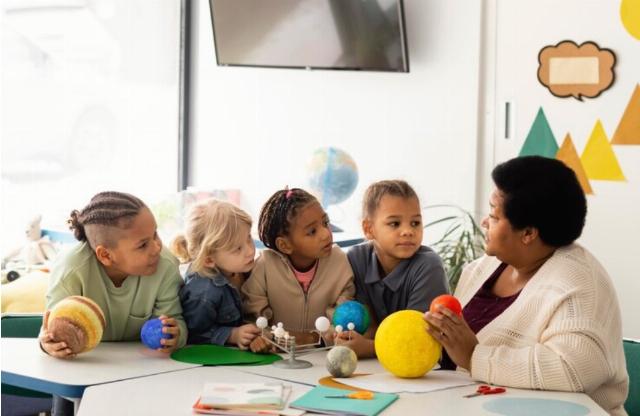
Image: Freepik