
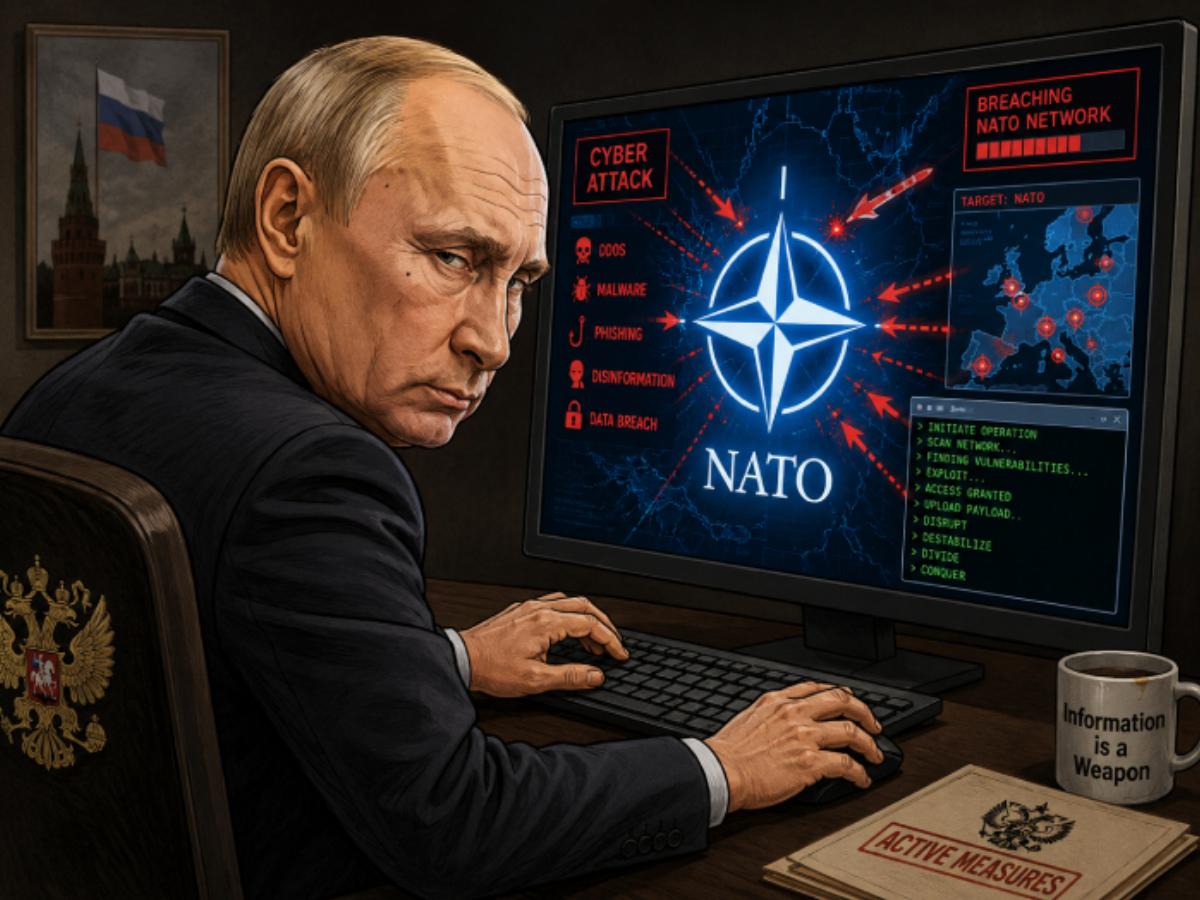
Kaupo Rosin, the head of Estonia’s Foreign Intelligence Service, says we should stop using the phrase “hybrid warfare.” “Hybrid schmybrid,” he told the Telegraph, dismissing a term that he says sanitizes what Russia is actually doing: “sabotage, unconventional activities, cyber attacks and information warfare.” Some of it, he said, could more accurately be described as state-sponsored terrorism.
Read more California bruits recognition of two Muslim holy days as official state holidays
Americans tend to imagine a Russian attack on NATO as tanks rolling across the Estonian border or missiles raining down on Poland. That might be the kind of attack Vladimir Putin has no intention of launching.
President Donald Trump said last week that Putin would not attack NATO territory. And NATO itself said Sunday that it sees no imminent threat of a conventional Russian attack, but that’s not the same thing as saying Russia is leaving NATO alone.
NATO acknowledges an increase in Russian “hybrid acts” across Europe. Germany, for example, is investigating a suspected drone attack involving explosives near a Ukrainian cargo aircraft at Leipzig/Halle airport. German officials have described it as a possible hybrid attack, although they have not publicly attributed it to Russia.
Meanwhile, CIA Director John Ratcliffe recently made a rare trip to Moscow to meet his Russian counterpart. According to Reuters, Ratcliffe raised concerns about the possibility of Russian operations against a NATO member.
And so, how much sabotage, cyberwarfare or deniable violence constitutes an attack?
NATO says Article 5 is not restricted to tanks, bombs and invading armies. A significant cyberattack or other hybrid attack can qualify as an “armed attack,” but the determination is made case by case.
Read more Eligibility gone wild
NATO has good reason not to publish an exact threshold since that would tell Moscow exactly how far it could go without triggering collective defense. But Moscow still can test that threshold.
Putin does not need to conquer Estonia; he merely needs to discover how much disruption, intimidation and destruction NATO countries will tolerate while arguing among themselves about whether they have actually been attacked.
That’s not all. Rosin says dissatisfaction with the Ukraine war is spreading through Russian society, including among oligarchs and others with access to “money, weapons and information.” He does not predict Putin’s imminent downfall, but says any political change could come suddenly.
A weakened leader with few good options at home may have greater incentive to demonstrate strength abroad.
The danger, then, may not be that Putin wakes up one morning and orders an invasion of NATO. It is that he keeps attacking NATO in ways carefully designed to make NATO wonder whether it has been attacked at all.
Read more Don’t be a “get to no” woman (or man)—you guys are awful!