
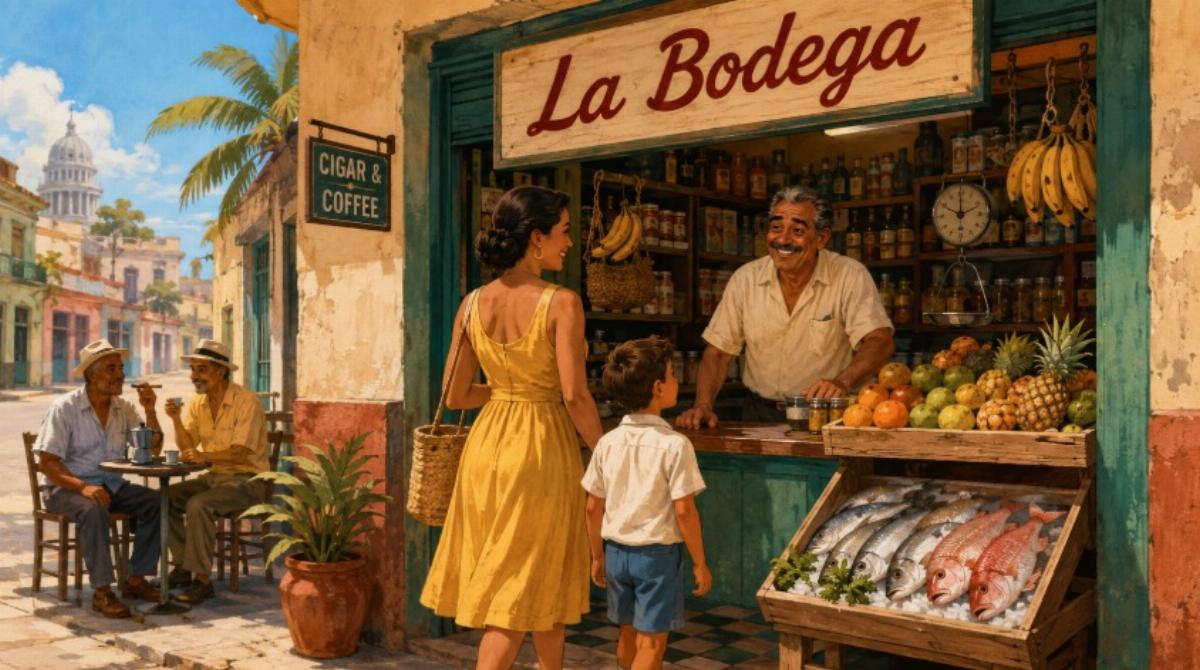
As a little boy in Cuba, I remember walking with my mom to “la bodega.” As I recall, there was one down the street with a “cigar & coffee” corner for the fathers and lots of fresh fruits and seafood that my mother purchased.
Read more What would a civil war with the Left look like?
“El bodeguero,” or the owner, was usually a friendly guy who understood capitalism better than Milton Friedman and the old shopping principle that the “mother is always right.” In other words, everybody went home happy with their visit to “la bodega.” “La bodega” was capitalism at its best, and it worked beautifully.
This is why Mayor Mamdani should talk to the Cubans who live in New York City. Why? Because the Mayor doesn’t know a thing about being a “bodeguero.” If he can’t find a Cuban, talk to Cesar Baez:
When Venezuela’s socialist president, Hugo Chávez, created a nationwide network of government-run grocery stores called “Mercal” in 2003, he faced the same conundrum of how to control excess demand when prices are set artificially low.
At first, Mercal seemed to work. It quickly became one of Chávez’s most popular social programs. In a 2007 episode of his talk show, Aló Presidente, Chávez compared Mercal’s prices with those at a nearby grocery store. A kilo of sugar at Mercal cost 740 bolívares, compared with a price of 1,300 bolívares elsewhere. Chicken sold for 1,900 bolívares instead of 4,550. The discounts were roughly 43 percent to 62 percent below prices already regulated by the government. Chávez called Mercal an instrument for building “socialist commerce.”
More than 70 percent of households reported buying at least one item at Mercal during the program’s peak in popularity in 2005. But eventually artificially low prices led shoppers to clear out the shelves, and the stores became famous for lines that would wind around the block. The share of households shopping at Mercal plummeted below 40 percent by 2014.
Read more The return of fiscal QE
The gap between Mercal’s subsidized prices and prices at other grocery stores created an obvious resale opportunity. There were complaints of diverted goods, fictitious purchases, store clerks allowing their friends and relatives to jump the line, and corruption in procurement and distribution. Hauling food across the border to resell at market prices in Colombia became a booming industry. Black-market reselling even spawned a new profession: bachaqueo.
The government responded to the shortages with tighter controls. It capped purchases, assigned shoppers a weekday based on the final digit of their national ID number, and registered sales by ID and fingerprint. Some stores required shoppers to bring a baby or present a birth certificate before they could buy diapers.
That’s exactly what happened in Cuba. First, you created a black market. Secondly, you had to show your “ration card” to buy whatever you needed. In the end, it did not work.
New Yorkers have one advantage over Cubans and Venezuelans. In other words, there will be private “bodegas” that they can walk to. Like Chavez or Castro, Mamdani will learn that he can’t escape the laws of supply and demand. And I guarantee you that you will see food lines and shortages, another natural consequence of messing with the free market.
Read more Photo celebrating Trump’s death displayed at the Orange County (CA) Fair
Image created using AI.
P.S. Check out my blog for posts, podcasts, and videos.