
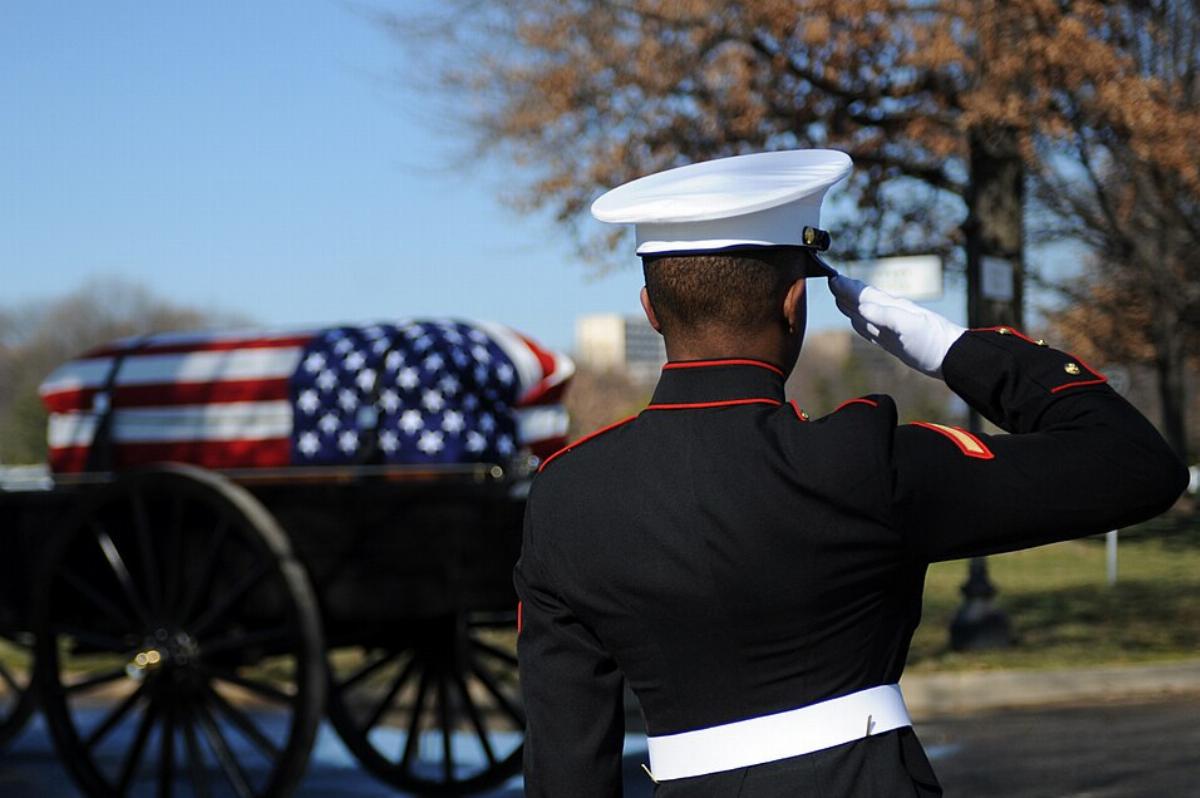
As yet another Memorial Day passes, the memory of fellow veterans who no longer walk among us always weighs heavy upon my mind. But while I reflect upon those veterans—a group that includes both family members and friends—a story always comes to mind about a relentless search conducted by a former enemy soldier to find his dead brother’s remains.
Read more Pathetic: The specter of Los Angeles Mayor Karen Bass and her allies defending her record
In 1994, my father—who had commanded the U.S. naval forces in Vietnam during the war—and I, who had served with the Marines, made a trip back to Vietnam to seek that government’s cooperation in undertaking a joint study on Agent Orange. This was a chemical defoliant heavily used by U.S. forces to deny concealment to the enemy. We had come to believe, despite assurances given during the conflict by its manufacturers to the contrary, that it was responsible for the deaths of many of our veterans who had been inadvertently exposed to it. Those veterans included my older brother who had served as a swift boat commander in the war.
That trip led to my meeting with a former North Vietnamese veteran and medical doctor—Major General Nguyen Huy Phan. In a one-on-one exchange, Phan extended his condolences for the loss of my brother. But as we spoke, I noticed he became a little emotional. I later learned that he too had lost a brother to the war.
When my brother died, I was with him. I knew when he died, where he died, and how he died. Phan was not so fortunate. While he received word during the war of his brother’s loss, he would spend 17 years looking for his remains.
It is very important in Vietnamese culture to ensure a loved one who has passed is buried appropriately in order to continue the “cycle of life.” For Phan, that meant locating his brother’s remains and returning them to the village of his birth where he would then be interred. Doing so was customary due to the cultural perception that the remains became one with the soil, that the soil then fed the village’s crops, and that the villagers then would consume those crops—thus ensuring continuance of such a cycle.
Read more The 250th celebration seems more muted and less buoyant than the 1976 bicentennial
Phan explained to me it took those many years to finally locate his brother’s remains and return them to his birth village. As the Vietnamese lacked the technology to conclusively identify remains, we will never know if what Phan believed to be his brother’s body really were. But it was good to know he had finally achieved some peace of mind in believing it to be so.
My encounter with Phan motivated me to return to Vietnam numerous times to interview those who had been our enemy during the conflict in order to record their stories. But in writing the book entitled “Bare Feet, Iron Will–Stories from the Other Side of Vietnam’s Battlefields” in which I shared them, I made an interesting discovery. Just as locating his brother’s remains had brought Phan peace of mind over his loss, the research and interviews of the former enemy that I conducted brought me a similar peace of mind over my own brother’s loss.
This experience has led me to understand, while the need we have to remember—in our case on the last Monday of the month of May—those who served in uniform and have passed, it is equally as important for those we fought to do the same.
Note: While we never received authorization from Vietnam to conduct a joint Agent Orange study, my father, Admiral Elmo R. Zumwalt, Jr., would become the most senior military commander ever to return to Vietnam in an effort to make the case for compensation from Veterans Affairs (VA) for battlefield exposure. His firm belief was that a wartime commander was obligated to fight for those who had courageously served under him, even after the guns on the battlefield had gone silent. As a result, his fight for such veteran benefits was relentless. It only ended after the VA accepted the results of a 1990 pro bono study my father wrote, proving two essential points: a) some of the medical studies finding no linkage between various cancers and exposure to the chemical were seriously flawed, and b) the VA medical board reviewing existing evidence every three years to determine whether there was any linkage was biased as several of those same doctors had worked for the chemical manufacturers involved.
Read more US military enlistments on Memorial Day
Image: Public domain.