

I just saw the Babylon Bee headline on X: “Elon Musk Acquires Total Ownership of The Economist.” Gosh. I wonder what they meant by that?
Read more Ushering in public lewdness
I know. Elon totally owned that Brit editor girl, Zanny Minton Beddoes. But, as a settler-colonialist from India that grew up in Britland, I was interested in her accent. You see, back in the day, tippy-top journalists had a posh accent, also called “Received Pronunciation.” But after I left for the good old US of A, posh accents became recherché. That’s French for “overly fancy.” So everyone who was anyone began talking “estuary English.” Best way to describe it is halfway between Received Pronunciation and working-class Cockney. But Beddows’ accent is half posh, half estuary. I wonder why?
But I don’t care about The Economist. Not since editor Walter Bagehot died in 1877.
I do care about Elon Musk. And SpaceX’s Lucky 13 flight was one for the ages. My brother-in-law sent me home a couple of months ago with a copy of Elon Musk by Walter Isaacson, so I know all about him. In 2008, in the middle of the mortgage meltdown, his first three rockets had failed. He was broke, but just managed to scrape enough money together for Falcon 1 Flight 4. It was a success and Elon was off and running.
The only thing to say is that Elon Musk is a force of nature. Isaacson says that, when everything is going wrong and all normal people would just throw up their hands and give up, Elon goes into demon mode. Says his partner Grimes:
“Demon mode is when he goes dark and retreats inside the storm in his brain.”
And gets things done.
Want to understand the meaning of Musk? Just look at this picture of the three Raptor rocket engines.
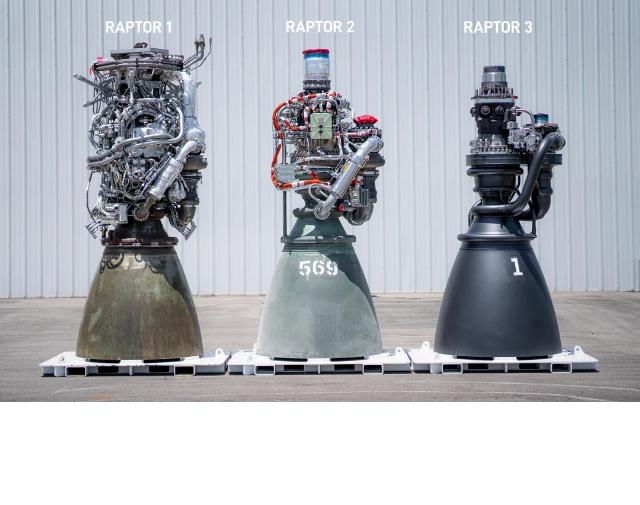
See the plumbing? By Raptor 3, almost all the plumbing is gone. Call it the Musk Effect.
How does he do it? Just watch the YouTube video.
After the success of Lucky 13, I scanned my X-feed, and it was full of guys marveling at the separation of the Super Heavy booster and Starship, and the soft landing of Starship in the Indian Ocean just off Aussieland, and the video connection with Starlink that still worked. It’s such a guy thing: rockets and stuff. I remember watching the first simultaneous landing of two Falcon Heavy side boosters in Florida (7:50), and marveling: this is like a science fiction movie!
And don’t get me started on the chopsticks and the Megazilla to catch the Super Heavy boosters.
Then there is Economist editor Zanny Minton Beddoes, in the coven with TV megazillas Margaret Brennan, Kaitlan Collins, and Kristen Welker.
You see, I think there is a fundamental lesson to learn about the chasm between the male forces of nature, from Musk to Jobs to Bezos to Gates, and the female megazillas squeezing you in their “some people say” stare.
Read more No, it’s not ‘climate change’ burning Europe: It’s the fuel
My view of humans is Real Simple. I think that men are fighters, and women are carers. Since before the Dawn of Time. Men fought to preserve the food-growing territory, and women cared for everything else.
I say that defense of food-growing territory is really out of step in 2026 when 10 grain ships are sitting in the outer harbor of Vancouver, BC, every day, willing, wanting, waiting to take Canadian grain all over the world.
So what’s a modern fighter man to do? Simple. He creates a business startup with the help of some VC investors, and fights like Odysseus to defeat all the sirens and sea monsters out there in the global economy. The winners, like Musk and Bezos and Jobs, are top of the totem pole, and the rest of us guys learn to respect them.
But what’s a girl to do, Zanny? Ask Elon Musk lefty-inspired questions with a supercilious look on your face as prestigious editor of a prestigious magazine where all the heavy lifting was done by men 150 years ago?
I say that, just as men are programmed to be fighters, women are programmed to be carers. It’s in the jeans, and also in the male culture of insult and the female culture of complaint.
Men have already solved the problem of fighting in the modern era: go fight for your startup.
But whatabout women? I say that the ideologies of “patriarchy” and “feminism” do nothing to solve the question of women as carers in the modern world. The point of patriarchy is that it was humanity’s way of protecting women, and I say “women expect to be protected.” The lie of feminism was that women could take care of themselves and didn’t need a protector. We have seen, with #MeToo and “safetyism” and “unwelcome attention” that women still expect to be protected, and complain when they are not protected.
But how do women in the modern world find their calling as carers while still being protected and still being safe from unwelcome attention? Any ideas, Zanny?
Christopher Chantrill @chrischantrill blogs at The Commoner Manifesto and runs the go-to site on US government finances, usgovernmentspending.com. Also get his American Manifesto and his Road to the Middle Class.
Read more DNC lacks money — and respect
Image: SpaceX