
Make no mistake: The Democratic Socialists of America (DSA)’s agenda is taking root in the political mainstream, propelled by disciplined candidates who implement its policies and aided by a Republican Party that has too often failed to recognize or effectively counter its advance.
Read more Smokey skies does not mean global warming
The scope of that agenda — and the strategy for putting it into practice — is laid out in the DSA’s publicly released documents. The organization recently issued a remarkably candid national program titled “.” More than a progressive wish list, it proposes dismantling American capitalism, nationalizing major industries, abolishing central federal institutions, eliminating most immigration enforcement, and creating what the DSA calls a “democratic socialist republic.” The program should be read alongside the DSA’s Constitution and Bylaws, most recently amended at its 2025 National Convention.
The platform imagines a society without mortgages, landlords, student loans, health insurance, or household bills. Food, housing, education, energy, medicine, transportation, and retirement would be publicly provided, while major corporations and essential industries would be publicly owned.
The DSA also demands a federal jobs guarantee, free college, student debt cancelation, aggressive wealth taxes, universal rent control, public housing, and a 32-hour workweek without reduced pay. It proposes abolishing police, prisons, and Immigration and Customs Enforcement (ICE); ending detention and deportation; granting amnesty to every illegal alien; and eliminating visa caps and quotas. Many elements of this agenda are already under way nationwide.
Hilariously, parts of the document read as though they were written by a second-grader. One passage states,
Speaking of bills: you don’t really have them anymore. You have no debt. You don’t need health insurance. You don’t pay a mortgage or have a landlord, because comfortable housing is a human right. Your retirement is publicly funded. Food, education, energy, medicine, and transportation aren’t for-profit businesses; they are common goods and utilities.
For those grounded in reality, however, the platform offers no credible budget, production model, or explanation of how scarce goods would be allocated. There is no recognition of how Marxism functions in practice. When prices, private ownership, and investment are displaced, economic decisions do not disappear. That raises the age-old question: Who pays for all the free stuff? And if the answer is the government, who, one might ask, funds the government?
The DSA’s strategy for endorsing and electing candidates is already producing results, including Zohran Mamdani’s election as mayor of New York City.
A key 2021 convention resolution identified the U.S. House as an entry point for national socialist power. Local chapters would recruit DSA members, while the national organization would vet and train them, finance and coordinate their campaigns, and target winnable races. Candidates would run on the DSA platform, cross-endorse one another, promote other socialists, and remain accountable to the DSA. Once elected, they would hire DSA-aligned staff, meet with national leaders, form a separate congressional caucus, reject Democrat party discipline, and vote as a unified bloc. Members who broke with the program could be disciplined or expelled.
That strategy is already being implemented, although the DSA has not yet accomplished every element of the original resolution — particularly the creation of a formal House caucus voting as a disciplined bloc. The DSA’s 2025 national candidate endorsement criteria largely reproduce the resolution’s structure.
The DSA’s publication “Democratic Left” reported nearly 90 endorsed candidates in 2026, including more than a dozen congressional candidates. In New York, NYC-DSA promoted a coordinated slate; organized joint canvassing; and declared, “NYC-DSA is coming to Congress.” Its congressional candidates included Claire Valdez in New York’s Seventh District and Darializa Avila Chevalier in the 13th District, accompanied by eight DSA candidates for the state Legislature.
These were not independent candidates who merely shared progressive views. They were collectively promoted as members of a socialist slate, supported by shared volunteers, campaign infrastructure, messaging, and organizational objectives. They ran in Democrat primaries while serving a movement committed to building independent socialist power.
Read more Democrat party dead? Marxists and RINOs ascendant? America doomed?
The approach has produced results outside New York. Nationally endorsed DSA member Chris Rabb won the 2026 Democrat primary for Pennsylvania’s heavily Democrat 3rd Congressional District. With no Republican opponent, the DSA treated him as effectively elected. The DSA described the victory as the result of thousands of people organizing through the socialist movement and called Rabb its second nationally endorsed representative in Congress.
Four Florida DSA chapters backed Oliver Larkin’s congressional campaign, while Missouri chapters supported Cori Bush and Hartzell Gray. Across the country, DSA chapters have supported candidates through fundraising, canvassing, phone-banking, endorsements, and coordinated messaging.
Mayor Mamdani’s housing agenda in New York City demonstrates how the DSA’s electoral strategy and convention resolutions operate in practice. The DSA’s 2021 housing resolution, “Class Struggle on the Housing Terrain,” describes rent as capitalist “extraction” and tenants as a class that must be organized into “fighting formations.” A companion resolution calls tenant organizing essential to “defeat landlords and replace capitalism with socialism” and envisions a future “without landlords and bosses.”
The resolutions instructed DSA chapters to establish tenant unions, identify tenant leaders, prevent evictions, conduct political training, and transform isolated renters into an organized political bloc. Under this strategy, housing disputes become opportunities to build power and advance socialism. Mamdani has carried important parts of that strategy into City Hall at the heart of the nation’s financial capital.
On his first day as mayor, Mamdani revived the Mayor’s Office to Protect Tenants and appointed longtime tenant organizer Cea Weaver as its director. His administration then conducted “Rental Ripoff Hearings” across the five boroughs, collected more than 1,600 tenant accounts, and connected renters with legal and organizing resources.
City officials also conducted outreach to residents of rent-stabilized buildings to support tenant organizing. Mamdani’s “” housing plan, released on May 26, 2026, calls for building inspections coordinated with organized tenants. The plan also calls for constructing 200,000 affordable homes and preserving another 200,000 over 10 years, supported by $22 billion in city capital spending over five years. It would renew the New York City Housing Authority’s role as a public developer, expand tenant participation, and create permanently affordable cooperatives. This follows the DSA model almost exactly: organizing tenants building by building, identifying leaders, combining grievances with political education, and aligning government enforcement with tenant organizations.
Mamdani’s most visible victory came in June, when the Rent Guidelines Board voted 7-1 to freeze rents on both one- and two-year leases for approximately one million regulated apartments. Mamdani had campaigned on the promise and appointed six members to the nine-member board. The unprecedented two-year freeze takes effect on October 1, 2026.
His administration has also increased legal pressure on landlords, securing multimillion-dollar repair commitments, settlements, and judgments. It has proposed recognizing tenant unions, restricting credit check fees, and expanding investigations into landlord complaints.
Although Mamdani has yet to abolish landlords or private housing, his policies parallel the transitional measures outlined in the DSA’s own documents. Rent freezes, tenant unions, aggressive enforcement, public development, and permanently regulated housing are transitional steps intended to organize tenants, weaken landlords, and shift housing toward collective control.
Mamdani’s agenda demonstrates that the socialist transformation unfolding in New York is neither spontaneous nor accidental. It is the implementation of a decades-old socialist project that the DSA has formalized and accelerated in recent years — and is now touting as the new “socialist American Dream.”
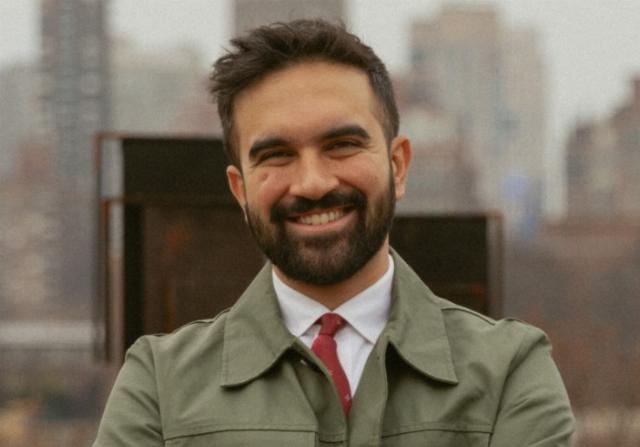
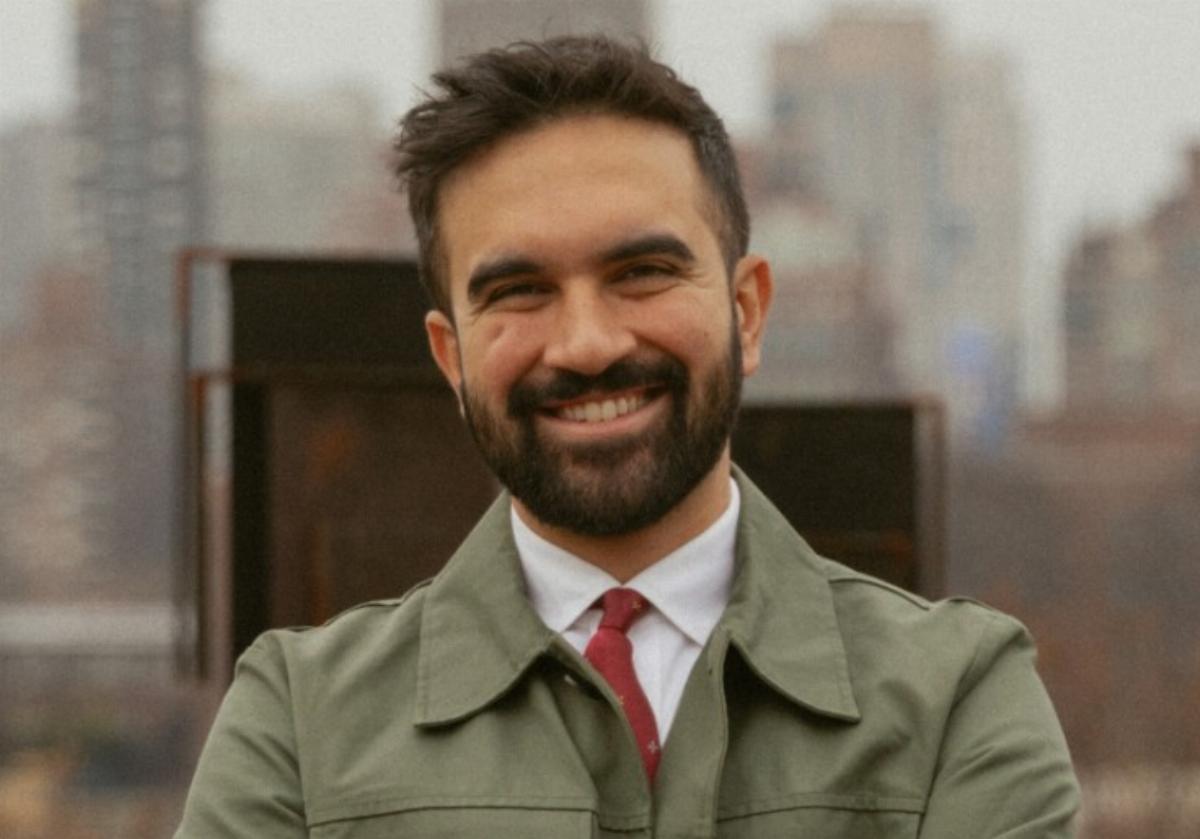
Image: Zohran Mamdani. Credit: Karamccurdy via Wikimedia Commons, CC BY-SA 4.0 (cropped).
Read more Striking the killing blow