
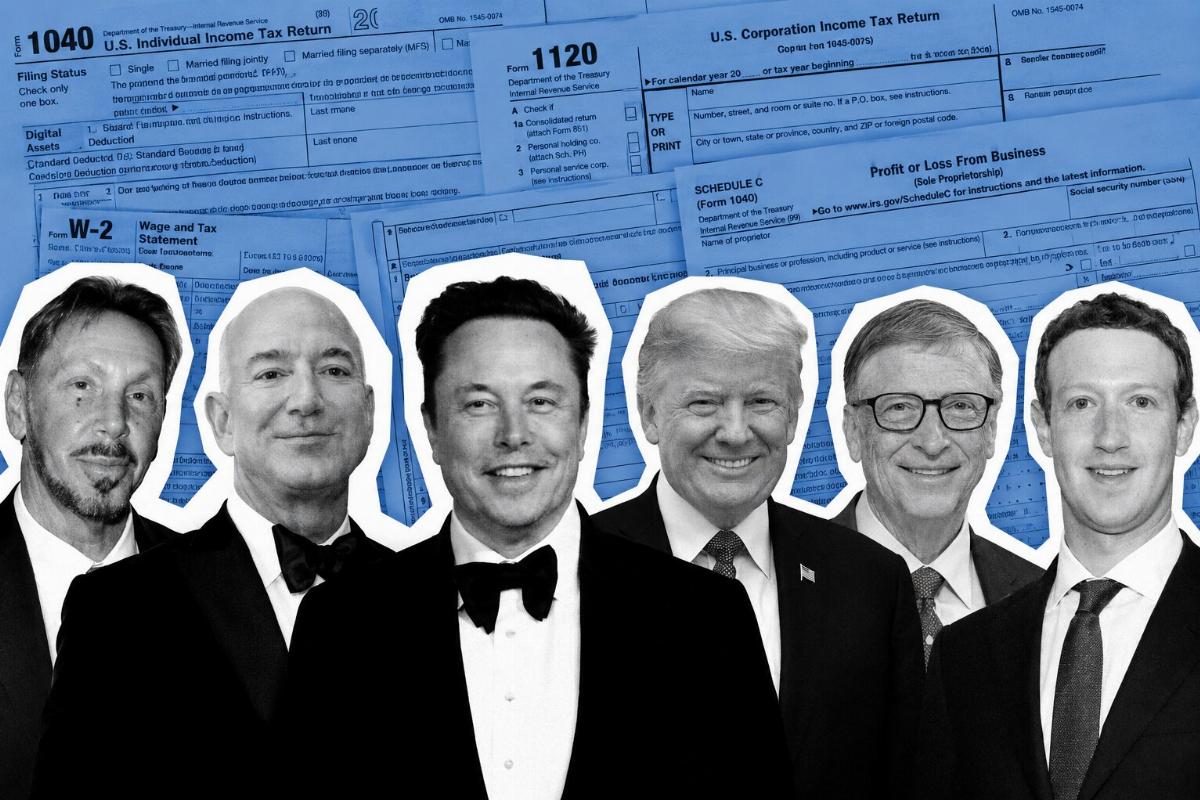
As the midterms approach, Americans will once again hear the familiar refrain that major corporations “pay no taxes.” It is an effective political line because it is simple, morally satisfying, and superficially intuitive. Giant companies report billions in profits, yet headlines periodically declare that some owe little or nothing in federal income tax. The implication is obvious: the system is broken, corporations are cheating, and policymakers must intervene.
Read more Thomas Massie and Bill Cassidy Lost. MAGA Won. Bigly.
The problem is that the slogan compresses a highly technical reality into something closer to political theater. While some corporations do occasionally report little or no federal income tax liability in a given year, this outcome is usually the direct result of laws written, debated, and approved by the same politicians now expressing outrage over it.
Begin with a basic point that is routinely ignored: corporations are taxed on profits, not revenues. A company is not taxed on every dollar it brings in. It is taxed on income after subtracting expenses incurred to generate that income — wages, rent, raw materials, financing costs, equipment, and countless other business expenditures. This is not a loophole. It is the foundation of any system attempting to tax net gain rather than gross receipts. A business spending heavily to operate should not be taxed as though those costs never existed.
Investment further complicates matters. Companies making major capital expenditures are generally allowed to deduct those costs over time through depreciation. In some cases, accelerated depreciation rules permit firms to write off large portions upfront. The predictable result is that a company may look enormously profitable to shareholders while reporting relatively little taxable income in the same year. This is not deception; it reflects the fact that financial accounting and tax accounting serve different purposes.
Losses also matter. Businesses do not experience smooth, uninterrupted growth. Firms that lose money in one period are often allowed to carry those losses forward to offset future profits through net operating loss provisions. A company recovering from years of difficulty may report strong earnings yet still owe little in taxes because it is effectively climbing out of an earlier hole. Pretending every tax year exists in isolation makes for good soundbites but poor economics.
Then there are tax credits, which reduce tax bills directly. Governments routinely use credits to encourage politically favored activities such as research and development, domestic investment, energy projects, or taxes paid abroad. Critics are free to dislike these incentives, but calling the resulting lower tax bill evidence of abuse is peculiar when lawmakers explicitly designed the incentives to produce exactly that outcome.
Read more The Democrats’ Luciferian Beauty Play
For multinational firms, the picture grows even messier. Large corporations operating across borders navigate multiple tax systems simultaneously. Practices like transfer pricing and locating intellectual property in lower-tax jurisdictions are frequently portrayed as shadowy evasions. In reality, they operate under detailed legal frameworks designed precisely because modern commerce is global rather than confined neatly within national borders.
Much public confusion stems from the difference between “book” income and taxable income. Corporations report profits to shareholders under one accounting system and to tax authorities under another. These systems treat timing, investments, and expenses differently. As a result, firms can appear highly profitable while reporting minimal taxable income. When headlines declare a corporation “paid no taxes,” they are often comparing figures that were never designed to align.
None of this means the tax code is elegant or coherent. Not by a long shot. It is sprawling, politically negotiated, and full of distortions. But the notion that corporations somehow stumbled upon secret escape hatches in an unsuspecting system should be difficult to take seriously. Every single exemption, deduction, depreciation rule, loss carryforward, credit, international provision, and every other bit of nuance or benefit exists because legislators created them.
If critics believe corporations should pay more taxes, they can make that case. But the honest debate is over changing the rules: not pretending companies are violating them. The system is producing precisely the outcomes lawmakers knowingly constructed it to produce. They are policy choices, made in plain sight — not accidents, and certainly not sleight of hand.
Read more Nutty Nithya tries to outspencer Spencer Pratt in her ads — and it’s ‘cringe’
Image generated by ChatGPT.