
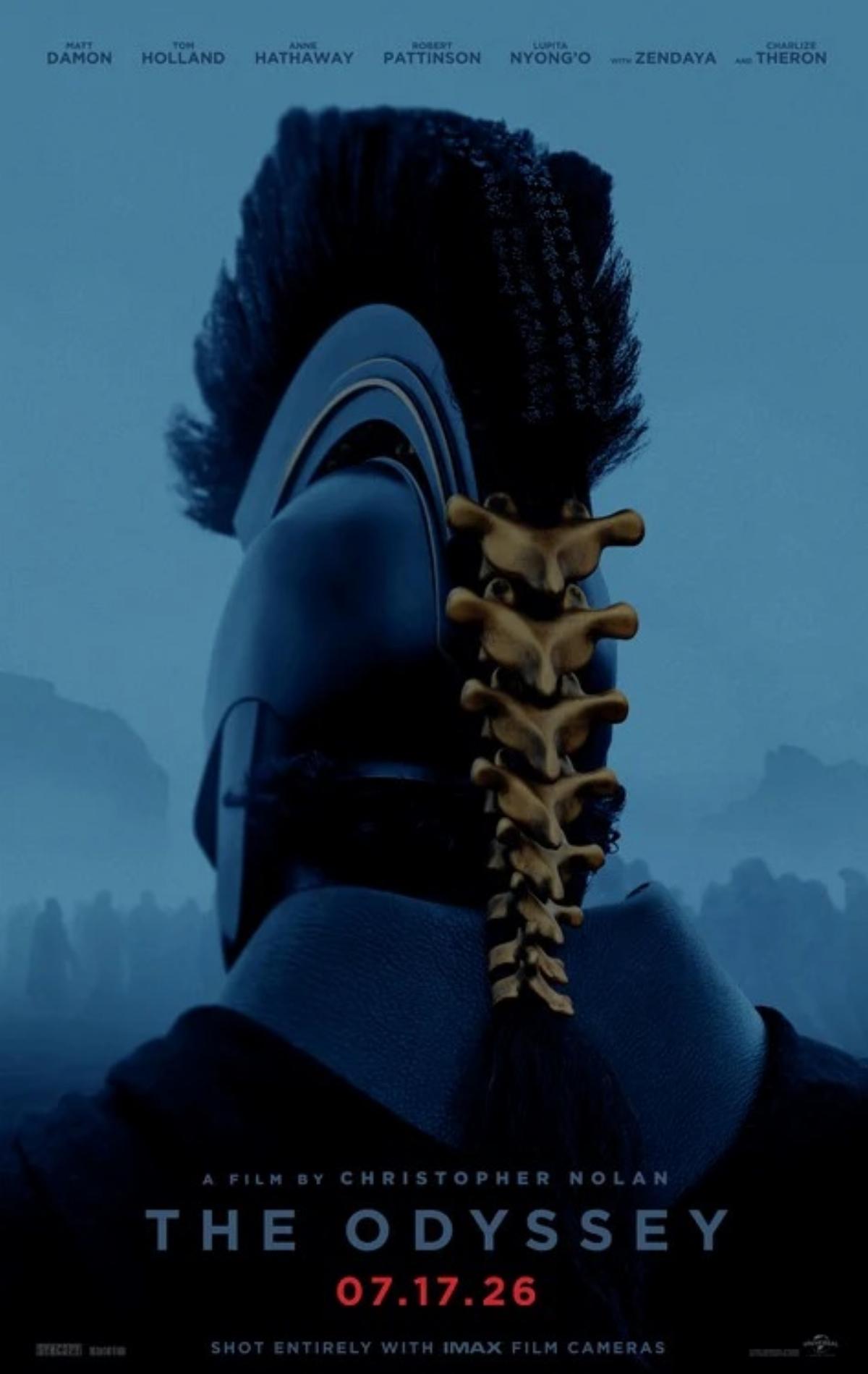
Christopher Nolan’s treatment of Homer’s Odyssey hits theaters on July 17. While Nolan evidently could not locate a single Greek actor or actress to feature in his film, his very inclusive cast boasts a black rapper, a pint-sized transgender warrior, a biracial Athena, a black Helen of Troy, and a black Clytemnestra, both played by actress Lupita Nyong’o. The script is based on a 2017 feminist translation of the Odyssey that elevates the female characters at the expense of the male characters. Judging from the trailers, the dialogue consists of the kind of elevated language one might typically find in the banter of the least impressive students at an underperforming junior high school. Nolan’s Odyssey, then, is a lavishly funded DEI project based on a literary hatchet job expressed in lazy adolescent slang.
Read more Could Deep-Sea Mining Break China’s Stranglehold On Critical Minerals?
I have no doubt Homer’s reputation will ultimately survive this grotesque charade. His legacy in the Western canon is secure by virtue of his work’s deep antiquity and literary grandeur. Homer occupies a unique place at the foundation of Western civilization; he provides us with a glimpse into the dawn of human self-awareness. The Odyssey represents one of the most ambitious portrayals of an individual’s striving to navigate his fate and master his destiny ever conceived. This work, along with the Iliad, shaped the culture of antiquity. Plato’s characters often cite Homer in their conversations, and his Socrates describes Homer as the “educator of all Greece.”
Yet this same Socrates also proposes a new educational curriculum and a new religious awareness that would silence Homer forever. Homer had presented the gods as shape-shifting beings who often fight with each other. Plato’s Socrates prohibits this kind of tale, effectively banning Homer entirely. Through his dialogues, Plato sought to supplant Homer as the educator of all Greece.
Clearly, Homer is not sacrosanct — least of all to Plato. Given Plato’s treatment of Homer, one might ask, what grounds are there to object to Nolan’s? Let’s compare the two treatments.
In his teachings, Plato sought to exercise a civilizing influence upon his contemporaries. Homer’s epics had valorized brutality, deception, and domination. His characters — including his gods — were poor role models. At the very least, Homer had ultimately proven to be morally pernicious. This called for a new teaching. Plato’s sidelining of Homer is part of his project to debrutalize humanity. Going forward, the good life would be identified not with violently subduing others, but with achieving an elevated perspective from which such domination would be deemed an inferior and unworthy pursuit.
Nolan’s Odyssey corrects Homer in a very different way. Nolan’s intent is perhaps best expressed by Lupita Nyong’o when, in answer to the question as to what she might say to Homer if given the opportunity, the actress delivers a contemptuous, accusatory condemnation of the epic poet for having failed to center his storytelling on the women as opposed to the men, a charge delivered through a smirk conveying the actress’s grandiose sense of moral superiority.
Read more Why I Still Believe In America
The casting of Nyong’o and the others mentioned above, with all the race and identity-swapping, is undoubtedly a play for Oscar consideration on diversity grounds, but it’s more than that. Nolan and his cast clearly despise the source material and consider it beneath them, an attitude they undoubtedly extend to the whole of Western civilization.
Nolan’s Odyssey is a raised middle finger to the West. The West is to be condemned as insufficiently inclusive and representative. Any greatness exhibited by the West is invalidated by the failure to include and to celebrate the kinds of identities Nolan has chosen to cast. The West’s cultural richness is a source of shame because it was achieved only by depriving the oppressed of their rightful place. By casting the film as he has, Nolan gets to rub the West’s nose in its unjust exclusions while also avenging them.
This film is not an homage. It is not a tribute. It is not a modern retelling, nor is it a creative reimagining. Make no mistake: This film is nothing other than a ritualistic punishment. Homer is to be punished for having failed to anticipate and pander to the fashionable resentments of belligerent identities in the 2020s. Homer showed a lopsided interest in his male characters. He made Helen white. What a relief that after nearly 3,000 years, Nolan and his band of perpetually aggrieved, bitter little misfits have stepped in to make this right.
This kind of accusatory bilge, all the rage in faculty lounges, demands our unconditional rejection. As heirs to the Western tradition — and, quite simply, as moviegoers — we deserve so much better than this. No one should pay a dime to see this maliciously contrived insult. Here’s hoping Nyongo’s arrogant little lecture is remembered as the scold that emptied 1,000 theaters.
Read more Don’t Waste America’s Best Chance to End the Opioid Crisis
Image: Universal Pictures