
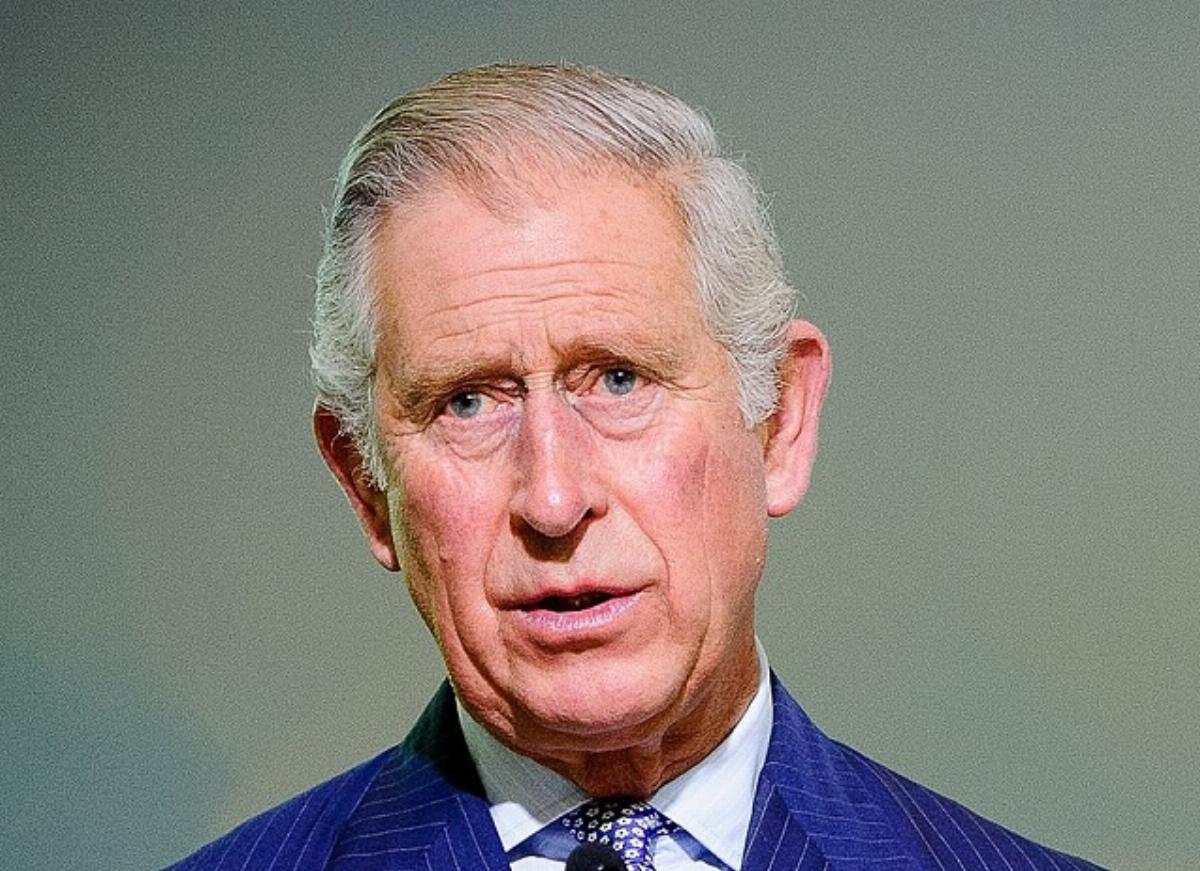
It is often said that it’s the thought that counts. King Charles III’s America 250 message was gracious, thoughtful, and precisely what one would expect from two nations that have transformed revolution into one of history’s closest alliances.
Read more Trump v. Barbara: Suicide by Cop-Out
His words celebrated friendship, liberty, the rule of law, and two-and-a-half centuries of a remarkable shared journey. Yet many Americans looked beyond the message itself toward the flag displayed behind it, where the familiar thirteen stripes of Old Glory appeared to have become fourteen. Curious whether anyone else had noticed, I telephoned both Buckingham Palace and the U.S. Department of State. At the time of writing, neither had offered an explanation.
🇺🇸 A message from His Majesty The King to President Trump and the American people, as they mark 250 years of the United States Declaration of Independence.
— The Royal Family (@RoyalFamily) July 4, 2026
To read His Majesty’s message in full, visit https://t.co/fKZVORz7rk. pic.twitter.com/FOoWyRUBfS
That, however, is almost beside the point.
Strategic communication has never depended exclusively upon intent. It depends equally upon perception.
Once a sovereign’s message enters the public square, it no longer belongs solely to those who created it. Symbols possess meaning because civilizations have spent centuries investing in such communications, and history has conditioned us to read into them—because history repeatedly demonstrates that leaders use them to communicate. Whether carefully crafted or inadvertently introduced, sovereign symbols ultimately say what they say.
For centuries, kings understood that banners, heraldry, standards, and flags were instruments of statecraft, not mere decorations. Edward III did not merely assert a claim to the French throne in 1340; he quartered England’s royal arms with the French fleurs-de-lis, visually announcing an ambition that would echo through the Hundred Years’ War.
The heraldry itself became policy before armies ever crossed the Channel. Medieval audiences did not dismiss such changes as artistic flourishes. They understood that when sovereigns altered their symbols, they were often signaling a change in political intent. History has trained us to ask not simply what changed, but why.
America during the Revolution spoke precisely the same visual language.
George Washington’s Continental Army first marched beneath the Grand Union Flag, a banner that retained the King’s Union in its canton while displaying thirteen colonial stripes. It was, in many respects, a flag of unresolved negotiation, visually expressing that reconciliation with the Crown remained possible. Then negotiations collapsed. Independence followed.
Specifically, the Grand Union Flag disappeared from the canton and was replaced by stars because the relationship it represented had disappeared as well—changed because the political reality had changed. Long before Americans explained their intentions in speeches, they had already proclaimed them in cloth.
History’s lesson is remarkably consistent. Sovereign symbols rarely follow political change; more often, they announce it as intention.
Which brings us back to the one additional stripe added by the king.
Viewed through seven centuries of European statecraft, historians may ask: What would a fourteenth stripe have communicated had it appeared by deliberate royal design? Ironically, history offers a remarkably elegant answer.
Nova Scotia—literally “New Scotland”—was the colony the American Revolution never quite won and would have been the colony represented by King Charles’ added stripe. Indeed, Congress courted it as a colony, and George Washington supported expeditions there. Even Benjamin Franklin believed it might yet join the Patriot cause.
Read more How Democratic Socialists Hijacked the Progressive Playbook
One Nova Scotian supporter wrote Washington in 1776, “We would greatly rejoice could we be able to join with the other Colonies.” They never did. Britain retained New Scotland while America was born beneath thirteen stripes. A fourteenth stripe therefore carries an unavoidable historical echo—whether intended or not—because symbols ultimately say what they say.
Then history begins to smile. At almost the precise moment the royal message appeared, Scotland’s famous Tartan “Army” was marching through the United States for the FIFA World Cup, filling American cities with kilts, bagpipes, and its unmistakable refrain: “No Scotland. No Party.”
Only weeks earlier, Americans had themselves welcomed King Charles not with the English but with Australian flags before correcting the diplomatic mistake. And shortly afterward—as if the first insult wasn’t enough—the Union Flag was displayed upside down during the King’s visit to Arlington National Cemetery, prompting Britain’s Flag Institute to observe, with characteristic understatement, that such a display was “most improper.”
Now Americans found themselves studying the king’s fourteenth stripe… Was it payback?
One could hardly script a more entertaining sequence of Anglo-American symbolism. One can almost imagine the exchange:
“You welcomed us with Australia’s flag.”
“You flew ours upside down.”
“Very well. Here’s the colony you never got.”
No serious historian would argue that Buckingham Palace has reopened the question of Nova Scotian statehood. That is not the lesson history offers.
The lesson is that informed audiences instinctively search for meaning because history has taught them that.
Consider that Edward III placed France upon his royal arms before pursuing a 100-year war with France.
The Continental Congress removed the Union before permanently abandoning the Crown.
Governments have long understood that symbols often communicate political realities before official explanations arrive. That is why a single stripe can become more interesting than a thousand carefully chosen words.
Read more The 2026 Supreme Court — a ‘C Minus’ at Best
Image: Public domain.