
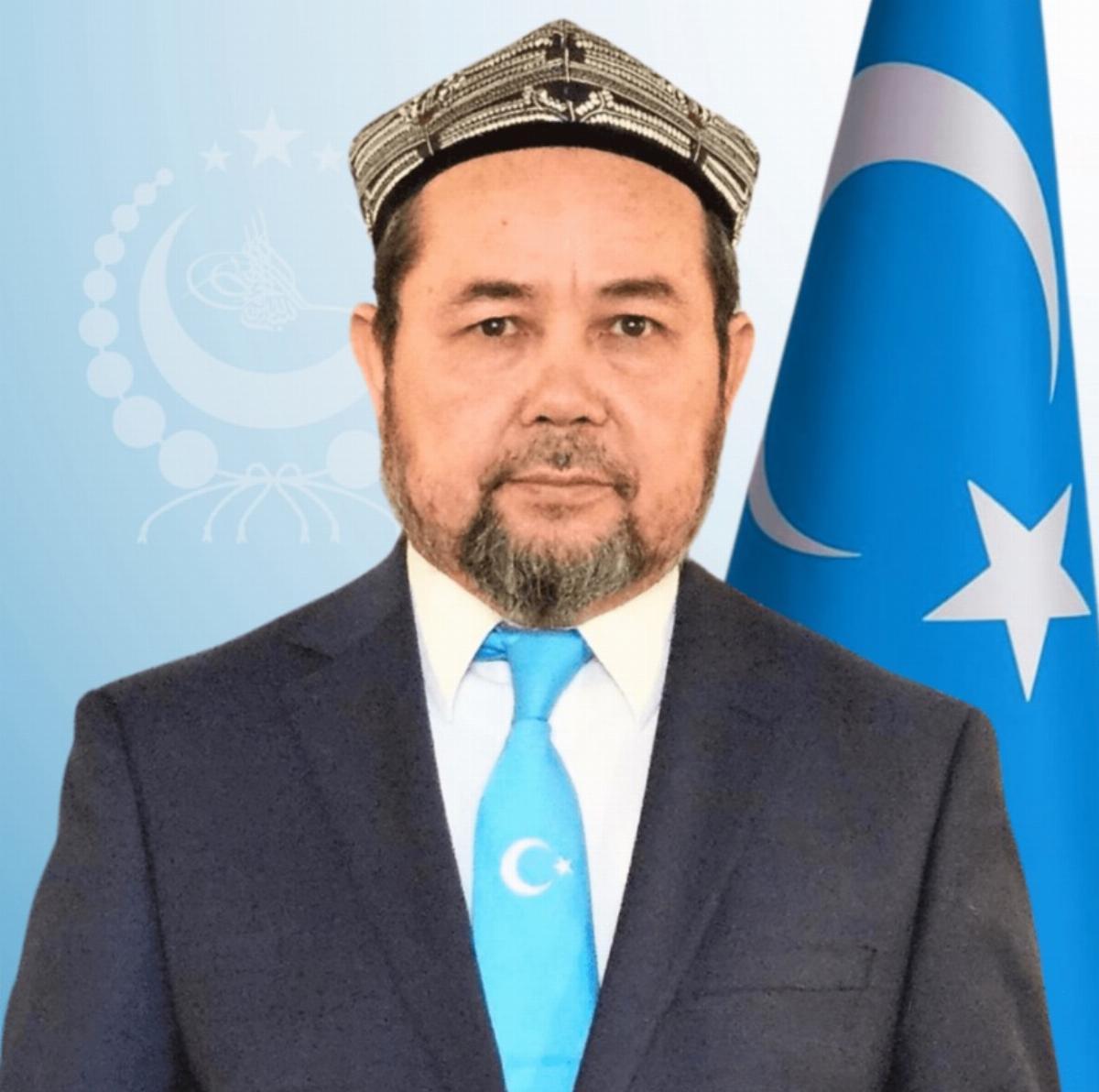
Last year, I interviewed Salih Hudayar, the Foreign Minister for the East Turkistan Government in Exile. Last month, the prime minister, Abdulahat Nur, reached out to me requesting an interview. He requested this opportunity so that more people would hear the plight of the Uyghur people.
Read more The Left-Wing Fringe Throws Another Tantrum Over Redistricting
Who was I to say “No” to interviewing a head of state, right?
Like his foreign ministry counterpart, PM Nur does not govern his home country from…home. In exile, like many Uyghurs, Nur fled his country but hopes for the restoration of his people’s independence and self-determination.
His story is just as harrowing as the suffering of his fellow Uyghurs.
Nur was born in Maralbeshi County, East Turkistan, on June 10, 1967. As a child, he endured severe harassment from Chinese Communist officials because of his religion and ethnicity. He quit the Chinese government’s “official” school and attended an underground national school to learn the Uyghur language and history, since the Chinese Communist Party had banned these subjects.
In the late 1980s, he moved to Kashgar City for higher education, then became an educator himself to preserve the traditions and culture of his people. For these activities, Nur was arrested in 1990 by the Chinese government, imprisoned for three years, and then released due to lack of evidence. Nur lived as a displaced person until 1997, when he left China and traveled to Russia, Kyrgyzstan, and eventually Turkey to continue his pro-freedom activities against Chinese repression of the Uyghur people.
In retaliation for his escape, the Chinese government placed Nur’s family in concentration camps. After seeking help from the United Nations office in Ankara, he was granted refugee status and moved to Canada in 2001. His wife and some of his children joined him in 2005, but three of his children remained in East Turkistan, where they faced ongoing threats from Chinese intelligence services. Tragically, his oldest daughter was injured, and two other children were killed in an “accident” in 2006. PM Nur described the horrible incident in which Chinese intelligence lured his children to their deaths in what seemed to be an “accidental drowning.”
Although his daughter, Farida, survived that attempt on her life, she could not join her father and mother in Canada due to ongoing threats and persecution from the Chinese government. Since 2017, Nur has had no contact with his surviving children or the rest of his extended family in East Turkistan.
Despite these hardships, PM Nur’s activism to restore his country’s freedom and free his people has not waned. He works closely with the Uyghur community in his current home of Edmonton, Alberta, where he also serves as president of the Alberta Uyghur Cultural Society. After serving as Vice President, Nur was elected Prime Minister of the East Turkistan Government in exile in 2023.
PM Nur discussed his advocacy efforts in Canada. Recently, the Canadian Parliament has recognized the Chinese atrocities in East Turkistan as genocide, but the Canadian government has not yet made an official recognition of East Turkistan. Furthermore, despite Canada’s pledge to resettle 10,000 vulnerable Uyghurs from third countries such as Turkey, only about 200 have arrived so far.
After our interview, the East Turkistan leadership expressed to me their concerns that these delays have allowed Chinese authorities the time to actively manipulate and target the diaspora in Turkey. He noted that Beijing is exploiting the Uyghurs’ vulnerability to control who leaves, mask the ongoing genocide, and foster a false international narrative that the Uyghur population is being treated well.
I then asked PM Nur what steps would best assist the self-determination of the Uyghur people. Right away, he proposed that the United States should treat East Turkistan the same way it treats Tibet, by officially recognizing it as an occupied country rather than using China’s colonial name (Xinjiang, which means “New Frontier” in Mandarin). He has also urged the United States government to designate a special envoy at the State Department to handle East Turkistan issues and provide political, technical, and material support to the East Turkistan government in exile.
What benefits does the United States gain from taking a stand for East Turkistan? The prime minister replied that recognition of East Turkistan would undermine China’s Belt and Road initiative by exposing the illegality of projects built on occupied land. As an independent country, East Turkistan, with its significant natural resources, could cut off China’s economic and military growth while assisting Western allies.
Read more Breaking the Hindenburg Line
Our discussion then focused on the specific plight of Uyghurs in East Turkistan. PM Nur presented statistics on detention camps and human rights abuses.
I then asked if the East Turkistan government has explored other international alliances. I also asked him if Russia could assist in the restoration of East Turkistan following the end of the Ukraine conflict. Could East Turkistan join the Abraham Accords? Nur acknowledged that Russia could help them if the situation in Ukraine resolves, but noted potential problems due to current Russian-Chinese relations, which remain entrenched for their mutual benefit. When asked about the Abraham Accords, PM admitted that he had limited knowledge of the matter and that his office has not formed direct connections with the Israeli government either.
Of course, I had to ask the prime minister what vision the Government in Exile has outlined for establishing an independent East Turkistan. The PM explained that they have prepared institutions and bylaws for a democratic, pluralistic state. Regarding the timeline for independence, the PM indicated that it would be easier to achieve if China’s threat could be demonstrated to the world and stopped, but noted that if China completely absorbs East Turkistan, the independence effort would become more difficult.
PM Nur also emphasized that recognition of the occupation and strong sanctions against China, similar to those which the United States has imposed against Iran, are essential first steps, while noting that independence is currently not feasible without international support. The PM also highlighted the need for assistance in combating Chinese spy operations that have undermined the Uyghur movement for independence.
Nur suggested that international partners should help counter these activities. When asked about potential international recognition for East Turkistan, PM identified the United States as the most likely country to make the first move, citing its strength and ability to act independently of China’s influence.
Since the Prime Minister lives in Alberta, I was also interested in his views on the current Independence movement in the province. The Prime Minister explained that while his government is following Alberta’s independence movement, Nur believes that a fractured Canada would not benefit East Turkistan’s cause. Intriguingly enough, Nur argued that a divided Canada would weaken the West’s greater ability to counter China’s growing influence.
Finally, the Prime Minister noted that his government is currently in the early stages of outreach to U.S. and Canadian officials, with Salih Hudayar meeting with U.S. Senators, though no official recognition has been received yet.
Will the world see a free East Turkistan in the next generation? Will the Uyghur people be saved from genocide and restore their autonomy and self-determination? Only if the West establishes a posture of resistance against the aggressive Chinese Communist government.
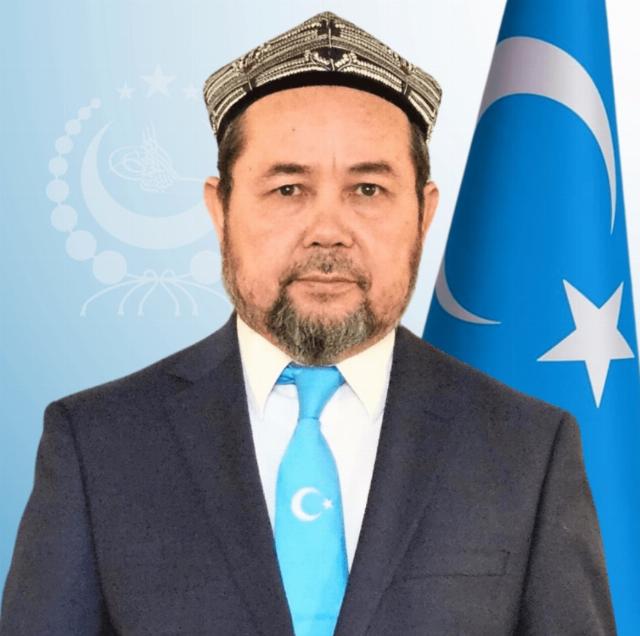
Abdulahat Nur by the East Turkistan Government in Exile and East-Turkistan.net. CC BY 4.0.
Read more On Memorial Day, Unpatriotic Americans Know Nothing of America’s Greatness