
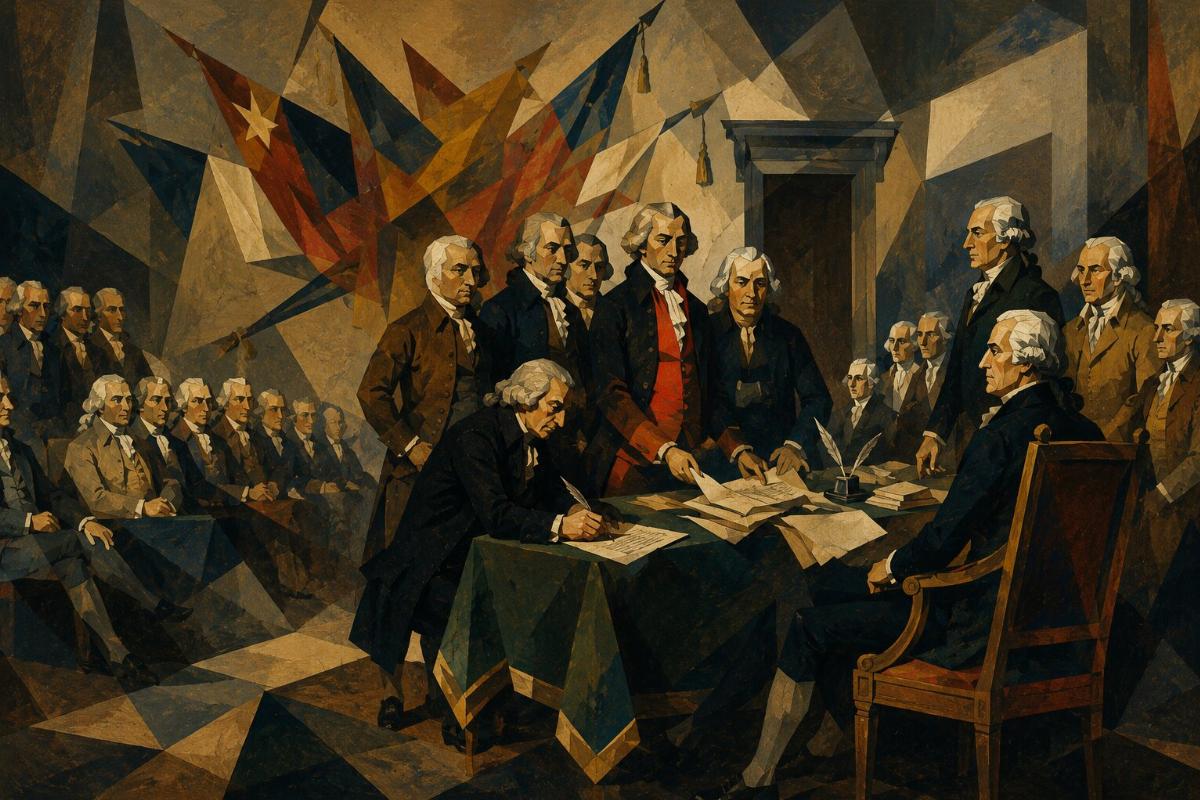
The Declaration of Independence remains one of the most important documents ever written, not only in American history but in the history of human freedom. As the United States approaches its 250th birthday, it is worth pausing, reflecting, and truly considering what the Declaration says — and why it changed the course of human civilization. Most people can quote a few lines from it, but very few stop to think about the deeper meaning behind those words or the extraordinary claim the Founders made about the source of our rights.
Read more The American World Cup: 78 Super Bowls
The Declaration of Independence is the only national founding document in the world that clearly identifies the source of human rights. It does not say rights come from kings, governments, parliaments, or any human institution. It does not say rights are granted by majority vote or political power. Instead, it declares that human beings are “endowed by their Creator with certain unalienable Rights.” That single sentence is the foundation of American freedom.
This idea was revolutionary in 1776, and it remains revolutionary today. If rights come from God — from a higher moral authority — then they are permanent. They cannot be changed, rewritten, suspended, or taken away by any government. They are not privileges. They are not favors. They are not temporary. They are unalienable, meaning they cannot be surrendered or removed because they are woven into the very nature of being human.
By contrast, if rights come from government, then they are fragile. They can change from administration to administration. They can be expanded or restricted depending on political winds. They can be granted one day and taken away the next. History shows that governments that claim to “give” rights almost always end up taking them away. When rights come from government, freedom becomes conditional — something you have only as long as those in power allow it.
The Founders understood this danger. They had lived under a system where rights were treated as privileges granted by a monarch. They saw how easily those privileges could be abused, limited, or revoked. So they made a bold and unprecedented declaration: government does not create rights; government exists to protect rights that already exist. This is the heart of the American experiment.
Read more That bonded minute
Because of this principle, life in the United States is fundamentally different from life in any other nation. Americans are born free. Freedom is not something we earn, negotiate, or request. It is our inheritance. It is our birthright. It is the starting point of American life, not the reward. No other country puts this truth into writing the way the Declaration of Independence does. Many nations talk about rights, but only the United States defines their source — and places that source above government.
As America celebrates its 250th anniversary, it is important for every citizen to reflect on this truth. Our freedoms — speech, religion, assembly, self‑defense, due process, and the pursuit of happiness — are not gifts from politicians. They are not granted by courts. They are not created by Congress. They come from God, and because they come from God, they cannot be taken away by man.
The Declaration of Independence is not just a historical document. It is a reminder, a warning, and a promise. It reminds us that freedom is sacred. It warns us that government must always be limited. And it promises that as long as Americans remember where their rights come from, they will remain a free people.
Read more Conservatism’s global moment
Image generated by ChatGPT.